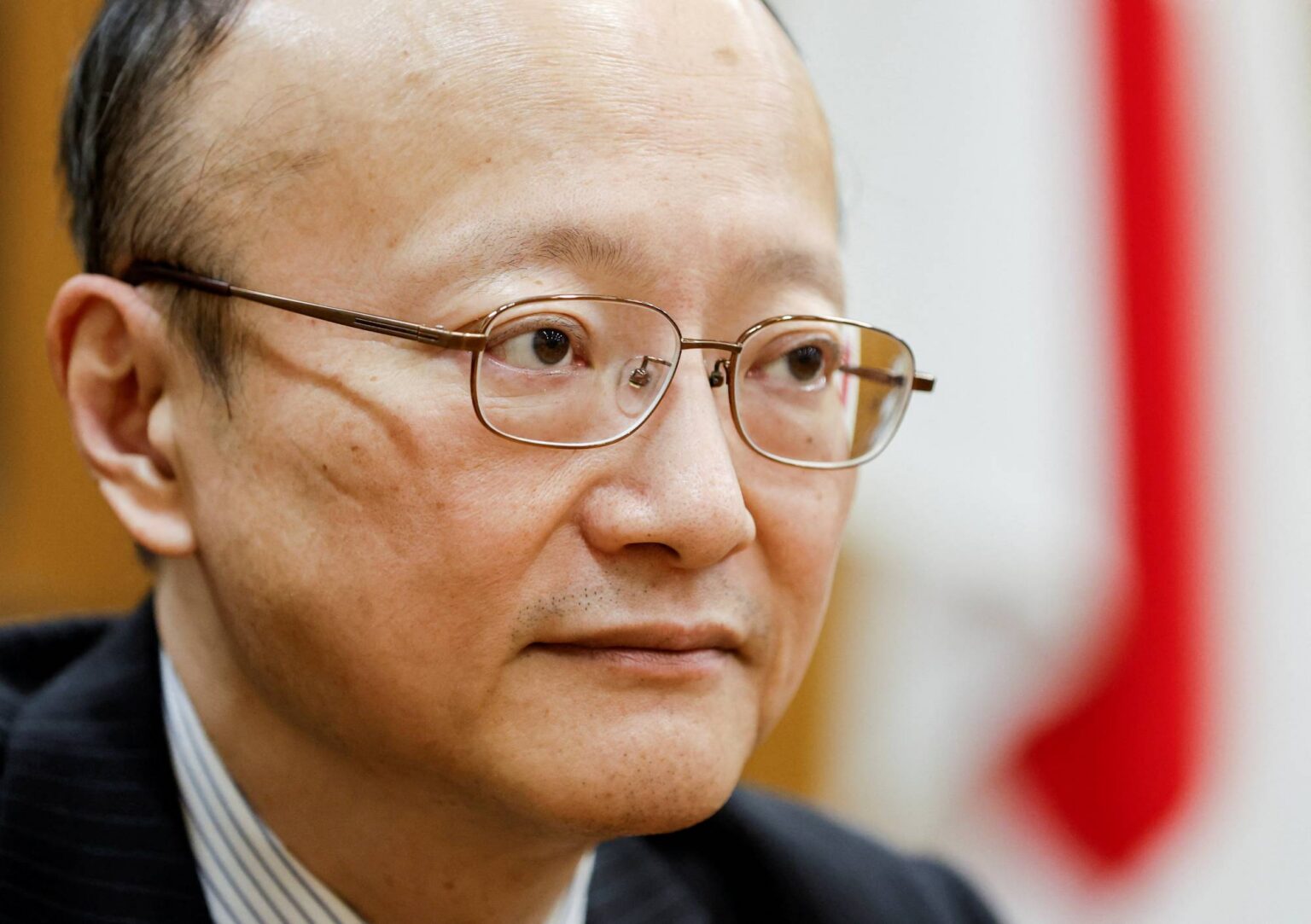
Manila, Philippines: A new era began on 24 February 2025 with Masato Kanda’s inauguration as the eleventh president of the Asian Development Bank (ADB). The ADB has been instrumental in influencing social and economic development across Asia and the Pacific for more than fifty years.
With over four decades of expertise in public finance, global diplomacy, and economic strategy, Kanda was unanimously elected by the ADB Board of Governors. He is a seasoned international financier and policy-maker.
Kanda’s impressive career in Japan’s Ministry of Finance, where he held many top positions, including Vice-Minister for International Affairs, laid the groundwork for his current role as head of ADB.
During his time in this position, he gained a reputation for deftly maneuvering through intricate fiscal and monetary landscapes, leading initiatives to stabilize markets during times of extreme volatility, and guiding high-level discussions at conferences such as the G7 and G20.
Under his leadership, Japan set a new benchmark for its contributions to multilateral development funds, a reflection of his commitment to long-term funding solutions and international collaboration.
After assuming office, Kanda laid up a plan for leadership that prioritized practical measures, global cooperation, and solutions focused on achieving tangible outcomes for member nations in development.
Infrastructure gaps, poverty reduction, climate transition, and energy security are just a few of the long-standing and new development concerns that he highlighted, along with ADB’s mandate to promote inclusive, resilient, and sustainable growth.
His statements resounded in a region dealing with fast economic changes and ongoing inequality, indicating a willingness to guide ADB toward greater significance in a shifting geopolitical and economic environment.
In the first months of Kanda’s tenure as head of the Asian Development Bank (ADB), the bank redoubled its efforts to become its members’ preferred partner by fortifying its financial strategy and encouraging closer collaboration with governments and development partners.
He has emphasized in global forums the need of working together on clean energy, laying out plans to speed up worldwide power systems and encourage the shift to renewable energy sources, including nuclear power as a means to reduce carbon emissions. A goal to link ADB’s funding mechanisms with development concerns of the 21st century is reflected in these policy initiatives.
From January 2020 to February 2025, Kanda was the 10th president of the ADB, continuing a strong tradition started by his immediate predecessor, Masatsugu Asakawa. During Asakawa’s presidency, the world economy was in a state of disarray, with the COVID-19 pandemic being the most notable event that necessitated extensive and swift actions to stabilize economies in different regions.
The Asian Development Bank (ADB) was able to restore public health systems and aid economic recovery in member nations during the crisis’s worst stages thanks to emergency funds raised under his guidance. This included a $20 million assistance package and a $9 billion vaccine facility.
By bolstering institutional alliances and advocating for alternative funding mechanisms, Asakawa ensured that the Asian Development Bank (ADB) continued to pursue its strategic goals in the areas of climate action, poverty reduction, financial inclusion, and infrastructure development.
Under his leadership, the Bank solidified its status as a dependable development partner and set itself up for the strategic changes that Kanda is now advocating.
What sets Kanda’s president apart is his ability to combine his extensive knowledge of fiscal matters with an understanding of the changing needs of international collaboration in development.
With his experience in global finance, he is well-suited to handle the challenges that come with the increased responsibility of multilateral development banks to fund global public goods including adaptation to climate change, technology advancement, and environmentally responsible infrastructure projects.
Importantly, Kanda has also spoken with other parties on complex policy matters. The conversation between him and his colleagues at the U.S. Treasury, for example, has brought up the need for adaptable policy frameworks and the changing expectations of member nations, as he has been asked to adjust ADB’s lending policies to reflect the dynamics of the region’s economy.
While his term winds down in November 2026, everyone is keeping an eye on how Kanda manages to keep ADB’s core mission strong while expanding its reach to address global transitions in climate resilience, inclusive growth, and finance.
At the intersection of tradition and change, his presidency so far highlights a larger story: that leadership with experience can guide the Asia-Pacific region toward sustainable development that impacts millions of people.
Follow The Variant for timely updates and comprehensive coverage of global affairs, politics, business, and international relations.