


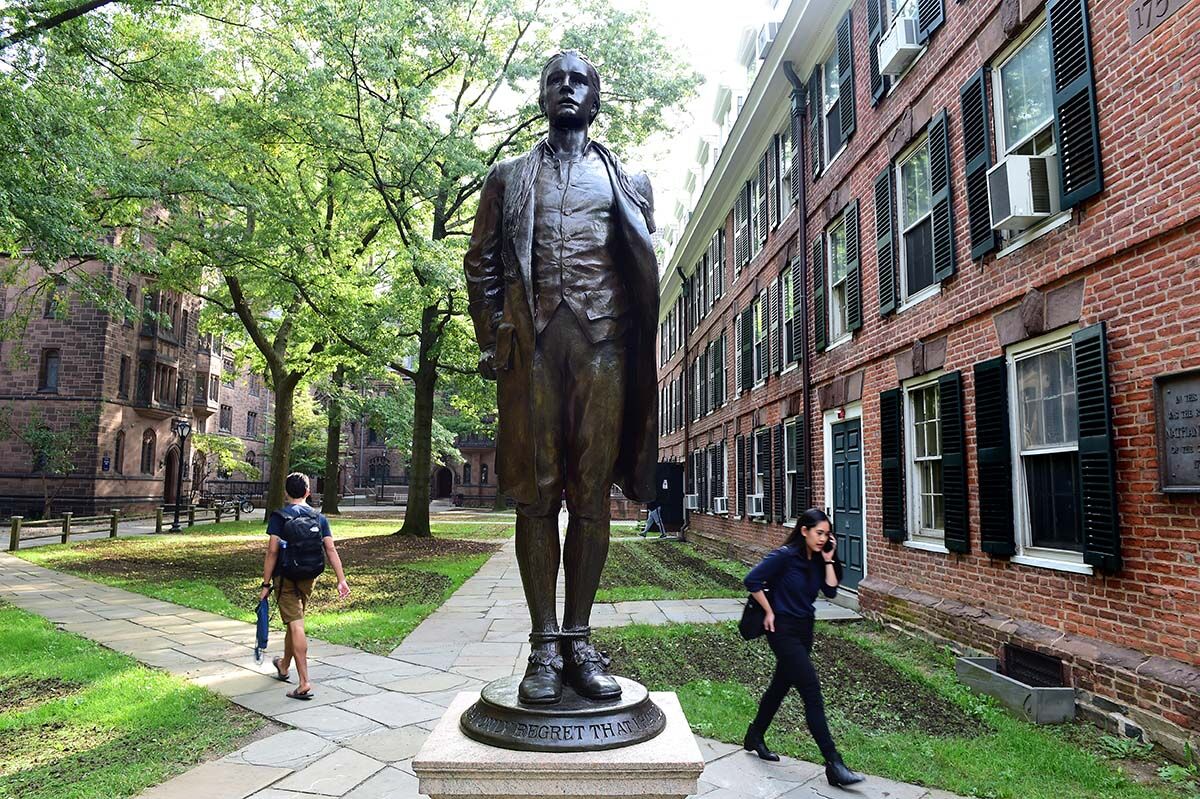
Rochester, NY: Nathan Hale was born in 1755 in Coventry, Connecticut. He came from a well-connected colonial family and was educated at what is now Yale University, graduating with honors in 1773. After graduating, Hale became a schoolteacher in New London, Connecticut, a position matching his academic training.
When the American Revolutionary War began in 1775, Hale felt compelled to serve. He joined the Connecticut militia and soon became a first lieutenant. As the war escalated, the Continental Army needed information about British troop movements — especially around New York, where British forces had significant strength.
In September 1776, Hale volunteered for a highly dangerous mission behind enemy lines. Disguised as a schoolteacher — even carrying his real Yale diploma as cover — he traveled into British-occupied territory on Long Island to observe and gather intelligence about British defenses. The disguise didn’t work for long. Betrayed or recognized, Hale was captured, tried by the British as a spy, and sentenced to death.
On September 22, 1776, at just 21 years old, Nathan Hale was hanged by the British for espionage. Tradition holds that, facing execution without fear, he declared:
“I only regret that I have but one life to lose for my country.”
Whether he said these exact words is debated by historians — no contemporary transcript exists — but this phrase became a powerful symbol of patriotism and sacrifice and has been widely recorded in American tradition.
Why Is There a Statue of Nathan Hale at U.S. Intelligence Headquarters?
Nathan Hale as a Symbol of Sacrifice
Although Hale lived and died nearly 250 years ago, and he never served in modern agencies like the Secret Service or CIA, his story resonates deeply with American intelligence and federal law-enforcement communities. Hale represents:
- Courage under risk
- Duty and commitment
- Willingness to sacrifice life for country
These values are central to roles like espionage, counterintelligence, and national security.
The Statue Outside (or Near) Federal Intelligence Headquarters
The statue most often talked about today stands at the Central Intelligence Agency (CIA) headquarters in Langley, Virginia. It is a replica of a bronze statue originally created for Yale University in 1914 by sculptor Bela Lyon Pratt. The CIA installed its version in 1973, exactly 200 years after Nathan Hale graduated from Yale.
Though people often mistakenly think it’s at the Secret Service building, the most famous Hale statue in this context is at the CIA. The Secret Service — a federal law-enforcement agency under the Department of Homeland Security — does not generally promote or interpret Hale as part of its own history the way the intelligence community does.
Why the CIA Honors Nathan Hale
The CIA refers to Hale as “the country’s first intelligence officer” because his mission during the Revolutionary War — gathering information from behind enemy lines — fits the broadest historical definition of espionage. His statue is meant to:
- Inspire CIA officers with a legacy of patriotic service
- Connect modern intelligence work with its historical roots
- Serve as a reminder of the risks involved in serving one’s country
Traditions around the Statue
Among CIA officers, an informal tradition has grown up around the Hale statue: before departing for overseas assignments, officers sometimes leave coins (especially quarters or 76-cent arrangements symbolizing 1776) at the statue’s base for good luck and protection — a symbolic gesture recognizing Hale’s sacrifice and the shared commitment to duty.
Conclusion: Hale’s Place in American Memory
Nathan Hale is remembered not because of extensive military victories or a long career, but because of a singular act of courage and the powerful narrative that grew up around it. At a moment when the United States was fighting for its very existence, a young officer volunteered for an almost certain death to serve his nation.
Today, that story — and the bronze statue that commemorates it — continues to remind government employees and the public alike of the sacrifice, duty, and patriotic resolve foundational to American identity and national security.
The Variant remains committed to delivering accurate, timely, and insightful coverage of the world’s most important stories.







