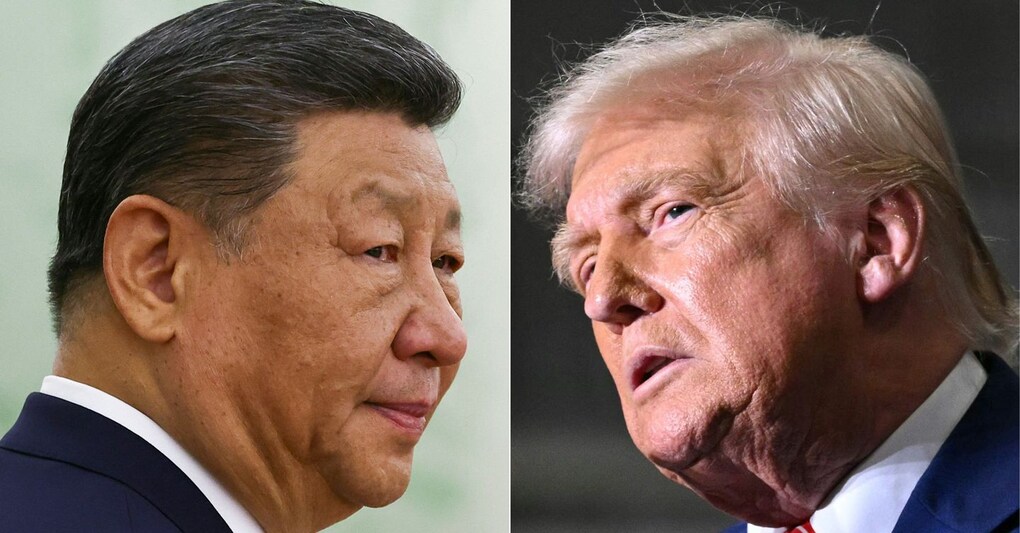
Rochester, NY/Washington, D.C: The anticipated high-stakes meeting between U.S. President Donald Trump and Chinese President Xi Jinping has been officially rescheduled, but with no new date announced—an unusual development that has stirred speculation across diplomatic and economic circles.
The delay comes at a time when global attention is fixed on the fragile trajectory of U.S.–China relations, already strained by trade disputes, security tensions, and competing geopolitical ambitions.
A Delay without Clarity
The absence of a revised schedule suggests more than a routine logistical adjustment. Diplomatic meetings of this magnitude are rarely postponed without immediate rescheduling unless underlying disagreements persist. Analysts view the silence as a signal that both Washington and Beijing are recalibrating their positions before committing to direct engagement.
While official statements from both sides have remained measured, the lack of clarity has created uncertainty among allies, investors, and international institutions. The meeting was expected to address a wide range of contentious issues, including trade tariffs, technology restrictions, and security concerns in the Indo-Pacific region.
Strategic Calculations in Washington and Beijing
For the Trump administration, delaying the meeting may provide additional leverage. By holding off on direct talks, Washington could be seeking concessions from Beijing, particularly on trade imbalances and intellectual property protections. Trump has consistently framed negotiations with China as a test of economic strength, often emphasizing a hard-line approach.
On the other side, Xi Jinping’s leadership may be using the delay to consolidate internal consensus and refine China’s negotiating stance. Beijing is navigating a complex domestic and international environment, balancing economic stability with the need to project strength on the global stage.
Economic Implications and Market Reactions
The uncertainty surrounding the meeting has already begun to ripple through global markets. Investors had anticipated that a confirmed summit could signal progress toward easing trade tensions. Instead, the postponement has revived concerns about prolonged economic friction between the world’s two largest economies.
Industries dependent on stable U.S.–China relations—particularly technology, manufacturing, and energy—are likely to remain cautious. The lack of a clear diplomatic timeline complicates planning for multinational corporations and may influence global supply chain decisions.
Broader Geopolitical Context
The rescheduling also occurs amid heightened geopolitical competition. From tensions in the South China Sea to disputes over Taiwan and ongoing technological rivalry, the stakes of a Trump–Xi meeting extend far beyond bilateral trade. Allies in Europe and Asia are closely monitoring developments, as the outcome of U.S.–China engagement will shape broader international alignments.
Moreover, the delay may intersect with other global crises, potentially shifting diplomatic priorities for both leaders. In such a fluid environment, even minor scheduling changes can reflect deeper strategic adjustments.
What Comes Next?
The key question now is whether the postponement represents a temporary pause or a sign of deeper diplomatic friction. Without a new date, uncertainty will likely persist, leaving room for speculation and strategic maneuvering on both sides.
If and when the meeting is rescheduled, it will carry heightened significance. Expectations will be tempered, but the pressure to deliver tangible outcomes will be greater than ever. For now, the delay underscores a central reality of U.S.–China relations: progress is often incremental, and setbacks—whether symbolic or substantive—are part of an increasingly complex diplomatic landscape.