


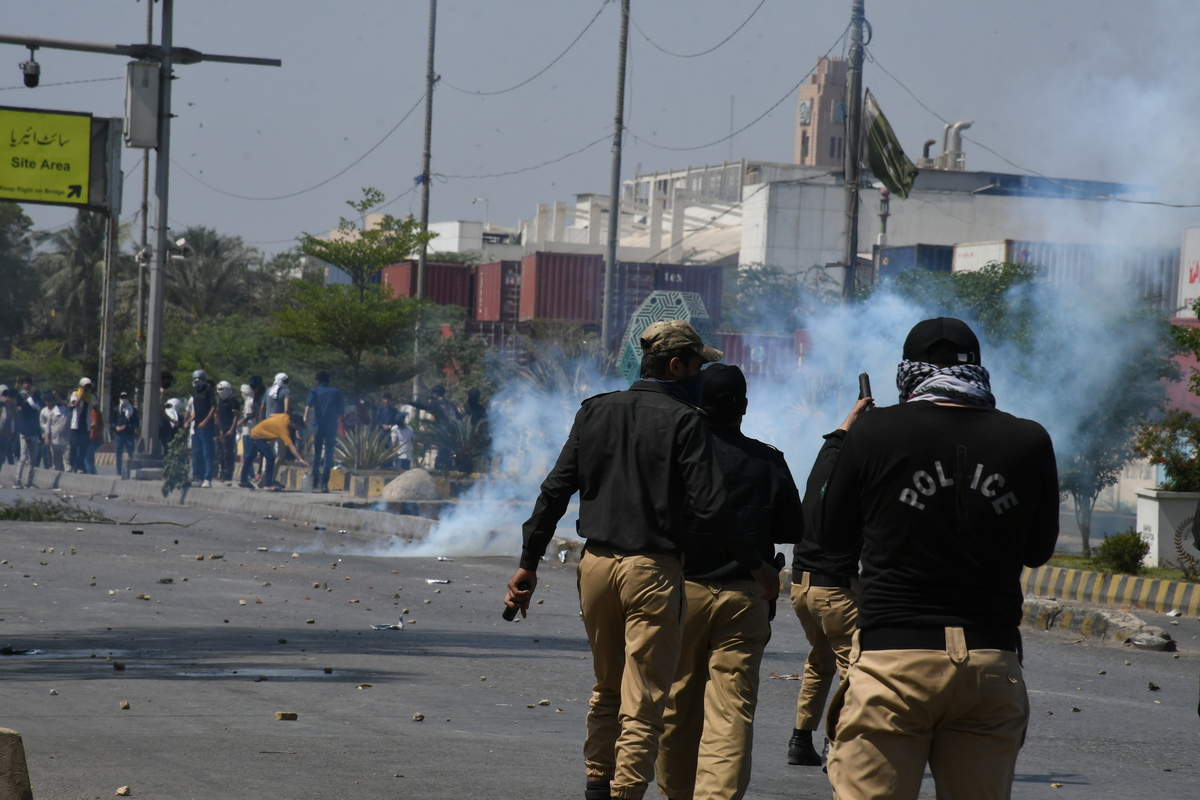
Karachi/Lahore/Islamabad/Sakardu: A wave of demonstrations surged across Pakistan’s main urban centers in the early hours of Sunday, March 1, 2026, as news of Ayatollah Khamenei’s killing spread.
A throng of predominantly Shia Muslim protestors congregated outside the U.S. Consulate on Mai Kolachi Road in Karachi, the country’s largest and most populous city.
One of the most violent confrontations Pakistan has witnessed in recent years was the result of an impassioned display of mourning and rage that rapidly escalated.
In an effort to forcibly enter the diplomatic compound, hundreds of demonstrators advanced toward the consulate’s fortified perimeter, brandishing flags and chanting slogans against the United States and Israel.
Security forces escalated their response as protesters attempted to breach the outer wall and vandalize portions of the consulate grounds, including smashing windows and setting the area on fire, as the crowd grew.
Initially, the authorities responded with tear gas and attempt to maintain the line. Subsequently, verified reports from hospitals and rescue services in Karachi confirmed that at least 9 demonstrators were dead and dozens more were wounded in the pandemonium.
Many of the injured persons sustained gunfire wounds during the confrontations with police and paramilitary units responsible for defending the consulate perimeter.
The deceased and injured were transported to Civil Hospital Karachi by the authorities, where the death toll was recorded and hospital officials described the profound distress experienced by families and bystanders.
In the hours that followed the violence in Karachi, similar demonstrations occurred in Lahore, where hundreds of demonstrators gathered outside the U.S. consulate.
In Lahore, police employed riot control tactics and tear gas to disperse crowds before they reached sensitive diplomatic zones. Despite the high level of passion and the escalation of tensions, no fatalities were immediately reported.
Riot police and law enforcement agencies maintained strict control, cautioning demonstrators against attempting to force their way into restricted areas.
Protesters also occupied main avenues in the vicinity of the diplomatic enclave in the capital city of Islamabad.
Security personnel employed tear gas and batons to obstruct demonstrators from advancing further on the roads leading to the Red Zone, which is home to the U.S. Embassy and other missions.
At times, the situation in Islamabad was tumultuous, with traffic disruptions and tense standoffs between police and demonstrators who shouted anti-American and anti-Israel slogans.
The protests took an even more destructive turn in Skardu, a scenic hill station in the Gilgit-Baltistan region, located far to the north. A large public demonstration that began peacefully quickly devolved into violence, as protestors set fire to numerous public structures and offices throughout the city.
A regional United Nations office was among the structures that were set ablaze, and it was severely damaged and enveloped in flames during the unrest.
Local police and media reports indicate that in addition to the UN sub-office, other government and community facilities were targeted, necessitating the military’s intervention under constitutional authority to restore order.
Although officials had not yet confirmed any casualties in Skardu as of the most recent updates, the extent of the devastation in the region served as a reminder of the intensity of the demonstrators’ resentment toward the events that transpired thousands of kilometers away. Simultaneously, diplomatic missions in Islamabad and Karachi issued advisories, advising foreign nationals to avoid disturbances and remain vigilant of changing security conditions.
For readers seeking clarity beyond the headlines, The Variant offers context-driven journalism and expert analysis.







