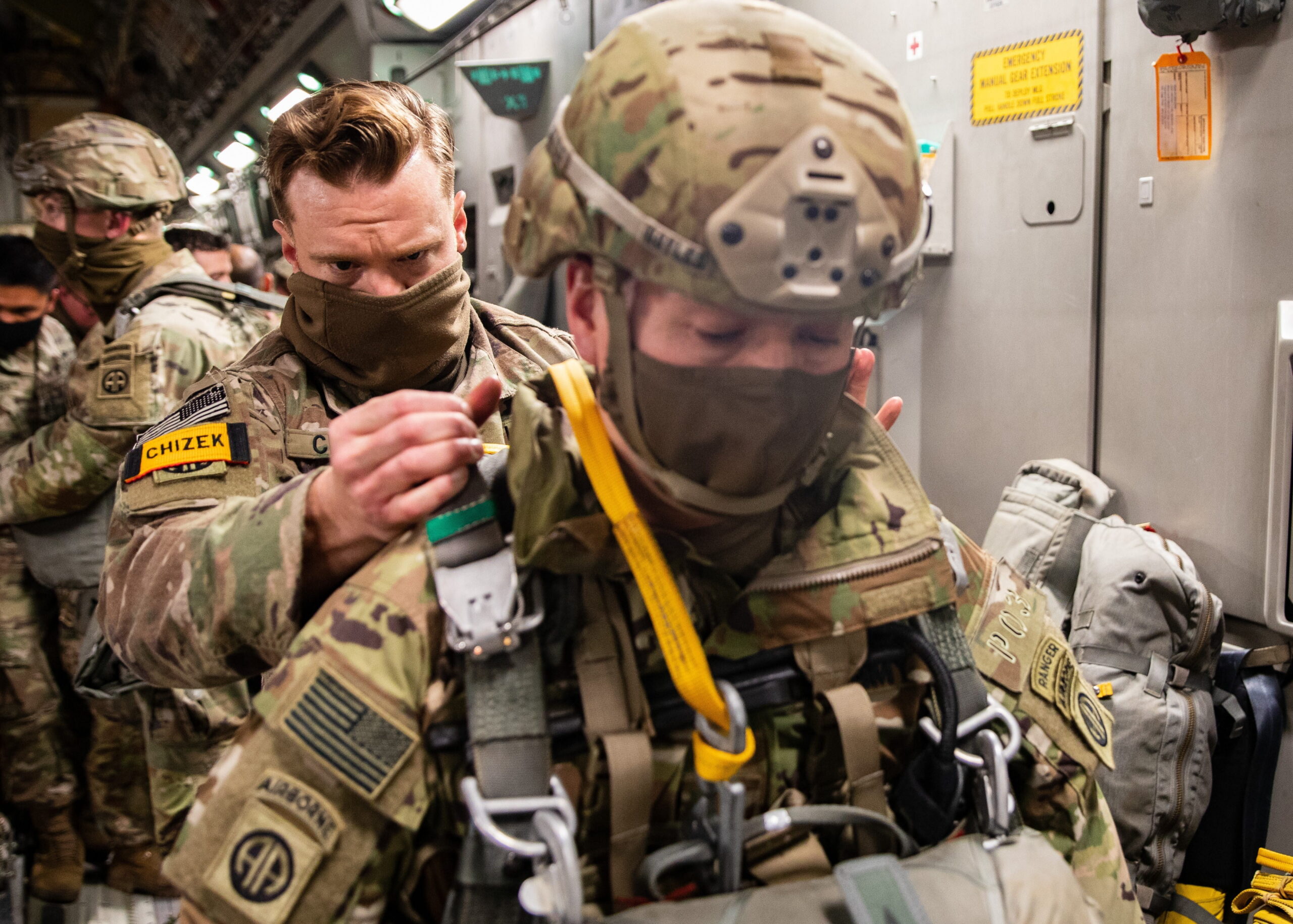
Rochester, NY/Washington, D.C: The reported order by Donald Trump to prepare elements of the 82nd Airborne Division for potential rapid deployment near or into Iran marks one of the most consequential escalatory signals in the ongoing 2026 U.S.–Iran confrontation. While no confirmed “jump order” into Iranian territory has yet been executed, the readiness posture itself carries deep military, diplomatic, and geopolitical implications.
Recent developments indicate that the Pentagon is preparing to deploy thousands of airborne troops to the Middle East, a force specifically designed for rapid insertion into hostile environments and seizure of strategic assets such as ports, airfields, or chokepoints like the Strait of Hormuz.
In strategic terms, this is not merely a defensive posture—it is a coercive signal, designed to give Washington the option of direct intervention on Iranian soil if maritime disruption continues.
The Strategic Logic behind the Move
From the perspective of the U.S. defense establishment, the potential deployment of airborne forces aligns with a broader objective: securing or reopening the Strait of Hormuz, through which roughly 20% of global oil flows.
The strait has become the central battleground in this conflict, with Iran threatening closure and the U.S. warning of devastating retaliation.
Donald Trump has repeatedly framed the war as a necessity to “defend the American people” and eliminate what he calls “imminent threats” from Iran, statements he has amplified through his posts on Truth Social.
In one such message, he emphasized that U.S. operations were “massive and ongoing” and aimed at neutralizing Iran’s military capabilities.
More recently, he shared intelligence claims about Iran’s missile reach, warning that Tehran could threaten U.S. and allied bases far beyond the region.
The logic is clear: airborne forces provide the fastest means to impose control over critical terrain—particularly if naval and air power alone fail to ensure freedom of navigation. In military doctrine, this is escalation dominance: maintaining the ability to rapidly increase pressure at any stage of the conflict.
Is This a Sound Military Decision?
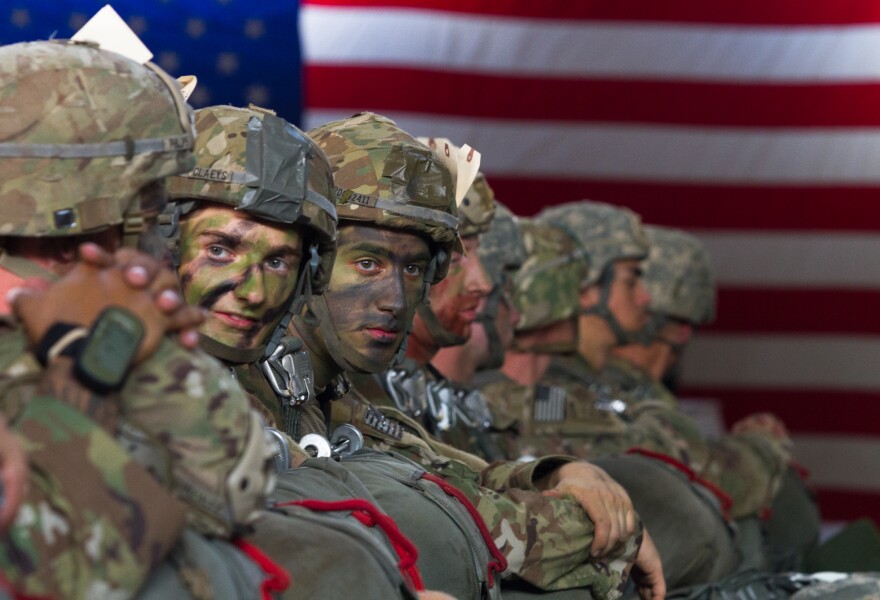
From a purely tactical standpoint, the move has merit. The 82nd Airborne Division is designed for precisely this type of contingency—rapid deployment, surprise insertion, and securing strategic objectives ahead of heavier forces.
If the U.S. were to attempt reopening the Strait by force, airborne troops could seize key coastal positions or infrastructure.
However, strategically, the risks are profound.
Iran is not Iraq or Afghanistan. It possesses a dense network of anti-access/area denial capabilities, including ballistic missiles, naval mines, drones, and fast-attack craft.
Even U.S. officials acknowledge that deploying ground troops near Iranian shores would be extremely risky given Tehran’s asymmetric warfare capabilities.
Moreover, such a move could transform a limited maritime confrontation into a full-scale ground war—something U.S. public opinion has shown little appetite for.
Polling suggests a majority of Americans oppose deeper military involvement, favoring rapid de-escalation.
Iran’s Reaction: Escalation and Deterrence
Tehran has responded with unmistakable defiance. The Islamic Revolutionary Guard Corps (IRGC) has warned that any U.S. escalation—particularly strikes on infrastructure or troop deployment—will trigger a complete closure of the Strait of Hormuz and attacks on U.S. and allied assets across the region.
Iranian leadership has framed the U.S. posture as coercion during negotiations. Officials have described American actions as “illegal and illegitimate,” emphasizing that military pressure will not force concessions.
This reflects a long-standing Iranian doctrine: resist under pressure, retaliate asymmetrically, and expand the battlefield geographically.
IRGC strategy in such a scenario would likely avoid direct conventional confrontation with airborne troops. Instead, it would rely on:
- Saturation missile strikes on staging bases
- Proxy attacks across Iraq, Syria, and the Gulf
- Mining operations and swarm tactics in the Strait
- Cyber and economic warfare
In essence, Iran would seek to make any U.S. ground presence unsustainable.
Impact on Diplomacy and Pakistan’s Mediation Efforts
Perhaps the most immediate casualty of this escalation is diplomacy.
There were indications that backchannel negotiations—reportedly involving intermediaries and possibly hosted in countries like Pakistan—were being explored. Donald Trump himself acknowledged “productive” discussions and even delayed planned strikes for five days to allow talks to proceed.
However, the signaling of airborne deployment fundamentally undermines trust. From Tehran’s perspective, negotiations under the shadow of an imminent invasion are talks under coercion. Iranian officials have already dismissed claims of progress as “fake” or exaggerated.
Pakistan’s potential role as a mediator becomes more fragile in this context. Islamabad traditionally maintains relations with both Washington and Tehran, but any perception that talks are a cover for military escalation could derail its diplomatic credibility.
Global and Regional Reactions
The international community has reacted with a mix of alarm and cautious alignment. A coalition of over 20 countries—including European and Gulf states—has expressed willingness to support efforts to secure maritime passage through the Strait. However, this support is largely conditional on avoiding full-scale war.
Middle Eastern states, particularly in the Gulf, face a dilemma. While they depend on U.S. security guarantees, they are also highly vulnerable to Iranian retaliation. Iranian threats have explicitly targeted infrastructure in countries hosting U.S. bases, raising fears of a region-wide conflict.
Meanwhile, global economic concerns are mounting. The disruption of oil flows has already driven prices sharply upward, with fears of a broader economic shock if the Strait remains contested.
Conclusion: A High-Risk Gamble
The preparation of the 82nd Airborne Division for potential operations near Iran is less about immediate invasion and more about strategic leverage. It is a signal—to Iran, to allies, and to global markets—that the United States is willing to escalate to secure its objectives.
Yet, this leverage comes with significant risks. It hardens Iran’s (position), complicates diplomatic pathways, and increases the (likelihood) of miscalculation. In conflicts of this nature, perception often matters as much as capability—and Tehran is likely to interpret airborne readiness not as deterrence, but as preparation for regime-threatening action.
Whether this move strengthens U.S. negotiating power or pushes the region closer to a wider war will depend on how both sides manage the narrow space between coercion and confrontation in the days ahead.