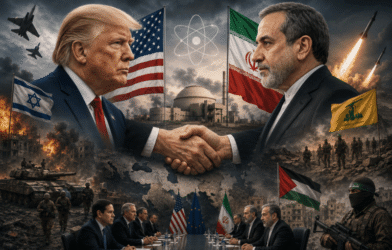
Chicago, IL: The fragile diplomatic opening between the United States and Iran appears to be entering a new phase, with both sides signaling willingness—though not certainty—toward a second round of talks.
After the first round of discussions hosted in Islamabad failed to produce a breakthrough, attention has now shifted toward whether renewed engagement can reduce tensions or whether the process will stall under the weight of long-standing mistrust.
What distinguishes the current moment is the parallel track of traditional diplomacy and high-intensity political messaging on social media, particularly from US President Donald Trump, whose posts on X (formerly Twitter) and Truth Social have become an informal extension of Washington’s negotiation posture.
President Donald Trump has used his social media platforms to reinforce a dual message of pressure and conditional engagement.
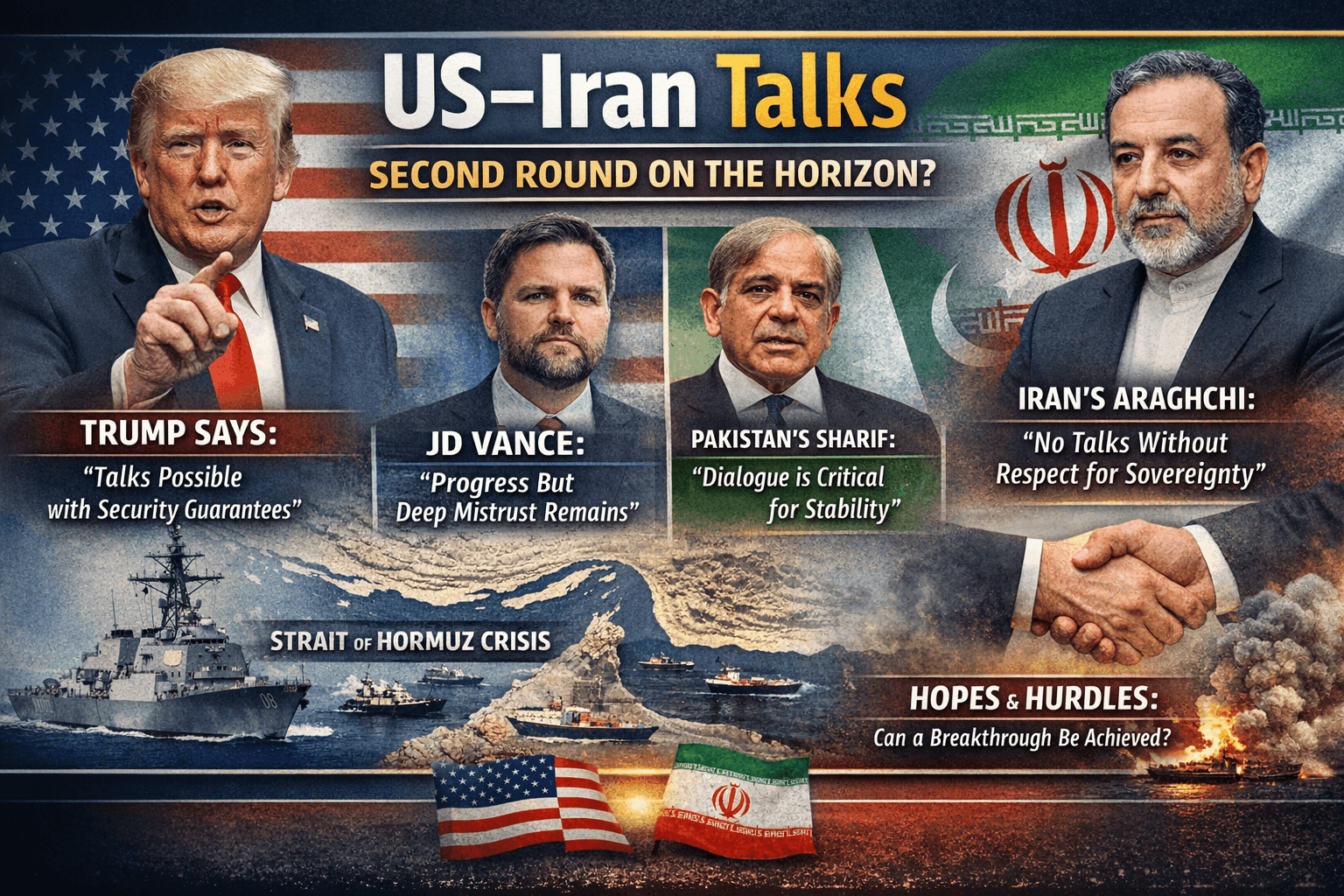
In recent posts, he has suggested that a second round of Iran talks remains possible, but only under what he describes as “clear security guarantees” and “freedom of maritime passage through critical waterways.”
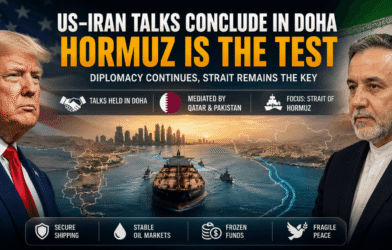
Trump’s messaging has consistently linked diplomacy to enforcement in the Strait of Hormuz, where tensions remain elevated due to increased naval monitoring and disruptions in commercial shipping routes.
While avoiding formal diplomatic language, his tone has emphasized that negotiations will not proceed without what he calls “real compliance on regional stability and nuclear limitations.”
At the same time, Trump’s statements indicate that he is keeping the diplomatic door open, framing potential talks as part of a broader strategy of “peace through strength,” rather than unconditional engagement.
US Vice President JD Vance, who led the American delegation in the first round of talks, has offered a more structured assessment of the diplomatic process.
In his public remarks following the Islamabad discussions, Vance acknowledged that while no final agreement was reached, “the talks were not without substance.”
He emphasized that US–Iran mistrust remains the central obstacle, stating that it “cannot be resolved overnight,” but also noted that “important areas of understanding were identified that could form the basis of a second round.”
Vance’s position reflects a cautious optimism within parts of the US administration, suggesting that while strategic disagreements remain wide, diplomatic channels are not fully exhausted.
Iranian Foreign Minister Abbas Araghchi has responded to the possibility of renewed talks with measured skepticism. He has reiterated that Iran is not opposed to dialogue in principle, but insists that negotiations must be based on “mutual respect and recognition of sovereignty.”
Araghchi has rejected what Tehran considers externally imposed conditions, particularly those related to nuclear restrictions and regional military posture.
However, Iranian statements have also stopped short of closing the door entirely on further engagement, indicating that Tehran is prepared to continue diplomatic contact if its core security concerns are acknowledged.
This dual stance—resistance paired with openness—reflects Iran’s broader strategy of maintaining negotiating leverage while avoiding full diplomatic breakdown.
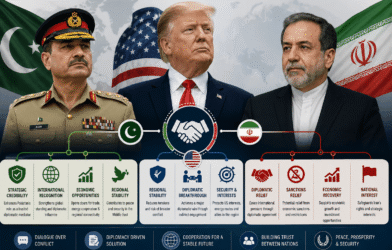
Pakistan continues to position itself as a facilitator of dialogue between Washington and Tehran. Prime Minister Shahbaz Sharif has reiterated that Islamabad remains committed to supporting peace efforts, emphasizing that regional escalation would have “severe consequences for global trade and energy security.”
Sharif has publicly encouraged both sides to return to the negotiating table, describing the initial talks as “a necessary but incomplete step toward de-escalation.”
Pakistan’s diplomatic role has been widely viewed as crucial in maintaining indirect communication channels; particularly as direct US–Iran relations remain deeply constrained.
Despite diplomatic movement, analysts remain divided on whether genuine thawing is underway. On one hand, the continuation of dialogue itself marks a significant development after years of limited engagement. The willingness to consider a second round suggests that neither side is currently prepared to allow complete diplomatic collapse.
On the other hand, the structural realities remain largely unchanged. US policy continues to prioritize strict limitations on Iran’s nuclear and regional activities, while Iran continues to resist what it views as external pressure and coercion.
The situation in the Strait of Hormuz further complicates the picture. Heightened maritime tensions and disruptions in shipping have added an economic and security dimension that makes negotiations more urgent—but also more difficult.
If a second round of US–Iran talks does take place, expectations are likely to remain modest. Rather than a comprehensive agreement, diplomats anticipate discussions focused on narrowing differences, establishing communication protocols, and possibly agreeing on limited confidence-building measures.
The most realistic outcome, according to diplomatic observers, would be incremental progress rather than a breakthrough. Issues such as nuclear oversight, sanctions relief, and maritime security remain deeply contentious and unlikely to be resolved in a single negotiation cycle.
The emerging phase of US–Iran engagement is defined by a paradox: negotiations are continuing despite a profound lack of trust. Statements from Trump, JD Vance, Araghchi, and regional leaders like Shahbaz Sharif all reflect this dual reality—pressure and diplomacy advancing simultaneously.
Whether the second round of talks leads to meaningful progress or simply postpones escalation will depend on whether both sides can translate cautious engagement into structured compromise. For now, the ice has not fully melted—but it is no longer completely frozen either.