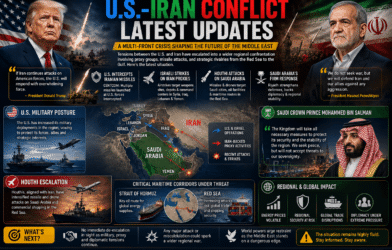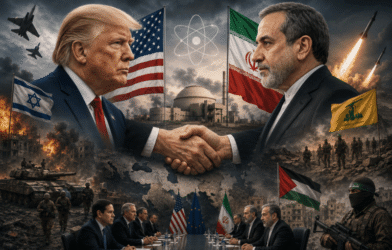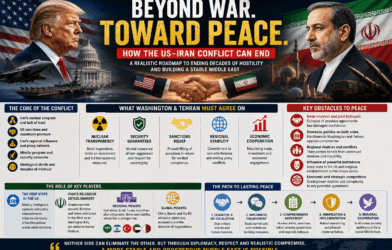
Rochester, NY: The Strait of Hormuz, the world’s most strategically sensitive maritime chokepoint, has once again become the epicenter of a dangerous confrontation between the United States military and Iran’s Islamic Revolutionary Guard Corps (IRGC).
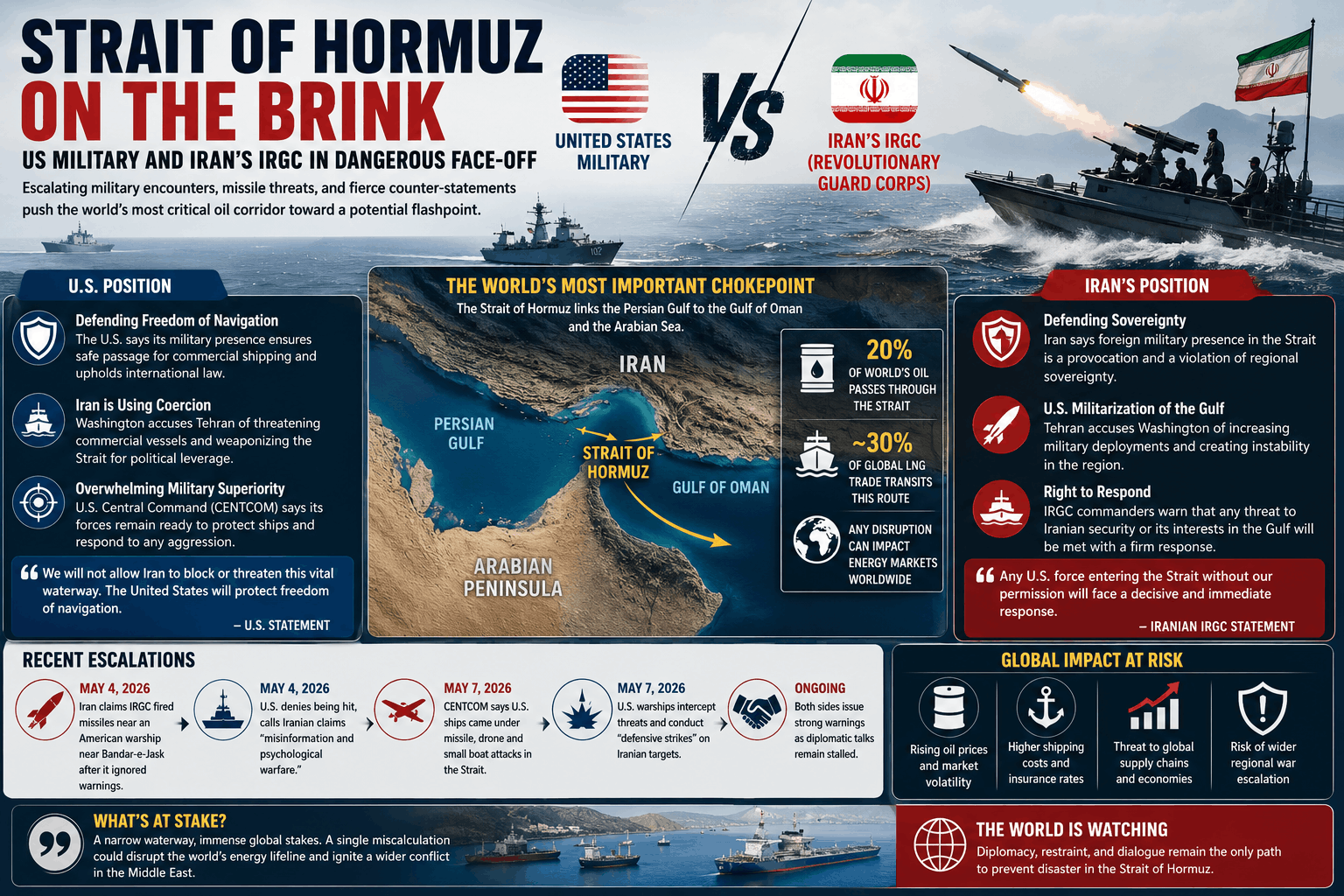
The narrow waterway, through which nearly one-fifth of the world’s oil and a significant portion of global liquefied natural gas supplies pass, is no longer merely a commercial route. In 2026, it has evolved into a volatile battlefield of military signaling, political brinkmanship, and competing narratives between Washington and Tehran.
The current crisis escalated dramatically during the first week of May 2026, when both sides exchanged accusations, military threats, and contradictory statements regarding confrontations in and around the Strait.
The growing tension has pushed global markets into uncertainty, raised fears of a wider Middle East war, and exposed how rapidly regional instability can threaten the global economy.
The confrontation intensified after President Donald Trump announced what Washington called “Project Freedom,” a U.S.-led initiative aimed at reopening commercial navigation routes and escorting stranded ships through the Strait of Hormuz.
Trump declared that the United States would ensure freedom of navigation and prevent Iran from using the waterway as geopolitical leverage. Tehran, however, viewed the initiative as a direct military provocation and a violation of regional sovereignty.
Iran’s military leadership responded with unusually sharp warnings. Ali Abdollahi, a senior Iranian commander, publicly declared that American naval forces entering the Strait without coordination with Tehran would face direct attack.
Iranian authorities warned commercial vessels not to move through the region unless they complied with Iranian security instructions. These statements reflected the increasingly dominant role of the IRGC in shaping Iran’s regional strategy, often overshadowing diplomatic channels and civilian officials.
The situation became even more explosive on May 4, when Iranian state-linked media claimed that IRGC forces had fired missiles toward an American warship operating near Bandar-e-Jask after it allegedly ignored Iranian warnings.
Tehran portrayed the incident as a demonstration of Iranian military resolve and claimed that the American vessel had been forced to retreat. The United States Central Command (CENTCOM), however, categorically denied that any U.S. ship had been hit, dismissing Iran’s claims as misinformation and psychological warfare.
This contradiction highlighted one of the most dangerous aspects of the crisis: the information war. Both governments are attempting to shape domestic and international perceptions while avoiding the appearance of weakness.
In Iran, state-controlled media has framed the confrontation as proof that the Islamic Republic can challenge American military power directly. In Washington, officials insist that the U.S. Navy continues to dominate regional waters and retains overwhelming military superiority.
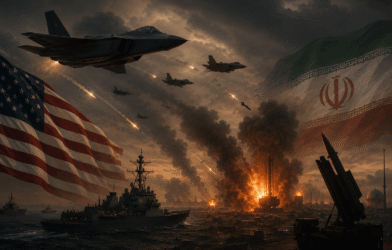
The military tensions escalated further on May 7, when CENTCOM announced that U.S. naval destroyers transiting through the Strait had come under missile, drone, and small boat attacks launched by Iranian forces.
According to the American account, U.S. warships intercepted the incoming threats and responded with “defensive strikes” targeting Iranian missile launch sites, drone infrastructure, and command-and-control facilities.
Tehran, meanwhile, accused the United States of violating ceasefire understandings and attacking civilian and commercial assets near Iranian waters.
The IRGC has attempted to project an image of strategic control over the Strait. Iranian commanders repeatedly emphasize that the Persian Gulf and Hormuz fall within Iran’s defensive sphere of influence.
Large-scale IRGC naval drills conducted earlier in 2026 showcased missile systems, drones, fast attack boats, and anti-ship capabilities designed specifically for asymmetric warfare against larger naval powers.
Tehran’s strategy is built not on matching American military strength conventionally, but on making the Strait too dangerous and costly for uninterrupted Western military operations.
Washington, however, views Iranian actions as maritime coercion and an attempt to weaponize global energy supplies. American officials argue that Iran is using threats against commercial shipping to pressure the international community into easing sanctions and accepting Tehran’s political demands.
President Trump has repeatedly insisted that the United States will not allow Iran to “blackmail” the world through control of the Strait.
The counter-statements from both capitals reveal fundamentally different narratives. The United States presents itself as defending international law, freedom of navigation, and global economic stability. Iran portrays itself as defending regional sovereignty against foreign military encroachment.
While Washington accuses Tehran of destabilizing global trade routes, Iran accuses America of militarizing the Gulf and provoking confrontation to maintain strategic dominance in the Middle East.
The global consequences of this standoff are already visible. Oil prices have surged sharply as fears grow that prolonged instability could disrupt global energy flows. Insurance costs for commercial shipping through the Gulf have risen significantly, while international shipping companies remain hesitant to move vessels through contested waters.
Financial markets have also reacted nervously, with investors increasingly concerned that a direct military clash could ignite a broader regional conflict involving Israel, Gulf Arab states, and American allies.
The Strait of Hormuz crisis also reflects a broader geopolitical transformation. The confrontation is no longer solely about maritime security or nuclear negotiations. It has become part of a larger struggle over influence in the Middle East, the future of American military dominance in the Gulf, and Iran’s ambition to establish itself as a regional power capable of resisting Western pressure.
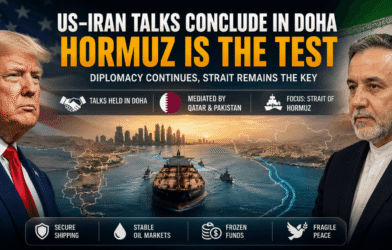
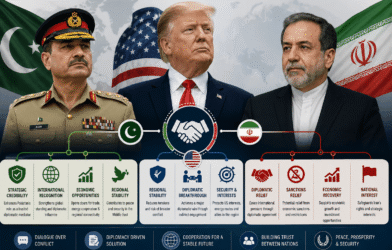
Despite periodic diplomatic contacts and temporary pauses in military operations, mistrust between both sides remains extraordinarily deep.
President Trump briefly suspended aspects of “Project Freedom” to allow negotiations space to continue, but both Washington and Tehran remain far apart on core demands involving sanctions, uranium enrichment, regional security, and naval operations in Hormuz.
The danger lies not only in deliberate escalation but also in miscalculation. In the crowded and heavily militarized waters of the Strait of Hormuz, a single missile launch, drone strike, or naval misunderstanding could rapidly spiral into a larger regional war.
Both the United States and the IRGC are operating in extremely close proximity, armed with advanced weaponry and driven by political leaderships unwilling to appear weak before domestic audiences.
For now, the Strait remains a symbol of fragile global stability — a narrow waterway carrying not only oil and commerce, but also the immense weight of geopolitical confrontation between two determined adversaries.
Click here and stay tuned for more updates!