Peace Through
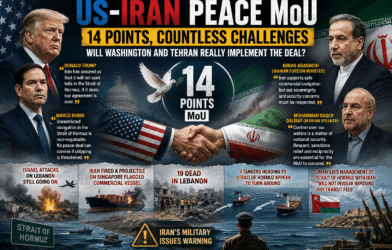
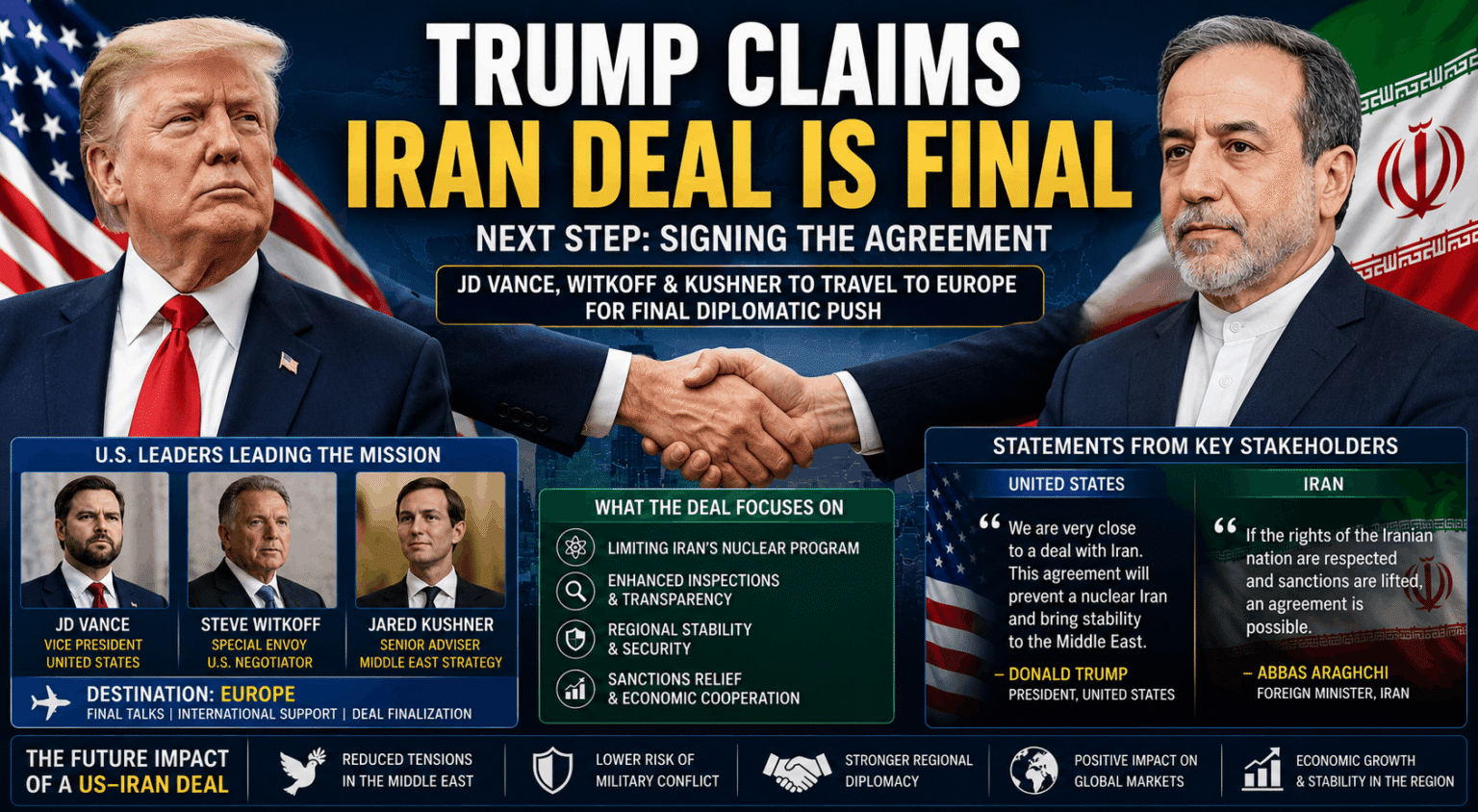
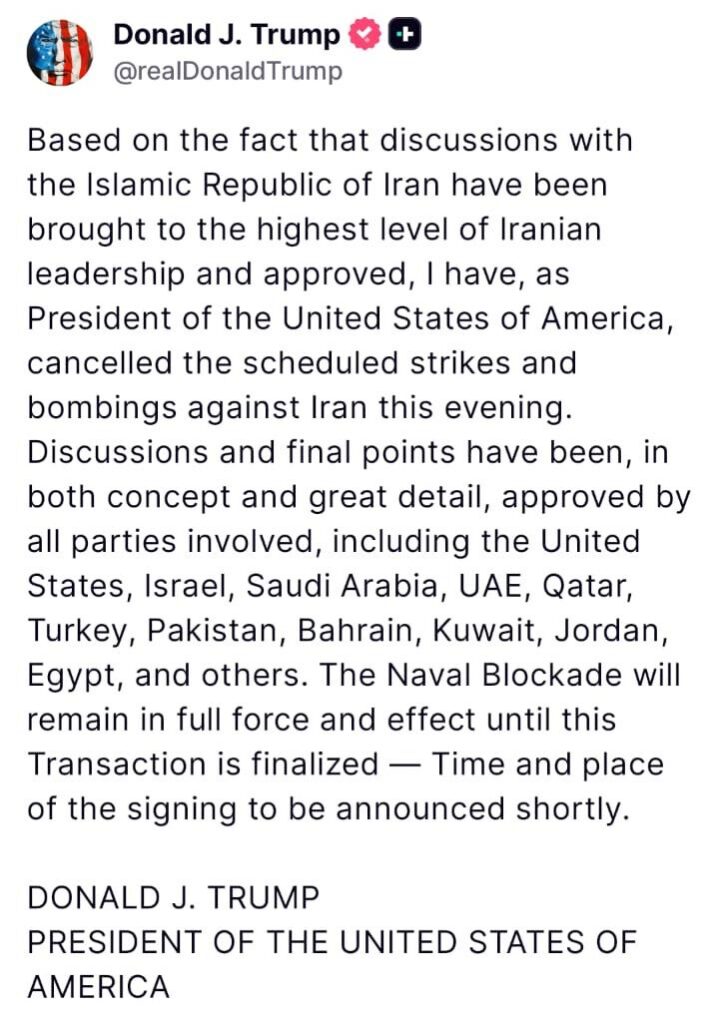
Rochester, NY: United States President Donald Trump has once again placed diplomacy at the center of his Iran strategy, claiming that a comprehensive agreement between Washington and Tehran is almost complete and that the two sides are approaching the final stage before signing.
Trump’s announcement has created a wave of speculation across global capitals because any breakthrough between the United States and Iran would represent one of the most significant geopolitical developments in the Middle East in recent years.
Trump has repeatedly presented himself as a leader who prefers negotiation over prolonged military confrontation. While speaking about the Iran issue, he claimed that a deal was “very close” and suggested that the remaining issues were technical rather than political.
His message reflects a broader strategy: avoiding another costly conflict in the Middle East while attempting to secure restrictions on Iran’s nuclear ambitions and reduce regional tensions.
However, the announcement has also raised critical questions. Is Tehran truly prepared to accept the American proposal, or is Iran using negotiations as a way to ease economic pressure while protecting its strategic interests?
The answer will determine whether this moment becomes a historic diplomatic achievement or another failed attempt at engagement between two longtime adversaries.
JD Vance, Steve Witkoff and Jared Kushner’s European Mission: The Final Diplomatic Push
The reported planned European engagement by Vice President JD Vance, Special Envoy Steve Witkoff and Jared Kushner indicates that the Trump administration believes the negotiations have entered a decisive phase.
Europe has historically played a central role in Iran diplomacy. Countries such as France, Germany and the United Kingdom were key participants in the 2015 nuclear agreement and have consistently argued that diplomacy remains the most effective tool to prevent nuclear escalation.
A European-based diplomatic effort could therefore be aimed at creating international support, addressing remaining disagreements and ensuring that any agreement receives broader legitimacy.
The involvement of Kushner is particularly significant because he previously played a major role in Trump’s Middle East diplomacy, especially the Abraham Accords between Israel and several Arab states.
His participation suggests that Washington may be viewing the Iran agreement not only through the nuclear lens but also as part of a wider regional security framework.
What Does the United States Want From Iran?
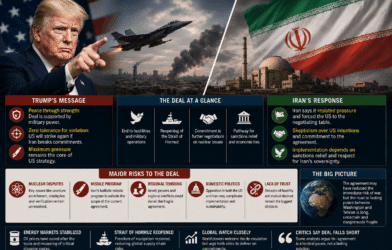
The Trump administration’s central demand remains focused on preventing Iran from developing a nuclear weapon capability.
Washington wants strict limitations on uranium enrichment, expanded international inspections and guarantees that Iran’s nuclear program remains peaceful.
President Trump has repeatedly argued that Iran should never obtain nuclear weapons.
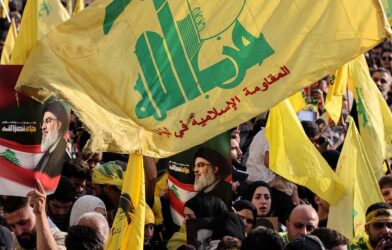
His administration has also linked regional stability to limiting Iran’s support for armed groups across the Middle East, including movements operating in Lebanon, Iraq, Syria and Yemen.
The challenge for Washington is that Iran views these issues differently. Tehran considers its nuclear program a sovereign right and argues that its regional partnerships are part of its national security strategy.
Any agreement that attempts to include Iran’s missile program or regional influence would face much greater resistance from Iranian leadership.
Iran’s Position: Agreement or Tactical Negotiation?
Iran has not publicly confirmed that it has accepted the American proposal in its entirety.
Tehran has indicated willingness to continue negotiations, but Iranian officials have repeatedly emphasized that any agreement must respect Iran’s sovereignty, remove economic sanctions and provide guarantees that Washington will not withdraw from the deal again.
Iranian Foreign Minister Abbas Araghchi has maintained that diplomacy is possible if the United States demonstrates seriousness and avoids imposing unacceptable conditions.
Iranian leadership has repeatedly stated that Tehran will not accept restrictions that undermine its national interests or security capabilities.
The memory of the previous nuclear agreement remains a major obstacle. In 2018, President Trump withdrew the United States from the Joint Comprehensive Plan of Action, arguing that the agreement was insufficient because it did not address Iran’s missile program and regional activities.
Iran responded by gradually reducing compliance with several nuclear restrictions.
For Tehran, any new agreement would require confidence that future American administrations will honor the commitments.
For Washington, the challenge is ensuring that Iran does not use negotiations simply to gain sanctions relief while continuing activities the United States considers destabilizing.
The Regional Impact: Could a US-Iran Deal Transform Middle East Security?
A successful agreement between Washington and Tehran could dramatically reshape the Middle East.
The immediate consequence would likely be a reduction in military tensions and a lower risk of direct confrontation between Iran and the United States or its allies.
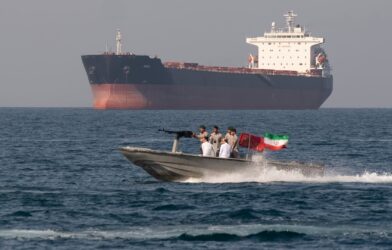
Countries across the Gulf region, including Saudi Arabia and the United Arab Emirates, have closely watched the negotiations because any US-Iran confrontation directly affects regional security, energy markets and trade routes.
A diplomatic breakthrough could also influence conflicts in Lebanon, Syria, Iraq and Yemen.
Reduced tensions between Washington and Tehran could create space for political negotiations and decrease the intensity of proxy conflicts that have destabilized the region for decades.
However, regional allies of the United States, particularly Israel, would closely examine any agreement.
Israel has historically opposed agreements that it believes leave Iran with the ability to rebuild its nuclear capabilities in the future.
Israeli leadership has argued that only a comprehensive approach addressing nuclear capabilities, missiles and regional military networks can create lasting security.
The Biggest Challenge: Trust between Washington and Tehran
The greatest obstacle is not the technical details of the agreement but the deep mistrust between the two governments.
The United States believes Iran has repeatedly exploited diplomatic openings to advance strategic goals. Iran believes Washington has repeatedly changed policy and cannot be trusted to maintain commitments.
President Trump’s supporters argue that his negotiating style, combining economic pressure with diplomatic outreach, can produce a stronger agreement than previous administrations achieved.
Critics argue that diplomacy requires consistency and long-term guarantees, not only pressure tactics.
For Iran, accepting a deal with Trump carries political risks domestically. Hardline factions within Iran may accuse the government of making excessive concessions to Washington.
At the same time, economic difficulties caused by sanctions create pressure on Iranian leadership to seek relief.
Can Trump Achieve the “Peace Through Deal-Making” Strategy?
President Trump has built much of his foreign policy identity around negotiating major agreements, from trade deals to Middle East diplomacy.
A successful Iran agreement would become one of the defining achievements of his presidency and could significantly alter his global image.
But the success of the agreement will depend on implementation rather than announcements.
Many international agreements have collapsed not because leaders failed to sign documents, but because they failed to build mechanisms of trust, verification and long-term cooperation.
If Washington and Tehran succeed, the Middle East could enter a period of reduced confrontation, greater economic cooperation and improved regional stability.
If negotiations fail, the consequences could be severe, including renewed sanctions, military escalation and a deeper crisis involving nuclear security.
The coming diplomatic moves in Europe will therefore represent more than a routine negotiation. They will determine whether the United States and Iran are entering a new era of strategic competition management or preparing for another cycle of confrontation.
The world is watching whether Trump’s promise of ending wars can translate into a durable peace agreement with one of America’s most difficult adversaries.
For ongoing coverage and detailed analysis of international affairs, visit The Variant regularly for the latest updates.