


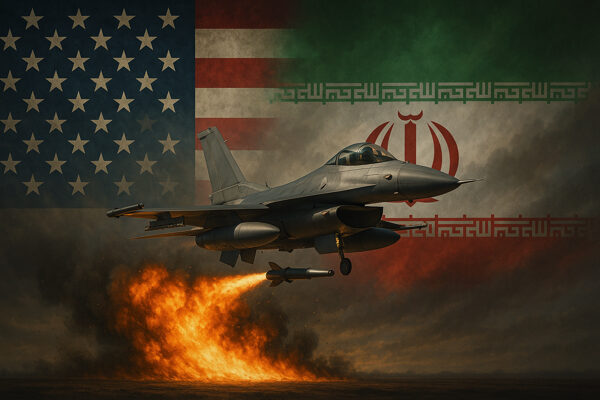
A potential United States military strike on Iran would represent a watershed moment in contemporary international relations, reshaping not only Middle Eastern security but also the global balance of power.
Unlike past regional conflicts, a US–Iran confrontation would unfold in a multipolar environment, where major powers and key regional states possess both the incentive and capacity to shape outcomes beyond the battlefield.
The strategic responses of China, Russia, Pakistan, and Saudi Arabia would be decisive in determining whether such a conflict remains limited or cascades into a prolonged geopolitical and economic crisis.
Washington’s stated justification for military action against Iran has consistently centered on preventing Tehran from acquiring nuclear weapons.
US President Donald Trump has repeatedly warned that “Iran will never be allowed to have a nuclear weapon,” arguing that deterrence must be backed by credible force.
In a previous address, he framed Iran as “the world’s leading state sponsor of terror,” a characterization that continues to inform US strategic thinking. American defense officials estimate that Iran possesses thousands of ballistic missiles and a network of allied militias capable of striking US interests across the Middle East.
Tehran, however, rejects these accusations and frames US pressure as unlawful coercion. Supreme Leader Ayatollah Ali Khamenei has warned that “any military aggression against Iran will be met with a severe and regrettable response,” while President Ebrahim Raisi stated that Iran would not negotiate “under threat or sanctions.”
Iranian officials argue that their nuclear program is peaceful and that Western actions, including the US withdrawal from the 2015 nuclear deal, have undermined diplomacy. This clash of narratives sets the stage for a confrontation with global ramifications.
China’s response would be shaped primarily by strategic economics. Beijing is Iran’s largest energy partner and a central supporter of Tehran’s integration into alternative global financial and trade networks. Despite US sanctions, China has continued importing over one million barrels of Iranian oil per day, according to international shipping and energy assessments.
A US strike would therefore threaten China’s energy security and its broader Belt and Road investments across West Asia. President Xi Jinping has repeatedly emphasized that “dialogue and negotiation are the only correct path,” warning that military escalation would destabilize global markets.
In practical terms, China would likely respond by mobilizing diplomatic pressure at the United Nations, increasing economic support to Iran, and positioning itself as a stabilizing counterweight to US coercion.
Russia would approach a US strike through the lens of strategic rivalry with Washington. Moscow views Iran as a critical partner in limiting US influence across the Middle East, particularly in Syria and Central Asia. President Vladimir Putin has cautioned that an attack on Iran would have “catastrophic consequences for the region,” echoing Russia’s long-standing opposition to regime-change wars.
While direct military engagement with US forces remains unlikely, Russia could intensify intelligence cooperation, expedite arms transfers, and use the crisis to further challenge Western dominance in global diplomacy. For Moscow, such a conflict would validate its argument that US unilateralism is a primary source of international instability.
Pakistan’s role would be more restrained but strategically important. Sharing a border with Iran and already grappling with internal security pressures, Pakistan would seek to prevent regional spillover. Islamabad has consistently opposed military action against Iran, emphasizing stability and dialogue.
Former Prime Minister Imran Khan warned that “another war in the Middle East will only push the Muslim world further into chaos.” Pakistan would almost certainly deny any logistical support for a US strike while quietly engaging in regional diplomacy to contain escalation. Its overriding concern would be refugee flows, sectarian tensions, and economic disruption, particularly given its reliance on Gulf remittances.
Saudi Arabia’s position would be the most complex. As a US security partner and Iran’s principal regional rival, Riyadh has long viewed Tehran’s missile program and regional influence as existential threats. Yet Saudi Arabia has also become acutely aware of its vulnerability. The 2019 attacks on its oil facilities briefly removed nearly 5 percent of global oil supply, underscoring the kingdom’s exposure.
Crown Prince Mohammed bin Salman has acknowledged that war with Iran would be devastating, warning that “any conflict will collapse the global economy.” Since then, Saudi Arabia has pursued de-escalation, including restoring diplomatic ties with Iran. In the event of a US strike, Riyadh would likely focus on defensive measures, avoiding overt participation while prioritizing the protection of energy infrastructure.
The global oil market would be among the first and most severely affected arenas. Iran sits astride the Strait of Hormuz, a chokepoint through which approximately 20 percent of the world’s oil and a significant portion of liquefied natural gas transit daily.
Even the perception of conflict could push oil prices sharply upward. Energy analysts estimate that a sustained disruption could drive prices beyond $120 per barrel, with immediate inflationary consequences for import-dependent economies in Europe and Asia. Insurance premiums for shipping would surge, supply chains would be disrupted, and global growth projections would likely be revised downward.
Such economic shockwaves would amplify the political impact of the conflict. China and India, as major energy importers, would face immediate cost pressures, while oil exporters could experience short-term revenue gains coupled with long-term instability.
The International Monetary Fund has previously warned that major Middle Eastern conflicts have the potential to shave significant percentages off global GDP growth, particularly when energy markets are already strained.
Taken together, these dynamics suggest that a US strike on Iran would not remain a contained military operation. It would activate a network of strategic responses, economic disruptions, and diplomatic confrontations extending far beyond the Middle East.
While Washington may calculate that limited force could restore deterrence, history indicates that such actions often produce unintended consequences in a fragmented international system.
For policymakers, the central question is not whether the United States possesses the capability to strike Iran, but whether the international system is prepared to absorb the consequences.
The reactions of China, Russia, Pakistan, and Saudi Arabia would collectively shape the trajectory of any confrontation, determining whether it becomes a brief show of force or a defining rupture in the global order.







