


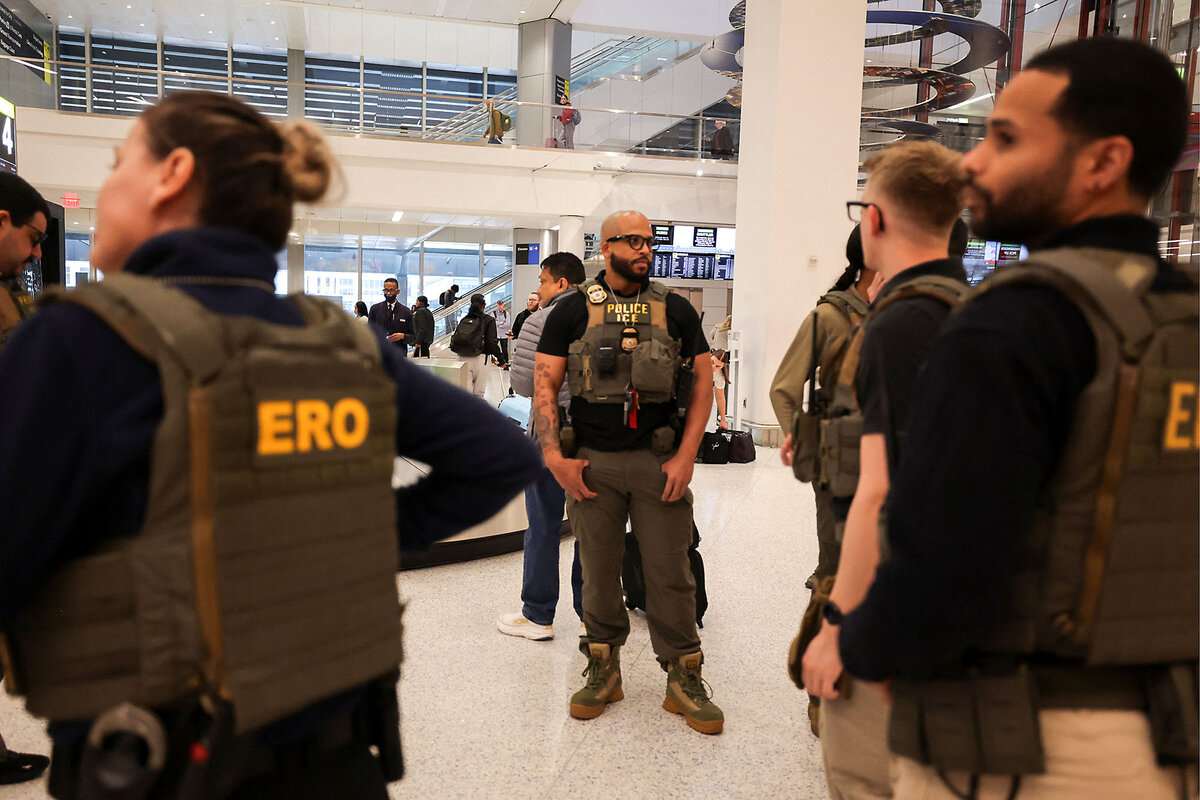
Rochester, NY: Anxieties about Airport Security have reached a boiling point, a litmus test for Trump administration leadership, policy interests, and partisan split has emerged from the protracted situation at U.S. airports. While the White House is working to restore TSA workers’ pay after weeks of budget disruption, a new and controversial reality is emerging: airports may continue to be staffed by Immigration and Customs Enforcement (ICE) officers, who were originally deployed as a temporary measure, for the foreseeable future.
This news breaks during the United States’ longest government shutdown ever, which has lasted more than six weeks and exposed deep-seated problems with governmental collaboration.
The situation started when thousands of TSA employees were underpaid due to a budget disagreement between Republicans and Democrats, which was mostly about immigration enforcement measures. This led to widespread resignations and absences from work and caused major delays in air travel around the country.
ICE Deployment: A New Normal for a Temporary Solution
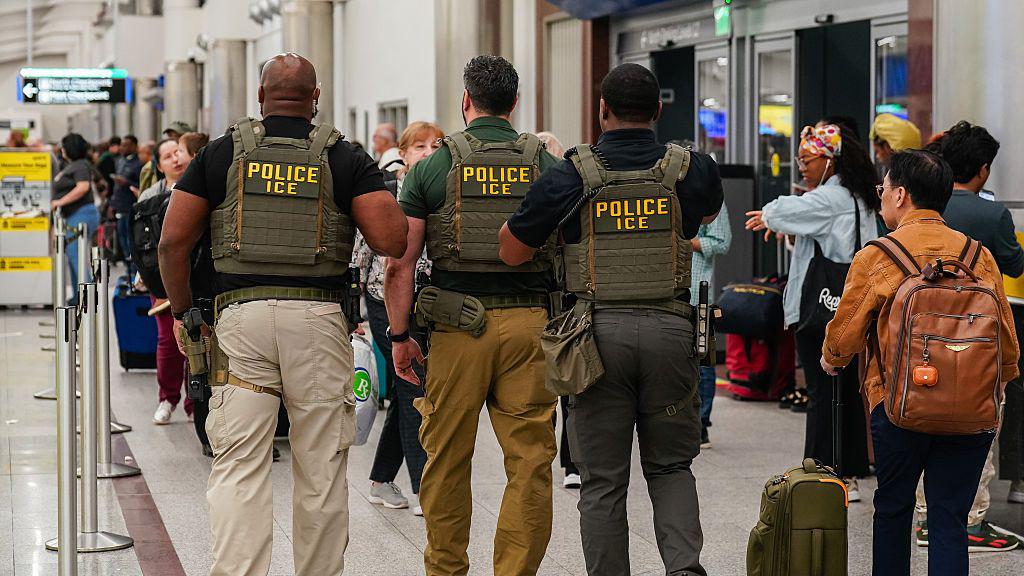
Deploying ICE agents to major airports was first used as a backup plan to assist overworked TSA officials due to a fall in staffing numbers. New remarks from high-ranking officials, however, raise the possibility that this stopgap measure may continue much beyond the return of TSA wages.
The presence of ICE at airports will not cease just because TSA employees are now getting paid, according to Tom Homan, who is acting as the head of border enforcement for the administration.
He instead stressed that ICE officers would stay “until the airports feel like they are 100%,” highlighting a security-first strategy that puts operational stability ahead of speedy removal.
This stance is reflective of the administration’s larger claim that reestablishing wages would not end the issue on its own. Airport security systems are still struggling due to the hundreds of TSA personnel who have left and the many more who are unsure about returning to work.
According to reports, ICE’s involvement may last for longer than expected since retraining employees might take months and morale is poor.
Delays, resignations, and public frustration indicate a system that is under stress
All throughout the nation, people are seeing the real-life effects of the crisis. People are waiting in line to clear security at airports for hours, which is unusual.
Unpaid salaries and financial difficulties have caused staffing shortages, which have compelled TSA operations to cut down. As a result, ICE agents have been assigned to cover these gaps.
However, some still disagree on how well this replacement works. Some people think that ICE officers can’t do the specialized jobs that TSA agents do since their training is more focused on immigration enforcement than aviation security.
Using ICE during peak flight times would jeopardize efficiency and safety, according to aviation professionals and unions.
Meanwhile, as the crisis reveals more systemic failings in administration, public dissatisfaction has only increased. The airline industry is feeling the effects of many economic pressures and geopolitical concerns, which is causing delays, higher ticket costs, and overall anxiety for travelers.
Discourse on Politics and the Nation
All sides of the political spectrum have responded strongly to the crisis. Some Republicans who are close to the president have spoken out in favor of keeping ICE in the country, arguing that it is essential for the safety of the country.
Reducing enforcement capabilities at airports, according to supporters, would be irresponsible at this moment of heightened global threat perception.
Democratic Party officials, in contrast, have been rather critical of the program. According to Senator Chuck Schumer, who has leveled accusations of “mismanaging a preventable crisis” on the government, the dependence on ICE is indicative of a more systemic problem within the Department of Homeland Security.
Senator Elizabeth Warren has also voiced her disapproval of what she terms as “a failure of basic governance” in the allocation of funds for immigration enforcement rather than for vital services like airport security.
To take it a step further, prominent progressives like Bernie Sanders have framed the crisis as proof of structural inequity. According to Sanders, “distorted national priorities” weaken public confidence since the government may support ICE activities but TSA personnel go underpaid.
Views from the Opposition: Authority, Responsibility, and Policy
Arguments on the other side center on larger issues of policy and responsibility, rather than narrow operational problems.
Democrats have maintained their stance that calls for improvements within ICE, such as more monitoring and restrictions on enforcement techniques, are directly related to the budget standoff. One major reason the shutdown has lasted longer than expected is their insistence on certain changes before approving any funds.
According to these critics, the persistent presence of ICE at airports represents an overreach of enforcement power into areas that have hitherto been handled by civilian security services.
Some worry that this change might lead to a more militaristic approach to domestic security and cause institutional borders to become more porous, which could affect the country in the long run.
The human toll of the crisis has also been highlighted by opposition leaders. Legislators have accused the government of putting politically divisive measures ahead of the financial hardships experienced by TSA personnel, many of whom have gone without pay for several weeks.
Government Policy and Its Far-Reaching Consequences
A blend of crisis management and political strategy characterizes the approach used by the Trump administration. By restoring TSA pay through executive action while maintaining ICE deployment, the White House appears to be addressing immediate operational concerns without conceding on broader policy disputes.
The administration can show it is responsive while still having some negotiating power with Congress thanks to this two-pronged strategy. But there are dangers involved as well. Political rifts and claims that the administration is putting an emphasis on enforcement rather than institutional stability might be exacerbated by the ongoing use of ICE.
In sum: the problem extends beyond airports
In the end, there are factors beyond logistics and personnel that determine whether ICE officials stay at airports. It encapsulates a broader struggle over governance, priorities, and the role of federal agencies in American public life.
As TSA workers begin to receive their long-delayed pay, the expectation might have been a return to normalcy. On the contrary, ICE’s continued presence at airports shows that the situation is far from over. Structural workforce challenges, political deadlock, and competing visions of national security continue to shape the situation.
In this sense, America’s airports have become a microcosm of a larger national debate—one that will likely continue to unfold in Congress, in public opinion, and in the daily experiences of millions of travelers navigating an increasingly uncertain system.







