


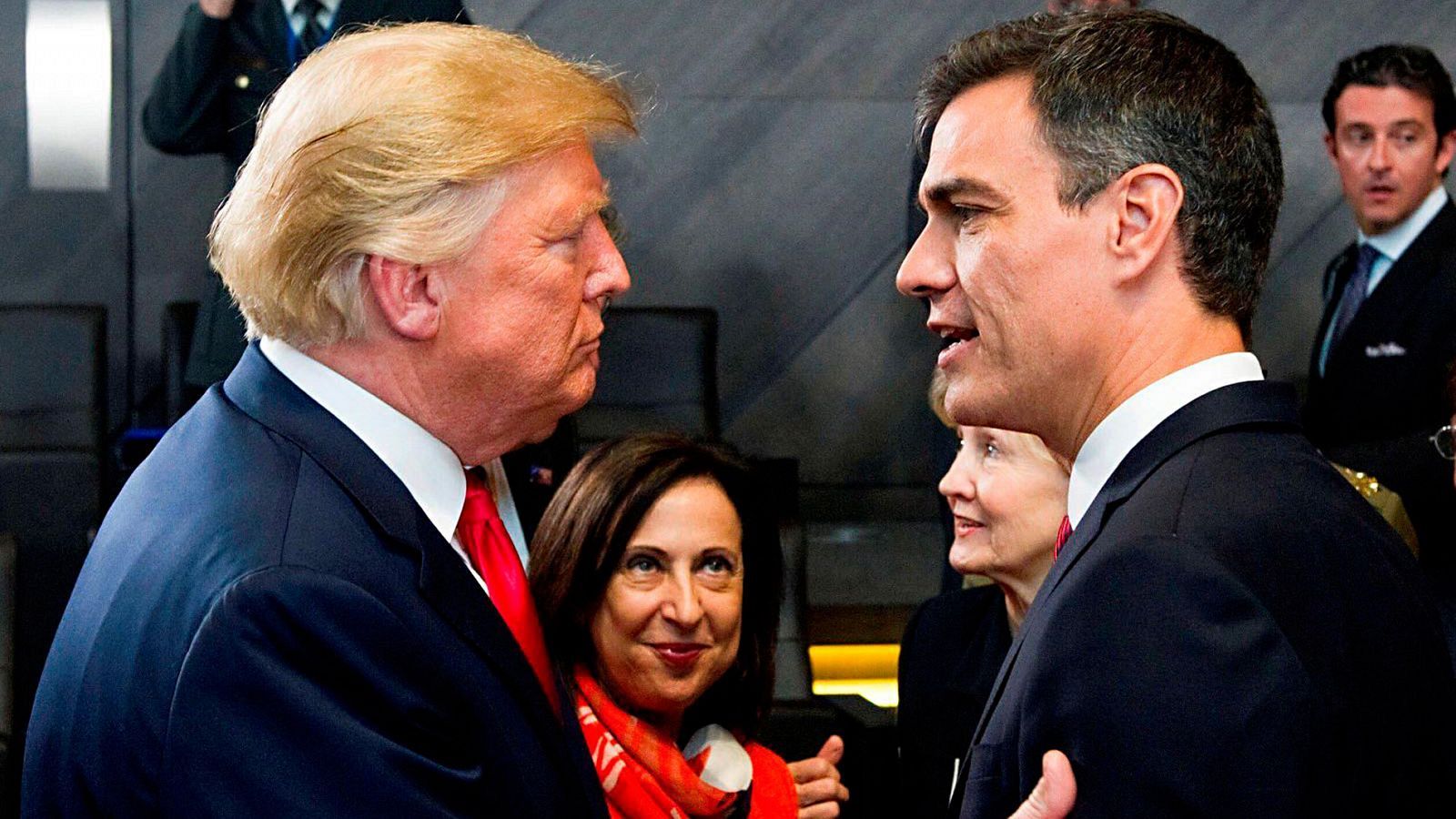
Rochester, NY: One of the most significant transatlantic conflicts stemming from the continuing 2026 Iran War is the growing diplomatic clash between Pedro Sánchez and Donald Trump. A larger political battle over sovereignty, alliance duties, and the trajectory of Western foreign policy has developed out of what started as a dispute about military cooperation.
The debate revolves over Spain’s reluctance to back military actions against Iran by the United States and Israel. Because there was no apparent legal authorization under international law, Madrid turned down Washington’s request to utilize the joint U.S.-Spanish bases at Rota and Morón for activities related to attacks on Iranian targets.
Declaring that Spain will not take part in what he regarded as a dangerous escalation in the Middle East, Pedro Sánchez couched the choice as one of principle rather than geopolitics.
In a nationally broadcast speech, he cautioned against the danger of reliving the errors of previous interventions like the Iraq War by resorting to military action in response to instability.
According to Sánchez, Spain will reject going to war and his nation “will not be complicit… simply for fear of reprisals.”
Quick and combative, that was Donald Trump’s answer. Trump warned of massive economic punishment and blasted Spain for being an untrustworthy NATO ally.
If Madrid persisted in blocking collaboration, he openly threatened to “cut off all trade with Spain” and perhaps impose an embargo.
Spain, he said, had “nothing we need” since it would not provide U.S. military access, and it was also failing to fulfill NATO defense budget goals.
A more fundamental schism in the Western alliance over the war has been exposed by this disagreement. Iran, Israel, and the US are now at war with each other, which has changed the Middle Eastern geopolitical scene.
Approximately 20% of the world’s oil exports travel through the Strait of Hormuz, making it one of the most important energy chokepoints in the world. War, according to analysts, might disrupt these supplies.
Regional escalation and retaliatory threats heightened the tension after coordinated assaults on Iranian military installations and the subsequent killing of Iran’s supreme commander.
Different groups in Europe have responded differently to the crisis. Ukraine and a number of Eastern European governments are among those who have voiced their support for a strong response to Iran, pointing to Tehran’s nuclear aspirations and regional proxy networks as reasons. But there are those who have called for calm and cautioned that this conflict has the potential to escalate into a regional disaster if not contained.
Because of its position, Spain is now the focal point of this European discussion. In reaction to Washington’s economic threats, the European Union has mostly rallied behind Spain, even though Madrid has opposed involvement in the conflict.
The European Commission has promised to protect its economic interests and has issued a warning that any trade reprisal against Spain would have a devastating impact on the whole EU.
European authorities have warned that a trade war between the United States and Europe might break out if the United States imposes an embargo on Spain. They have stressed that transatlantic commerce is highly interdependent and advantageous to both sides.
Even during Trump’s and Merz’s high-profile meeting in Washington, the diplomatic tensions were on full display. Trump openly blasted the Spanish government and hinted at the possibility of harsh economic sanctions against Madrid during the meeting.
In an effort to find a middle ground, Merz acknowledged that economic retribution against an EU member may have wider ramifications for Europe and said that Germany would urge Spain to raise its military budget.
From an analytical standpoint, the clash between Trump and Sánchez signifies more than just a dispute between the two presidents. It is a reflection of the widening gap in strategic thinking between the United States and some European countries over the handling of international security issues.
According to Trump, the fight with Iran is all about confronting a nuclear-armed dictatorship head-on. Sánchez and other European leaders are concerned that the conflict might lead to a breakdown in international stability, much like the effects of previous deployments in the Middle East.
The destiny of the transatlantic alliance may be determined by this conflict of narratives.
A further escalation of the economic threat to Spain into trade restrictions might cause Europe to seek more strategic independence from the US. On the other side, European nations may feel greater pressure to join with Washington’s military approach if the battle with Iran grows or escalates.
At this point in time, the clash serves as a clear example of how the Iranian war is having far-reaching consequences outside of the Middle East. It is causing changes in alliances, divisions among Western administrations, and a test of the stability of the political order that has characterized transatlantic ties for many years.







