


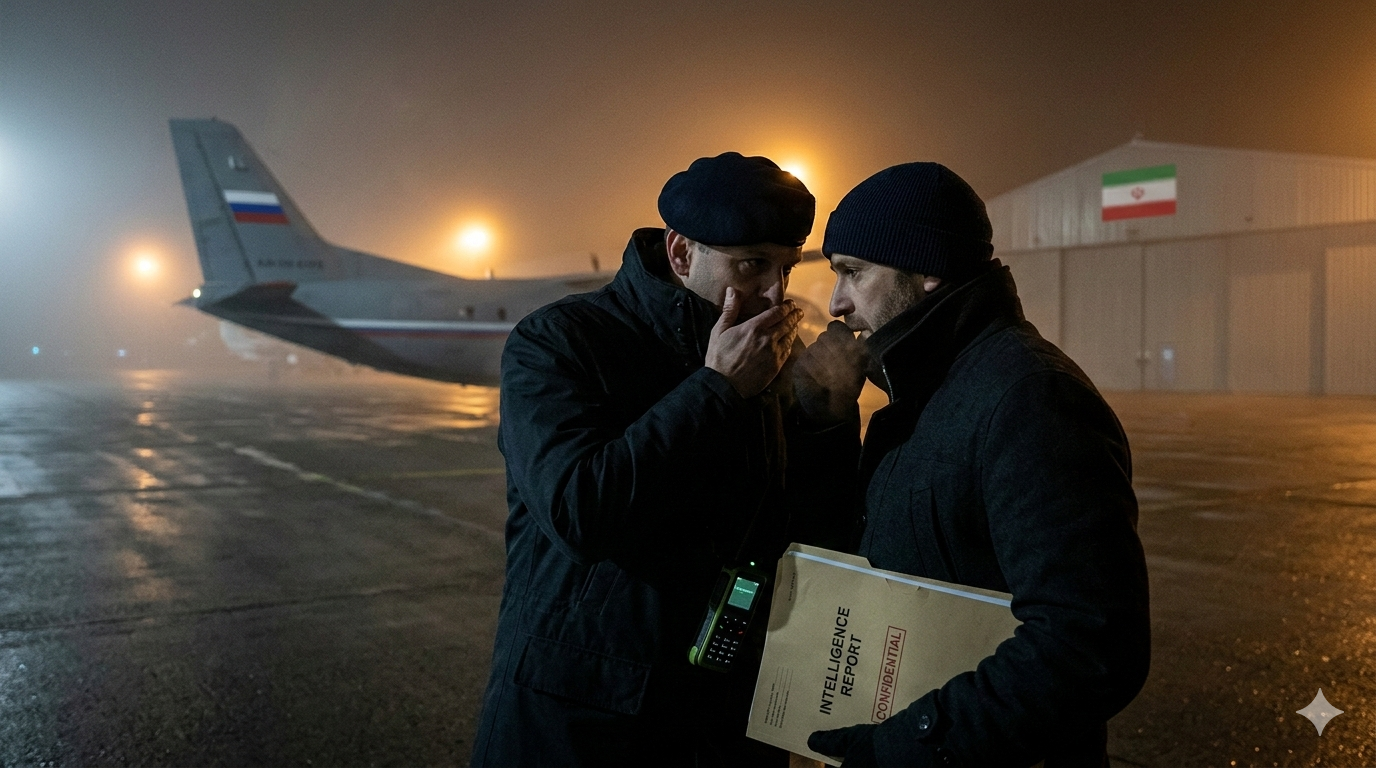
Rochester, NY/Washington, D.C: Recent intelligence assessments indicate that Russia has been discreetly furnishing Tehran with classified information regarding the locations of U.S. military assets in the Middle East, amid the intensifying conflict between the United States and Iran.
Moscow has provided data that could assist Iran in determining the locations of U.S. warships, aircraft, and military deployments throughout the region, according to several American officials who are knowledgeable about the situation.
The revelations underscore the increasing strategic alignment between Russia and Iran as the conflict escalates and geopolitical tensions widen.
According to reports, the intelligence encompasses the coordinates and movement patterns of American naval and air assets that are located in the vicinity of the Persian Gulf and other regions of the Middle East.
Iranian authorities were informed of the information subsequent to the commencement of the most recent round of hostilities between the United States, Israel, and Iran, according to U.S. officials.
Despite the absence of definitive evidence that Moscow provided Tehran with direct instructions on how to utilize the data, analysts are of the opinion that Iran’s capacity to monitor American military activity could be substantially improved by the mere possession of limited satellite and surveillance information from Russia.
Reporters were informed by numerous sources within the U.S. intelligence community that the data provided by Russia contained information that could assist Tehran in monitoring the movements of American forces.
It is presumed that the intelligence contained information regarding the coordinates of U.S. warships and aircraft that were operating in the region. Iranian forces may be able to more effectively plot missile or drone assaults against American targets if they choose to act on this information.
The reports have been acknowledged by officials in Washington, who have made an effort to minimize the strategic implications of the purported intelligence-sharing.
In response to the allegations, officials underscored that U.S. military commanders are already cognizant of the potential for information breaches and have integrated these risks into their operational planning.
Despite the allegations, U.S. Defense Secretary Pete Hegseth stated that American forces are confident in their capacity to operate safely. In a televised interview, he stated that the American people can be confident that their commander-in-chief is well-informed about the conversations between individuals.
He also mentioned that U.S. military strategists incorporate all of this information into their battlefield strategies.
The allegations have also been met with caution by the U.S. State Department. Officials declined to provide direct commentary on specific intelligence disclosures, but they emphasized that the United States continues to closely monitor Russian-Iranian coordination.
According to a spokesperson for the State Department, Washington’s primary objective is to safeguard American personnel and preserve operational dominance in the region, while simultaneously sustaining diplomatic and military pressure on Tehran.
Karoline Leavitt, the White House press secretary, also refrained from verifying the intelligence details, but she did imply that the purported Russian assistance had not significantly altered the war’s trajectory.
She emphasized that U.S. forces are continuing their operations against Iranian military infrastructure, but she stated that the administration could not comment on “intelligence reports that are leaked to the press.”
Moscow and Tehran’s strategic partnership has further developed in recent years, as evidenced by the reported intelligence cooperation.
During the conflict in Ukraine, Iran has provided Russia with a significant number of Shahed attack drones, while Russia has provided Iran with diplomatic support and expanded military cooperation.
According to analysts, the most recent intelligence coordination may indicate an additional phase in the development of this alliance, particularly in light of the mounting pressure exerted by the United States and its allies.
American military leaders maintain that the operational balance has not changed substantially, despite the concerns expressed by intelligence officials.
According to U.S. officials, the United States continues to possess an unparalleled level of battlefield awareness and surveillance capabilities in the Middle East, which enables commanders to promptly respond to any adversaries’ efforts to monitor or target American forces.
The alleged Russian intelligence assistance adds an additional layer of complexity to an already volatile regional crisis as the conflict between Washington and Tehran continues to unfold.
The development emphasizes the war’s growing involvement of global powers, which increases the likelihood that the conflict could transform from a regional conflict to a more extensive geopolitical conflict involving numerous significant states.







