


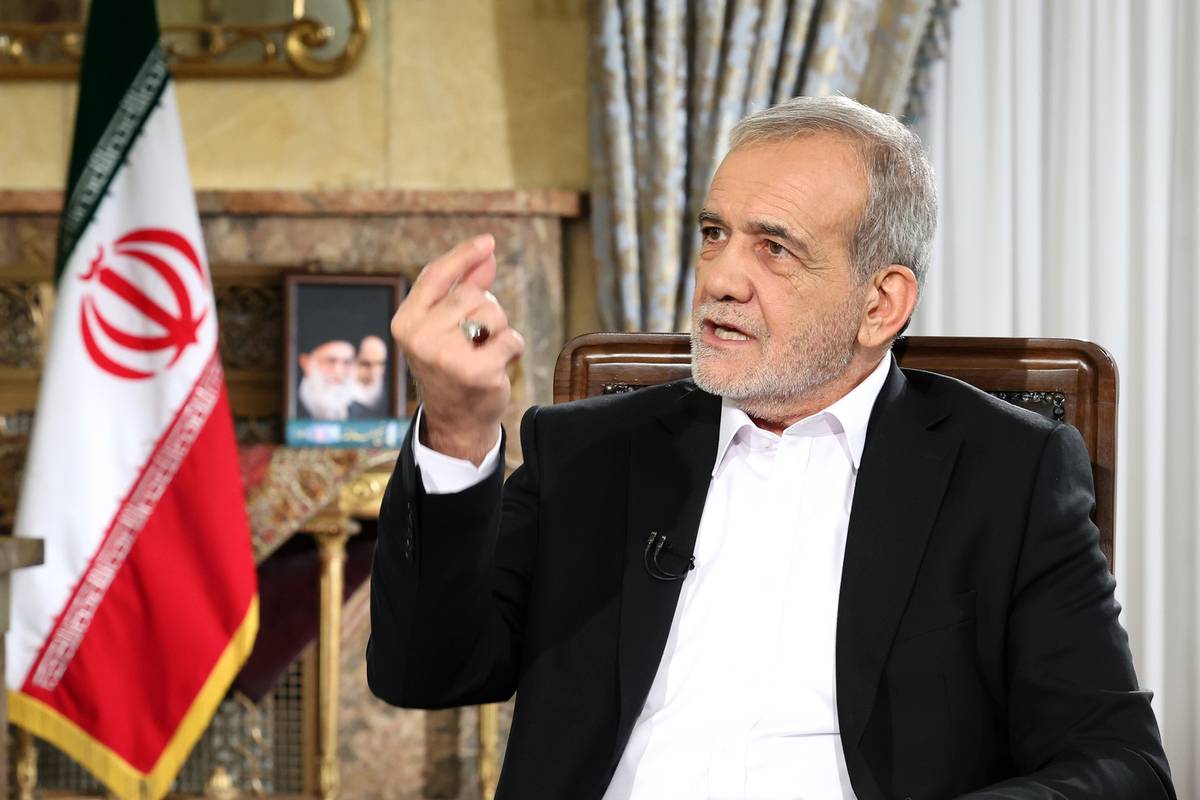
Rochester, NY/Tehran: Iranian President Masoud Pezeshkian made a nationally broadcast speech that combined diplomatic outreach with acts of resistance at a time of increased regional tension. The president made a bold statement to the Iranian people and an international audience watching the situation unfolds: Iran would not give in to outside pressure or give up its sovereignty.
He vehemently rejected calls from Washington, D.C. for unconditional surrender. Simultaneously, he made an unusual effort to allay concerns about a potential escalation of the regional war by apologizing to the Gulf nations that are neighbors, admitting that the area was anxious due to recent military moves.
Pezeshkian sought to reassure countries like Saudi Arabia, the UAE, Qatar, Kuwait, and Bahrain that Iran is not seeking war with its neighbors and that the country is taking actions to defend itself rather than escalate the conflict. This came as the standoff between Israel and the US and the US intensified.
During a very unstable time in Iran’s recent history, President Masoud Pezeshkian spoke to the Iranian people and the rest of the region via television, trying to allay worries of a regional conflict while simultaneously calling for domestic unity.
As he addressed the country on state television, Pezeshkian started by expressing his sorrow for the loss of life in the continuing struggle, which has claimed the lives of citizens, high officials, and military leaders alike.
He noted that Iran was going through a period of deep national sorrow and that the assaults on Iranian soil were breaches of international law. Regardless of the pressure from outside forces, the government would maintain its defense of the country’s sovereignty and territorial integrity, the Iranian president urged the people to stay strong.
Intense military escalation served as a background for the address. There has been a dramatic uptick in missile exchanges and airstrikes in the area over the last several days, with Iranian towns being bombarded and targets outside of Iran’s borders being hit in return. There are concerns that the situation might escalate into a larger regional showdown due to reports of hundreds of casualties since the fighting escalated.
Pezeshkian sought a middle ground between submissiveness and outright rebellion in his words. He stressed once again that Iran’s measures were mainly defensive and that the nation had no desire to go to war with its neighbors.
The Iranian president said that the government had ordered the military to refrain from attacking neighboring nations unless they were attacked by Iran from their own soil. The Gulf nations have lately seen missile and drone incidents connected to the war, so the message seemed to be an attempt to ease tensions with them.
Meanwhile, Pezeshkian dismissed Washington’s demands for unconditional surrender, arguing that they were in odds with Iran’s right to self-determination. He reiterated that Iran still favors discussion, but only under circumstances of mutual respect and equality, and that the nation had sought diplomatic solutions on several occasions before to the escalation. The president said that the Iranian government had sought diplomatic solutions to prevent conflict, but felt forced to react to what he called “aggression” from other countries.
The domestic situation in Iran was the main emphasis of the presentation. In the midst of national sorrow at the deaths of the supreme leader and other prominent personalities, Pezeshkian emphasized the need for political stability and national unity.
He said that the Iranian people must put aside their differences and rally together at this critical juncture for the country. A new supreme leader will be officially chosen during the transition, which will determine Iran’s political destiny, but in the meantime, a temporary leadership structure has been set up to handle the transition, according to the administration.
The president also recognized the growing concern felt by neighboring nations as they closely observe the developing situation.
The fighting has caused air traffic and energy infrastructure interruptions in many Gulf nations due to missiles and drones crossing their airspace. Iran respects the sovereignty of neighboring states and does not want the conflict to go beyond its present scope, according to Pezeshkian, who made an unusual apology to those nations.
Pezeshkian urged the Iranian people to be resilient in the face of these uncertainties. He reassured the people that Iran had weathered crises before and that their nation will triumph over its present difficulties if its inhabitants were united and determined.







