


TEHRAN / WASHINGTON / MOSCOW — After the March 9 telephone call between President Donald Trump and President Vladimir Putin discussing potential ways to end both the Iran conflict and the war in Ukraine, Iran’s official response has been starkly resistant to diplomatic overtures.
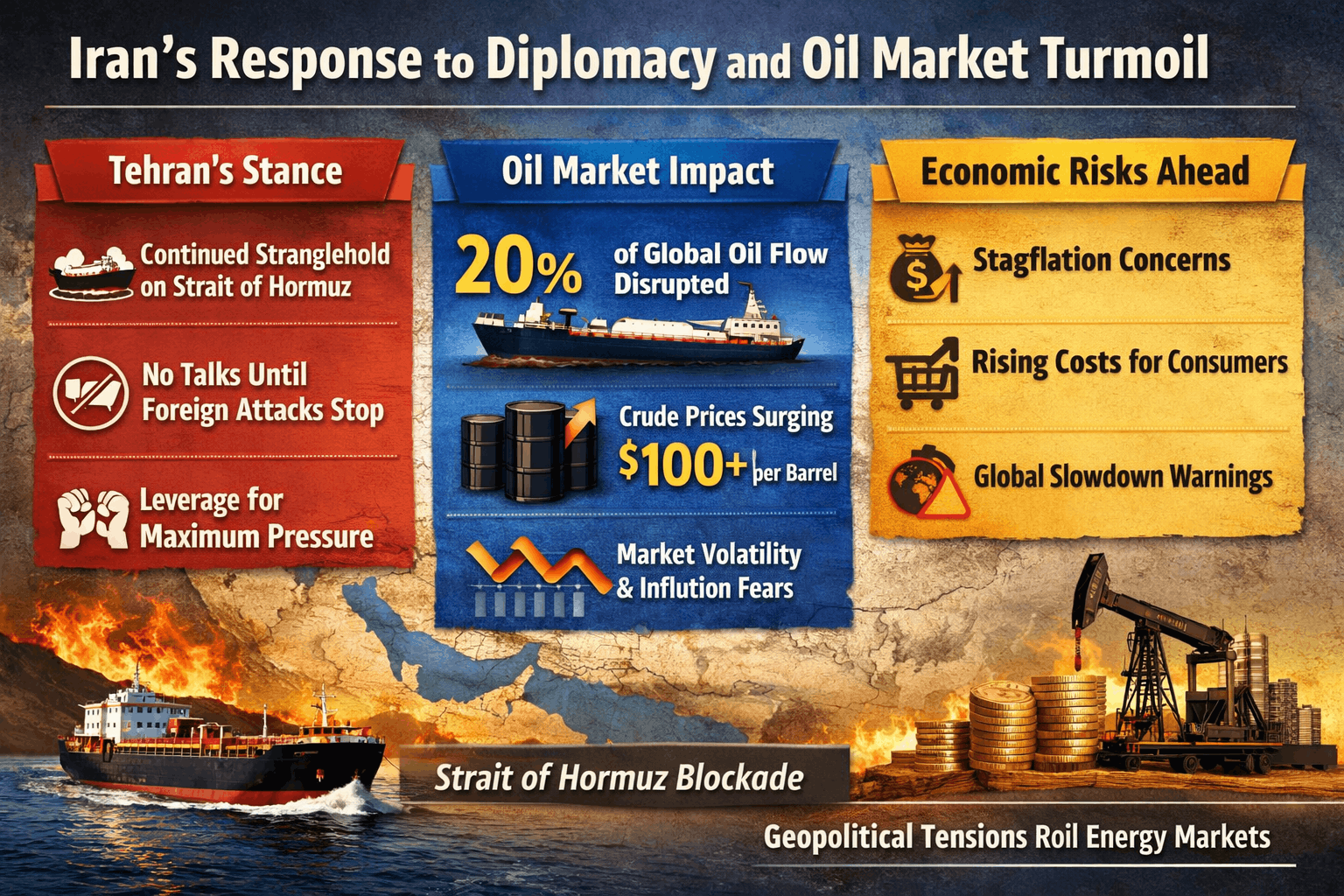
Rather than easing tensions, Tehran has reaffirmed its commitment to military pressure on oil shipments and global markets unless foreign attacks cease.
Iranian Revolutionary Guard officials stated Tehran will continue its near total blockade of Middle East oil traffic, especially through the Strait of Hormuz — a chokepoint for about 20 % of the world’s oil trade — until hostilities are halted.
This defiant posture came as oil prices remained highly volatile, reflecting market uncertainty about the duration and outcome of the conflict and any diplomatic breakthrough.
Iran’s leaders have shown little public inclination to negotiate directly with the U.S. or allies until external military operations end, viewing escalation as leverage.
Analysts say this stance dampens the immediate effect of diplomatic outreach from Trump and Putin, signaling Tehran believes it has strategic momentum amid Western pressure.
Market Impact: From Oil Spikes to Rollercoaster Prices
Even as Trump suggested the war could be “very far ahead of schedule” for resolution — a statement that briefly sent oil prices down — markets remain jittery. Crude futures have swung widely, underscoring the fragility of global energy security.
Why Markets Are Still Nervous
- Strait of Hormuz disruption: Iran’s refusal to reopen this vital route continues to tighten supplies.
- Supply shocks to energy producers: Major regional producers have adjusted output as tanker traffic remains constrained.
- Inflation ripple effects: Higher fuel costs are spilling into broader inflation risks for both developed and emerging economies. Experts warn this could translate into broader stagflation pressures if the conflict continues.
Economists say the oil market’s response reflects not only disruption of physical supply — nearly 20 % of crude and LNG flows has been impacted — but also the risk premium attached to potential further escalation. Investors are pricing in both short-term supply setbacks and long run uncertainty if the conflict drags on.
Tehran’s Strategic Calculus
From the Iranian government’s perspective, continuing to assert control over energy routes and resisting international diplomatic pressure may be designed to:
- Maximize bargaining leverage: By threatening global energy flows, Tehran pressures consumer economies and foreign capitals to push for de-escalation.
- Exploit divisions among global powers: Moscow’s outreach and possible energy policy shifts create openings to play external rivals against one another.
- Signal domestic resolve: Hardliner elements in Iran’s leadership appear keen to demonstrate strength rather than seek early compromise amid rising nationalistic sentiment.
Tehran’s rhetoric suggests that until key military conditions are met, the Iranian leadership will regard diplomacy — including proposals from foreign capitals — with skepticism unless backed by clear reductions in hostility.
Outlook: Markets and Diplomacy at a Crossroads
Even with international calls for restraint — including from Southeast Asian and G7 policymakers urging crisis de-escalation and coordinated measures — the road to peace remains uncertain.
Global markets are starting to factor in not just short-term disruptions but the potential for prolonged instability in energy markets and broader economic dislocation:
- G7 finance ministers are warning of necessary economic actions to counter the conflict’s effects.
- Economists are debating whether the conflict could spark a stagflationary environment similar to past Middle East oil crises.
- Analysts emphasise that without meaningful progress toward a negotiated stop to hostilities — rather than symbolic phone calls — markets are unlikely to regain lasting stability.
In summary:
Iran’s leadership has rejected immediate diplomatic overtures tied to the Trump–Putin call, maintaining strong military and economic pressure that keeps oil markets unstable. While major powers continue to explore diplomatic channels, Tehran’s response — buttressed by leverage over vital global energy flows — means that any durable peace will require far more sustained multilateral negotiation than a single presidential phone conversation can achieve.







