


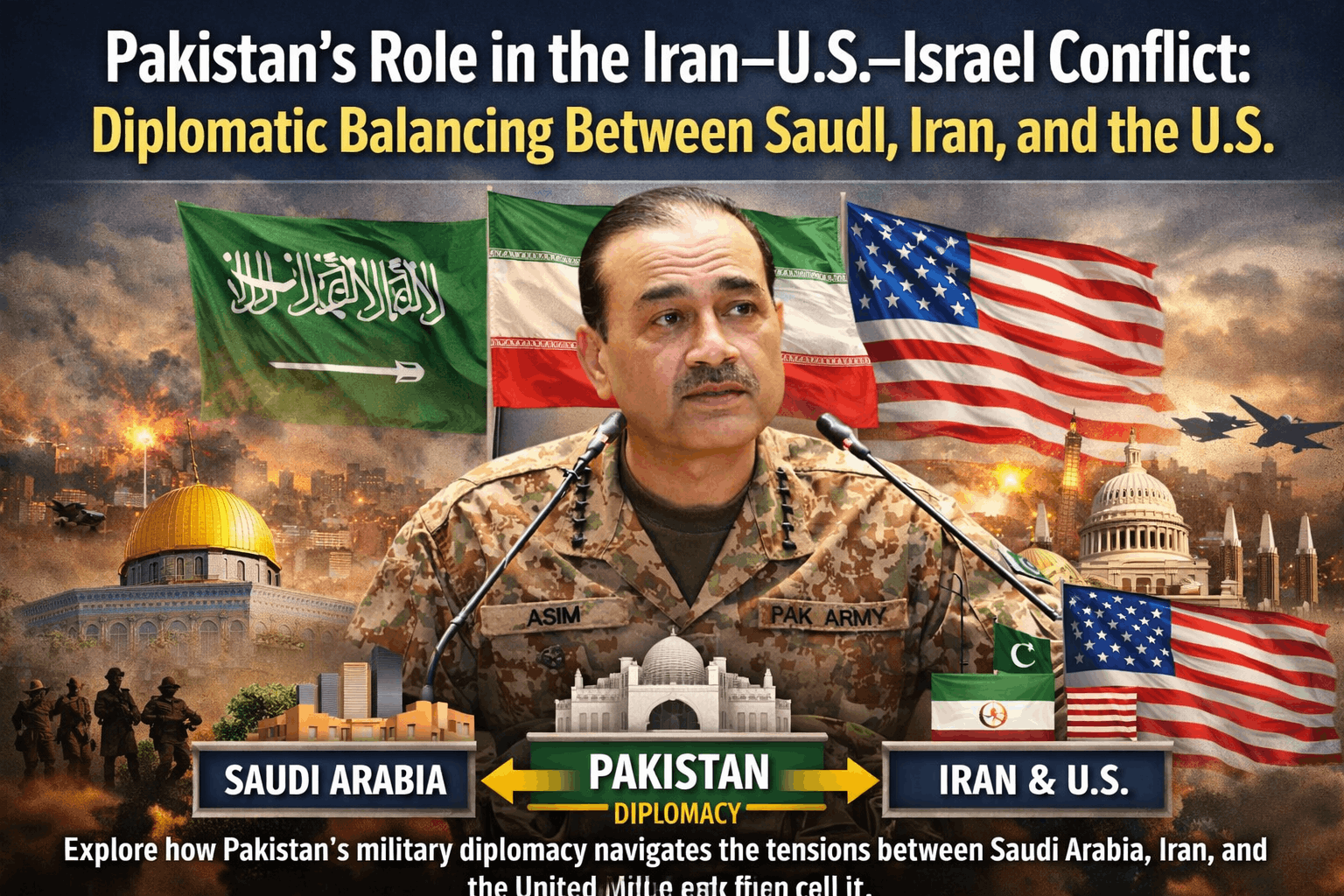
Rochester, NY: Pakistan has been placed in a precarious and strategically intricate position as the conflict between the United States, Israel, and Iran escalates throughout the Middle East. While avoiding direct confrontation with neighboring Iran, Islamabad is endeavoring to maintain its longstanding relationships with Saudi Arabia and other Gulf states.
In the past few weeks, Pakistan’s military leadership, particularly Chief of Defence Forces and Army Chief Field Marshal Asim Munir, has been the subject of international attention due to his participation in meetings and telephonic communications with Saudi, Iranian, and Gulf leaders.
Washington and other global capitals are intently monitoring Pakistan’s efforts to serve as both a strategic partner and mediator.
Pakistan’s Strategic Role in the Conflict
Pakistan is situated at the epicenter of the regional diplomatic conundrum due to its close proximity to Iran and its extensive economic and security connections with Gulf nations. In the past, Islamabad has maintained cordial relations with Tehran and has served as one of Saudi Arabia’s most trusted military allies.
The current conflict, which commenced following U.S. and Israeli strikes on Iranian targets and subsequent Iranian missile assaults across the Gulf region, further complicated this balancing act.
Analysts observe that Pakistan is endeavoring to preserve neutrality while preventing the conflict from escalating into South Asia or destabilizing the Gulf States, where millions of Pakistani expatriates reside and work.
Diplomacy and High-Level Contacts of Asim Munir
The recent diplomatic outreach by Field Marshal Asim Munir has become a focal point of international discussion. During his visit to Riyadh, Munir engaged in discussions with Saudi Defense Minister Prince Khalid bin Salman regarding strategies to mitigate Iranian attacks and maintain regional stability.
According to reports, the discussions were conducted within the context of the Saudi-Pakistan Strategic Mutual Defense Agreement, which was signed in September 2025. The treaty emphasizes the extent of military cooperation between Riyadh and Islamabad by stating that aggression against one country could be considered aggression against both.
Simultaneously, Pakistan has maintained communication with Iran and other Gulf countries to prevent escalation. Islamabad is endeavoring to establish itself as a diplomatic bridge that can facilitate communication with all parties involved in the conflict, as per regional analysts.
The World’s Perception of Pakistan’s Actions
Pakistan’s outreach is regarded by international observers as a classic illustration of “strategic balancing.” Islamabad has refrained from publicly supporting Washington or Tel Aviv against Tehran, despite its defense ties with Saudi Arabia, which indicate alignment with Gulf security concerns.
Many analysts are of the opinion that Pakistan’s diplomatic initiatives are designed to prevent the conflict from escalating to the broader Muslim world. The outreach is perceived by some as an effort to maintain Islamabad’s status as a critical security partner for Gulf monarchies without inciting Iran.
Domestic realities also influence diplomatic signals. The assassination of Iran’s paramount leader during the early phases of the war sparked protests in numerous cities in Pakistan, which is indicative of the internal sensitivities surrounding the conflict. Pakistan has a substantial Shiite population.
Washington’s Point of View
Pakistan’s diplomatic endeavors are scrutinized with caution in Washington. Islamabad’s capacity to communicate with Iran through back channels and its influence in the Gulf are acknowledged by U.S. policymakers.
According to certain strategic analysts, Pakistan could function as an intermediary for indirect communication or de-escalation between Tehran and Washington.
Nevertheless, the United States continues to monitor Pakistan’s security obligations to Saudi Arabia, with a particular emphasis on the defense treaty that has the potential to involve Islamabad in a broader regional conflict in the event of an attack on Gulf States.
Pakistan’s role is therefore both strategic and ambiguous for Washington: it is a country that is navigating its own regional priorities and a partner with influence in the Muslim world.
A Complicated Act of Balance
Pakistan’s diplomatic maneuvering serves as an illustration of the intricacy of contemporary geopolitics as the Middle East conflict persists. Islamabad is endeavoring to prevent domestic instability, reassure Gulf allies, and maintain open lines of communication with Washington, all while maintaining relations with Tehran.
The future of Pakistan as a strategic supporter of Gulf States, a mediator, or a cautious observer will be significantly influenced by the development of the Iran–US–Israel confrontation in the upcoming weeks.







