


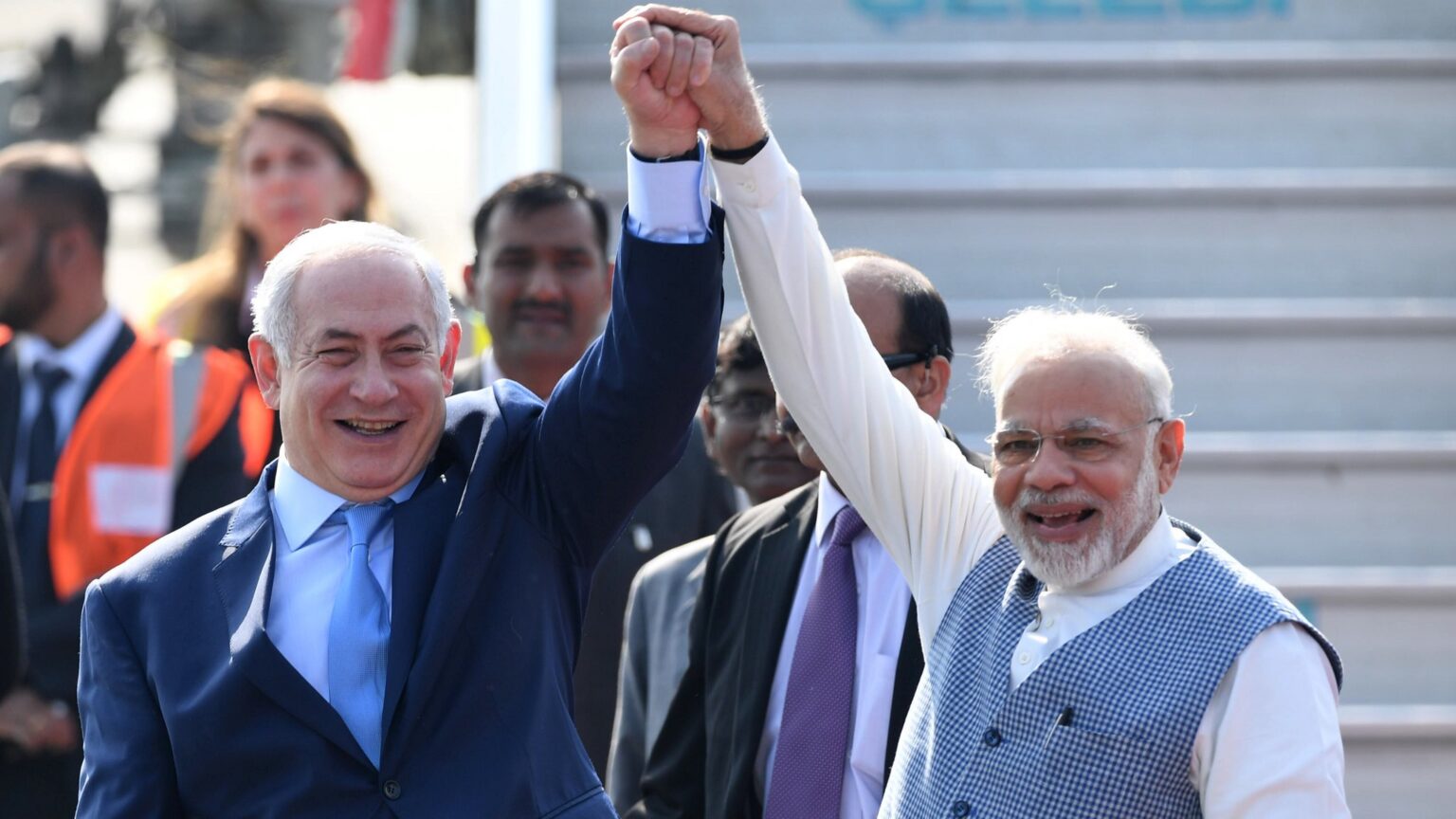
Rochester, NY/New Delhi: When Narendra Modi publicly praises Benjamin Netanyahu, it is rarely a casual diplomatic courtesy. It carries historical weight, strategic calculation, and regional implications—especially at a time when tensions among the United States, Iran, and Israel are once again sharpening geopolitical lines.
Modi’s words resonate not only in Tel Aviv but also in Tehran, Washington, and across Arab capitals that are carefully recalibrating their own positions.
The roots of India–Israel relations stretch back to the mid-20th century, though the trajectory has not been linear. India formally recognized Israel in 1950, just two years after the Jewish state declared independence in 1948.
Yet for decades, New Delhi maintained a cautious distance. Guided by its leadership role in the Non-Aligned Movement and solidarity with the Palestinian cause, India balanced recognition with restraint.
Full diplomatic relations were only established in 1992, a turning point that coincided with the end of the Cold War and India’s economic liberalization. From that moment onward, cooperation steadily expanded, particularly in defense and technology.
Today, Israel is among India’s top defense suppliers. The relationship includes missile systems, surveillance technology, counterterrorism cooperation, and agricultural innovation.
High-level visits—Modi’s landmark 2017 visit to Israel and Netanyahu’s reciprocal visit to India in 2018—symbolized a new era of open strategic partnership.
Unlike previous decades, India no longer hides its engagement with Israel behind diplomatic caution. Instead, it frames the relationship as pragmatic, interest-driven, and independent of third-party pressures.
In the context of current US–Iran tensions, Modi’s praise for Netanyahu carries additional strategic undertones. The United States remains Israel’s primary ally and security guarantor, while Iran views Israel as its principal regional adversary.
When Washington increases pressure on Tehran—whether through sanctions, military signaling, or diplomatic isolation—Israel often aligns firmly with US strategy, sometimes advocating even stronger measures. India, meanwhile, walks a tightrope.
It has longstanding civilization ties and energy interests with Iran, including investments in the Chabahar port, which offers India strategic access to Afghanistan and Central Asia bypassing Pakistan.
However, India has gradually reduced its oil imports from Iran under US sanctions pressure and deepened its defense alignment with Israel and the United States.
Modi’s praise of Netanyahu, therefore, can be interpreted as a signal that India’s strategic priorities increasingly lean toward technological and security partnerships with Israel, even while it attempts to preserve functional ties with Tehran.
This balancing act reflects India’s broader foreign policy doctrine of “multi-alignment,” seeking partnerships across rival blocs without formal alliance commitments.
From Israel’s perspective, India represents more than a market; it is a major democratic power in Asia whose support enhances Israel’s diplomatic diversification.
As Israel faces criticism in international forums over its policies toward Palestinians and its posture toward Iran, endorsements from large countries like India help counter narratives of isolation.
Netanyahu has long emphasized expanding relations beyond traditional Western partners, and India fits that strategy perfectly.
The Arab perspective, however, is complex and evolving. Historically, Arab states viewed India as a sympathetic voice for Palestinian statehood. India consistently supported a two-state solution and voted in favor of Palestinian-related resolutions at the United Nations.
Modi’s closer embrace of Israel initially raised concerns in some Arab capitals. Yet the geopolitical landscape of the Middle East has shifted dramatically.
Several Arab states have normalized relations with Israel through the Abraham Accords, and even those that have not formally normalized have engaged in quiet security dialogues.
For Gulf Arab states, particularly those wary of Iran’s regional ambitions, Israel is increasingly seen as a potential security partner rather than solely an adversary. In this context, India’s warm ties with Israel do not necessarily provoke the same alarm they might have decades ago.
Moreover, India’s strong economic ties with Gulf countries, its large expatriate workforce in the region, and its energy dependence create mutual interdependence that tempers political friction.
Arab governments may watch India’s moves carefully, but they are unlikely to jeopardize strategic and economic partnerships over rhetorical praise.
Iran, however, reads such gestures differently. Tehran monitors India’s diplomatic language closely, particularly given India’s historical ties and strategic projects like Chabahar.
If India appears to tilt too far toward the Israeli–US axis, Iran could reassess the depth of cooperation. Yet Tehran also recognizes India’s importance as a major Asian economy and a potential counterweight to Western dominance. As a result, Iran may respond with cautious recalibration rather than outright confrontation.
Ultimately, Modi’s praise of Netanyahu reflects a broader transformation in global alignments. India is asserting itself as an independent power willing to engage openly with Israel while managing its relationships with Iran and Arab states.
The United States, facing its own strategic recalculations in the Middle East, observes India’s positioning with interest, often welcoming deeper India–Israel cooperation as part of a broader democratic and security architecture.
In narration form, the story is less about a single statement of praise and more about the convergence of histories. It is about India’s journey from non-aligned caution to strategic assertiveness, Israel’s search for diversified alliances, America’s enduring rivalry with Iran, and the Arab world’s evolving calculus in a region no longer defined by old binaries. In this shifting landscape, words spoken between leaders carry echoes of decades of diplomacy—and signals of the realignments still unfolding.
For more news, expert commentary, and strategic analysis, explore the latest reports and features published by The Variant.







