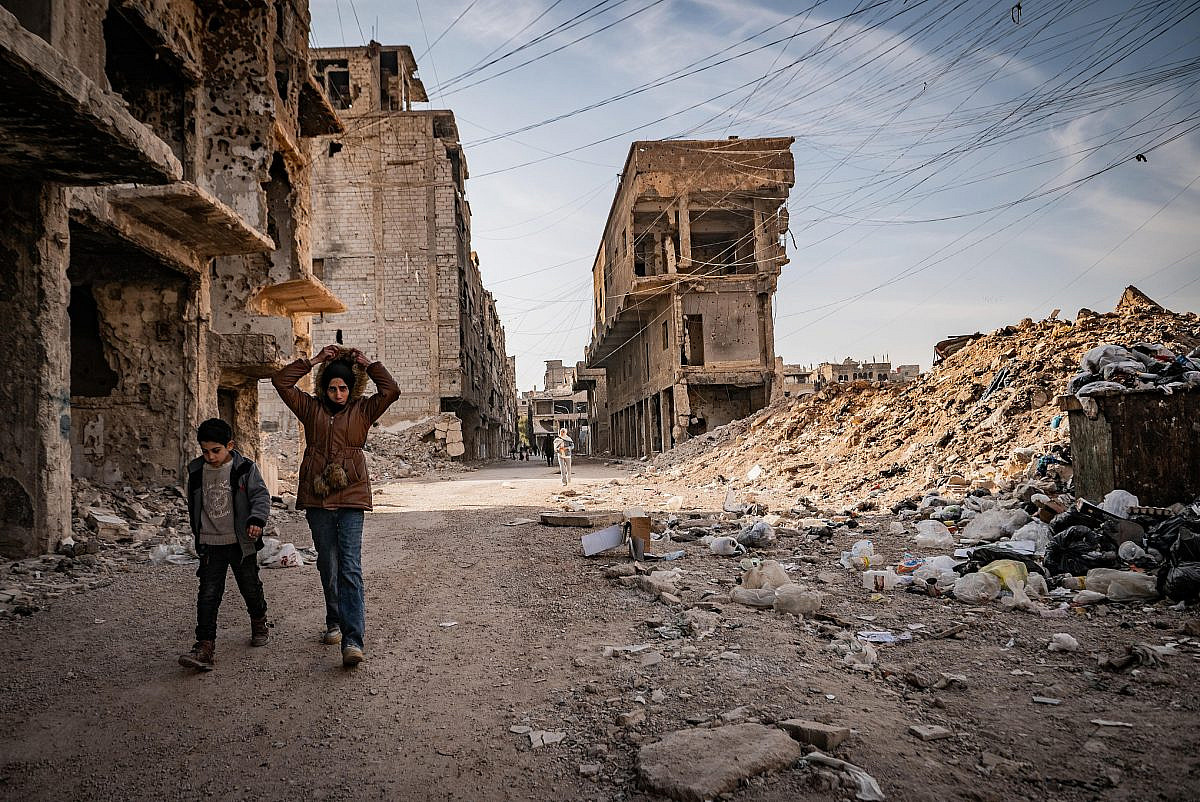
Rochester, NY: More than 95,000 homes were damaged or destroyed during years of fighting involving forces loyal to the now-defunct regime of President Bashar al-Assad in the southern province of Daraa, according to the Syrian government’s first comprehensive war damage assessment report.
This is a stark acknowledgment of the human and physical toll of Syria’s long civil war. Publicized by the Syrian Ministry of Local Administration and Environment in partnership with UN-Habitat, the results provide a formal depiction of the devastation caused by the war, which has marred both rural and urban areas and profoundly affected the lives of average Syrians ensnared in the violence.
Daraa is one of the most devastated areas by the Syrian civil war, which started in 2011 and has killed hundreds of thousands of people, displaced millions, and reduced large portions of the country to rubble, according to an assessment that started in January 2025 and initially focused on the areas that had the worst fighting.
Bombardments, artillery strikes, and house-to-house combat devastated 33,400 houses in Daraa, according to the study. Damage to almost sixty thousand more homes ranged from partial collapse to damage so bad that residents cannot return without major repairs.
Daraa has been through several cycles of power and warfare throughout the civil war in Syria; it is sometimes called the “cradle of the uprising” since it was the catalyst for the 2011 uprising.
According to experts and reports published, whole neighborhoods have been leveled due to the ongoing government bombardment, sieges, and guerrilla resistance, as well as subsequent counteroffensives.
Along with the destruction of homes, the new official figures show that more than 55 bakeries and ovens across the province were damaged. This shows that not only were personal possessions disrupted, but basic services and economic life were as badly affected.
In addition to the figures, the sheer magnitude of the devastation highlights the immense difficulties that Syrians attempting to reconstruct face.
The destruction of a house is more than just the end of a structure; it also marks the end of a family’s financial stability, social connections, and the memories that were once firmly planted in that location.
As a sign of both resilience and desperation, returning Syrians have resorted to stealing bricks, stones, and debris from destroyed buildings to use in impromptu restorations. This is happening all throughout the nation since official rebuilding projects are restricted and reconstruction funds are few.
Authorities and foreign groups engaged in development and humanitarian operations might use the government’s war damage assessment as a foundation for future recovery planning. To facilitate the sequencing of subsequent provincial reports, technical teams performed comprehensive surveys in a variety of areas, including housing, education, healthcare, and public infrastructure.
Reconstruction objectives and assistance mobilization will be guided by this “official reference,” according to officials. However, analysts warn that this will need strong local and international political will and enormous expenditure.
The path from destruction to stability in Daraa is lengthy and unclear for the people of Daraa. There are still evident physical wounds of conflict in the deserted houses of once-inhabited regions, even if ceasefires have held and a measure of quiet has returned after years of turmoil.
Syria has immense rebuilding problems as it emerges from a war that has changed its society, cities, and future. The statistics in the study only depict part of this tragedy, which is a broader national tragedy.