


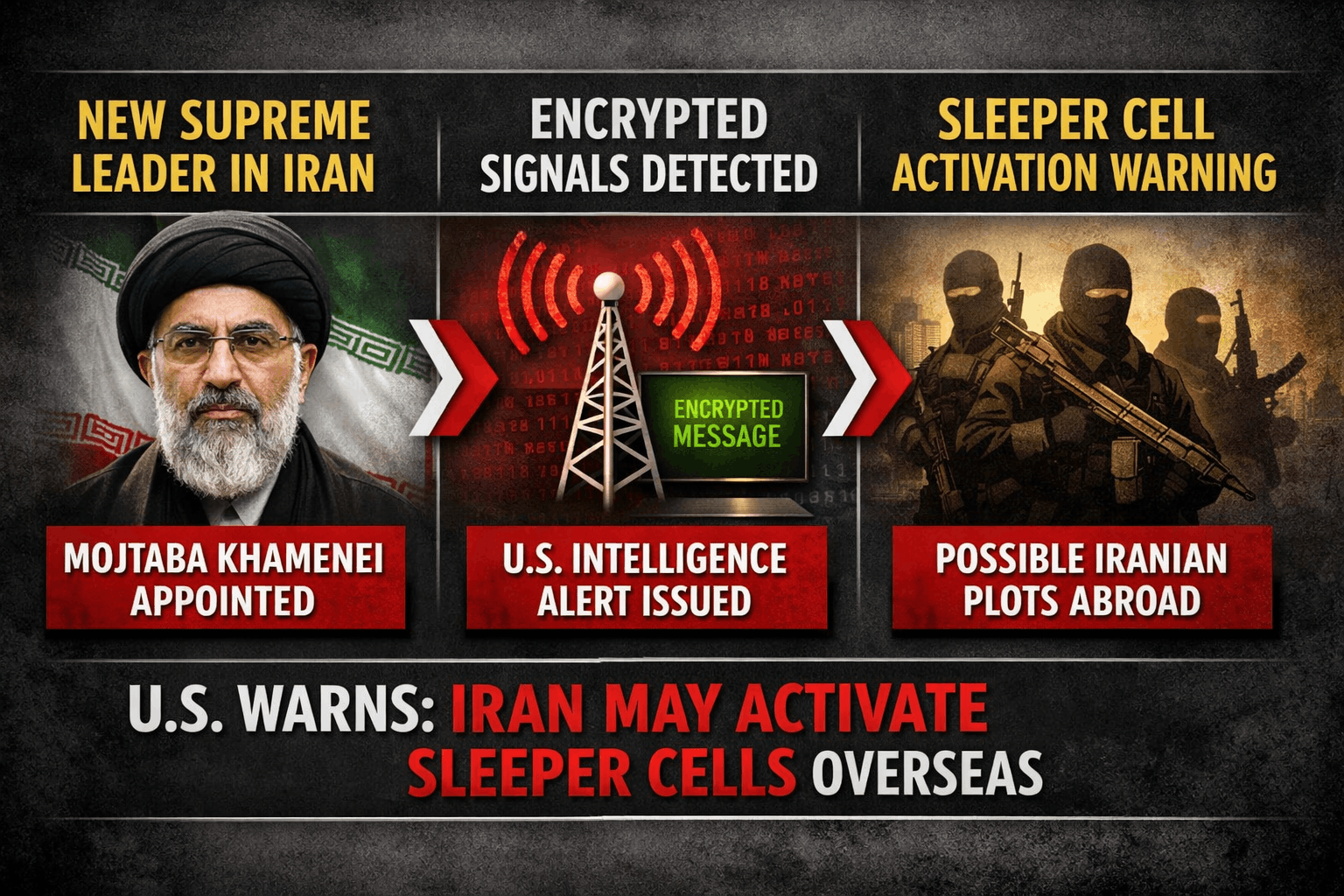
Washington D.C/Rochester, NY: In a shocking turn of events amidst a growing crisis involving Iran, Israel, and the US, officials in Washington have disclosed encrypted messages thought to have come from Iran.
These messages may signal the activation of Iranian sleeper cells abroad, which happens to coincide with the appointment of Iran’s new Supreme Leader after Ayatollah Ali Khamenei’s death.
U.S. intelligence agencies, including the FBI, the NSA, and others, have reportedly intercepted encrypted transmissions with an Iranian origin, as per a federal government alert sent to various U.S. law enforcement agencies.
These communications may be a “operational trigger” for spies or operators outside of Iran who are inactive, according to preliminary signals analysis.
Cause Concern with Encrypted Signals
After reviewing the notice, which was distributed on Monday by ABC News, it details a new radio station that could rebroadcast internationally and that sent the encrypted signal to many nations soon after Ayatollah Ali Khamenei’s death on February 28, 2026.
While the precise contents are still unknown, U.S. officials have warned that the transmission’s timing and character are reminiscent of coded messages sent to “sleeper assets” (intelligence jargon for covert operatives who do nothing until given a signal to do something).
“The transmissions may be meant to activate or instruct prepositioned sleeper assets operating outside the originating country,” the advisory adds, encouraging federal, state, and local law enforcement to intensify their surveillance of unusual radio-frequency activities.
Setting the Scene for Iran’s New Leadership
The encrypted message surfaced only days after Iran’s power shift occurred inside. Mojtaba Khamenei, the son of the late top Leader, was nominated by Iran’s religious authorities as the country’s next top authority on March 8, 2026. This appointment was extensively publicized in worldwide media.
Tensions between Tehran and Western capitals, especially Washington, have been exacerbated by Mojtaba Khamenei’s rise to power. Despite the escalating tension with the US and Israel, many say that Iran’s choice of a hardliner successor shows the regime’s determination to maintain rebellious policies.
Government Proclamations and Intelligence Views
This notice is unusual in that it publicly acknowledges the possibility of covert preparations by an adversarial foreign power, but it does not identify a particular imminent threat or provide explicit intelligence agency attributions, such as direct involvement by the CIA or the Defense Intelligence Agency (DIA). It was stressed by federal authorities that:
So far, no particular area has been identified as posing an operational danger.
Warnings regarding sleeper cell networks were provided after previous military moves against Iran.
Authorities in charge of law enforcement were told to step up their surveillance.
The timing of the encrypted broadcast, along with Iran’s leadership shift, raises concerns about “the potential risk of coordinated retaliatory actions” by covert networks loyal to Tehran, according to a senior U.S. counterterrorism official who spoke anonymously under standard intelligence reporting protocols.
Background Information and Security Issues
Iranian officials and their allies have long had secret networks and proxies all across the world, according to experts. An example of how sleeper cells and covert agents have played a significant role in Tehran’s intelligence operations is the 2011 plan that was thwarted against the Saudi ambassador in the US.
Consistent with long-standing practice on sensitive national security issues, the director of the FBI and other top intelligence officials have refrained from publicly commenting on the entire intelligence assessments of the intercepted signal.
On the other hand, the federal notice shows that the United States government is taking precautions, which include being prepared to enforce domestic laws and keeping an eye on foreign intelligence.







