


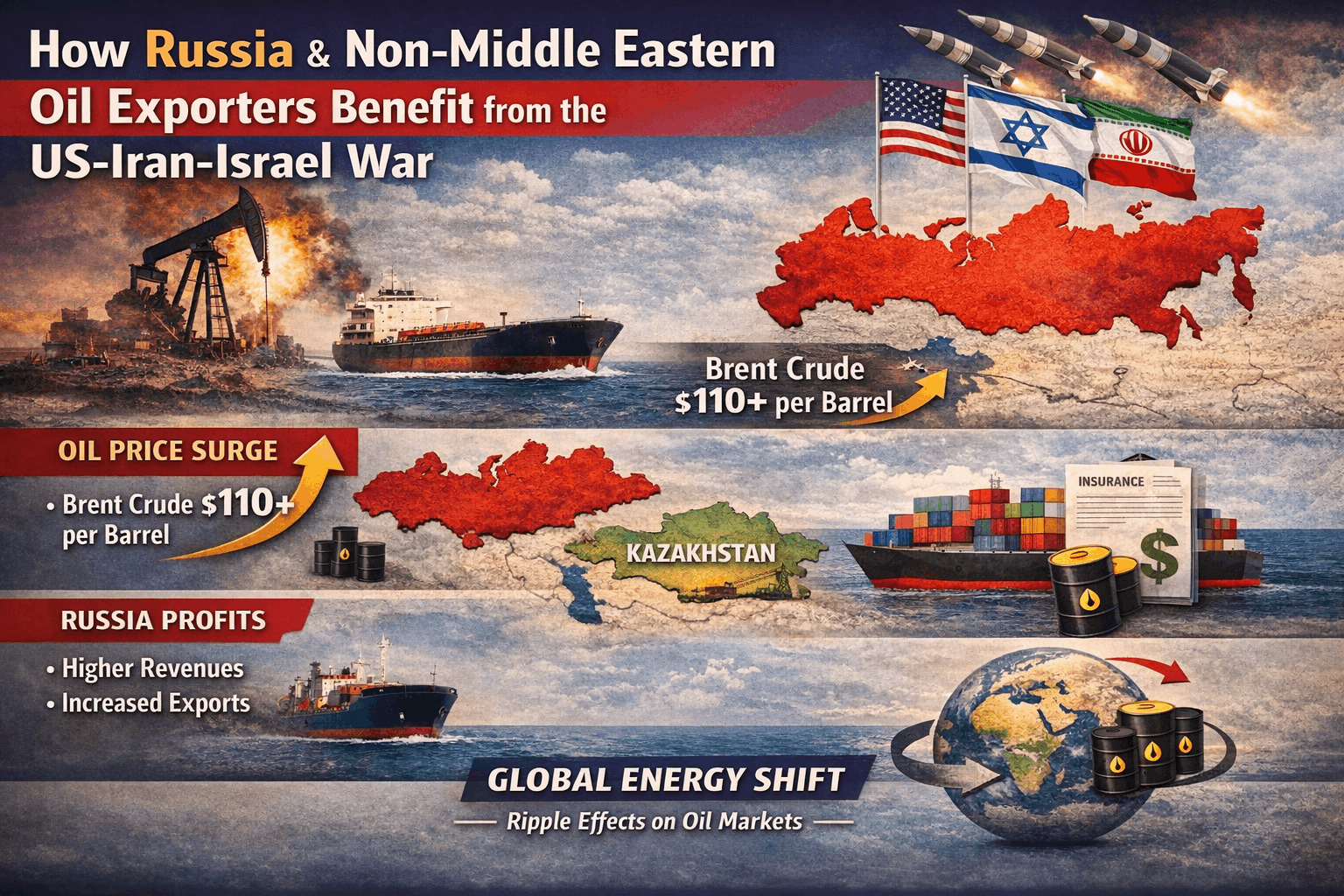
Rochester, NY: The battle between US, Israel, and Iran has quickly escalated from a local dispute into a huge economic shock for the world, particularly in the oil industry. Russia and other non-OPEC oil producers have reaped unexpected economic benefits, even though most analysis has correctly focused on the ongoing human and geopolitical disaster.
1. Oil Prices Have Increased Worldwide, Increasing Profits
Rising oil prices are one among the conflict’s most noticeable effects. Brent crude temporarily surpassed $110-$120 per barrel as markets responded explosively to rising fears about shipping through the Strait of Hormuz, which is used by around 20 million barrels of oil daily, and the potential threat to Iranian oil production and exports.
Those oil producers that are able to maintain or raise production will benefit greatly from this price situation. State revenues and business profits are boosted as a direct result of increased prices, since they increase export receipts on every barrel sold.
2. Russia has been a major beneficiary in a roundabout way
Russia has reaped the largest benefits so far. Russia has discovered a way to profit from the increase in oil costs, even when there are political tensions with the West over Ukraine:
The geopolitical risk premium and the need for alternatives to Middle Eastern crude have increased oil sales, which has boosted Russia’s oil income, according to analysts.
Russia is able to sell more oil at higher prices in important countries like Asia due to disruptions in Iranian supply and Saudi imports being closely monitored by global traders who are afraid of an escalation.
Since the war takes the United States’ attention away from enforcing sanctions and Ukraine, even some Western lawmakers have admitted that Russia gains from high global oil prices.
Some European markets rely on energy from the Middle East; Russia is trying to change that. Putin has made it clear that Russia is prepared to increase its gasoline exports to Europe in response to any demand.
Notably, Russia achieves these benefits without actively participating in the Middle East conflict—a prime illustration of a geopolitical “second-order beneficiary.”
3. Producers outside of the Middle East and other oil exporters, such as Kazakhstan, also incur lower losses.
Other non-Middle Eastern exporters are also in a position to experience relative increases, but Russia’s situation is unique:
When international trade patterns shift due to unrest in the Middle East, Central Asian nations like Kazakhstan may discover new markets for their exports.
Shipments that were redirected from the Persian Gulf may end up with exporters outside of the Middle East at trade chokepoints in the area. This leads to improvements in logistics and the possibility of higher freight revenues.
4. They Experience a Change in the Global Market
Non-Middle Eastern oil providers are benefiting from a number of market shifts:
As a result of the disruption to Iranian oil shipments and the resulting panic among purchasers, the market is shifting its focus to cheaper Russian Urals crude and oil from other suppliers who can provide extra supply. Russia may see a shift in demand from China and India toward its barrels, according to analysts, relieving some pressure from falling Iranian supply.
Another factor working to the advantage of producers in the North Sea, the Caspian, and Africa is the increase in insurance and transportation charges for Persian Gulf vessels, which makes options outside the area more appealing.
5. The American Model Reveals Multifaceted Advantages, Not Simple Gains
Although the United States is still a leading energy producer, the complicated nature of its economic gain from the oil shock should not be overlooked:
A rise in oil and LNG prices should, in theory, boost export earnings for the US, which is already a leading producer and exporter of both commodities worldwide.
Increased crude costs often lead to increased gasoline prices domestically, which may affect consumers and decrease political support. The United States also imports refined goods. The United States stands to gain from increased output, according to analysts, but this usually requires months of investment and changes to supply.
6. More Systematic Economic and Geopolitical Consequences
The war is changing geopolitical connections in ways that go beyond monetary gain:
With more money coming in from energy exports, exporters have more clout in politics and more room to maneuver financially, which impacts foreign policy choices outside of the oil market.
A number of nations have been able to further their geopolitical goals outside of the Middle East as a result of the international spotlight being diverted there. For example, there have been talks on how Russia’s force posture has changed since the West became involved in the war.
Conclusion: Finding Success in an Uncertain Market
Uncertainty and immense human suffering have been brought forth by the continuing US-Iran-Israel conflict. But some factors in the world’s commodities markets have made economic gains possible for Russia and other non-Middle Eastern oil exporters:
- Revenues from exports are positively affected by rising oil prices.
- Alternative manufacturers are in high demand due to the shift in trade patterns.
- Strategic geopolitical diversion opens doors to power and money in a roundabout way.
These tendencies show how geopolitically linked the world’s energy markets are, such that a war on one continent might affect economies all across the world.







