


Rochester, NY: Pakistan is rapidly transforming its defence sector from a modest supplier of small arms to an emerging exporter of high-value military systems, marking what analysts describe as a significant shift in the global arms trade. In 2025, Islamabad secured a series of unprecedented contracts that together reflect a growing international appetite for Pakistani military hardware.
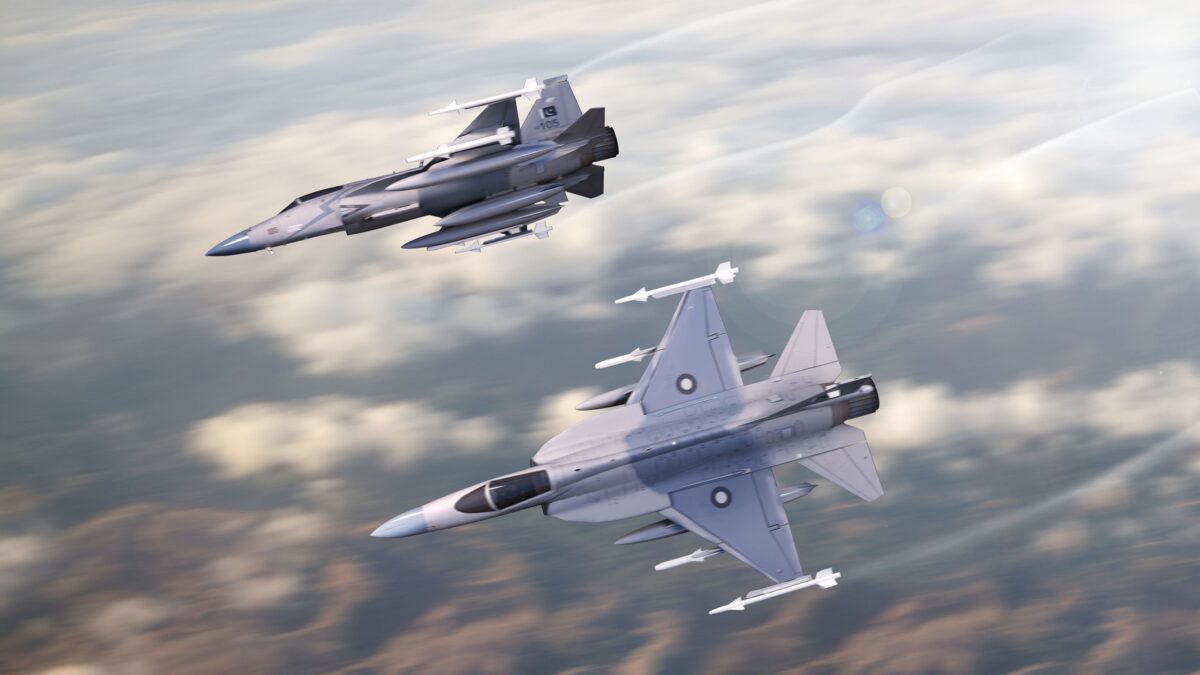
The most headline-grabbing development came on June 6, 2025, when Pakistan announced a record defence export agreement with Azerbaijan valued at about USD 4.6 billion. Under the deal, the Government of Pakistan agreed to supply 40 JF-17 Thunder multirole fighter jets, the jointly produced aircraft Islamabad builds with China, alongside a USD 2 billion investment package linked to training, logistics, and industrial cooperation. The JF-17, long considered Pakistan’s most strategically significant aviation export, has now become the centerpiece of Islamabad’s defence diplomacy.
Just months later, in December 2025, Pakistan concluded another multi-billion-dollar agreement with the Libyan National Army (LNA), estimated at more than USD 4 billion and potentially up to USD 4.6 billion depending on how sustainment and training elements are calculated. This agreement — one of Pakistan’s largest ever — covers 16 JF-17 fighter jets, 12 Super Mushshak trainer aircraft, and a broader spectrum of land, air and sea systems slated for delivery over the next two and a half years.
Taken together, these two major contracts have catapulted Pakistan’s 2025 defence export performance into uncharted territory. Industry reports suggest that total export agreements secured last year surpassed USD 8 billion and may be near USD 10 billion, a stark increase compared with previous years when Pakistan’s reported defence exports rarely exceeded tens of millions of dollars.
This remarkable growth comes on the heels of diplomatic efforts and showcases Islamabad’s intent to build a defence industrial base capable of serving markets beyond its borders.
Part of Pakistan’s newfound export momentum stems from the perception of its equipment as cost-effective yet operationally credible, particularly in countries that require modern capability without the sticker price of Western systems. The JF-17 Thunder, for example, is widely believed to cost a fraction of comparable Western fighters, contributing to its appeal across African, Middle Eastern, and Southeast Asian militaries. Afghanistan, Bangladesh, and Nigeria have all been mentioned in industry discussions as possible customers, while Islamabad has held ongoing talks with as many as 13 countries on potential arms deals, including jets, drones, missiles and sensors.
Beyond fighter jets, Pakistan’s defence exporters are working to broaden their catalog. Trainer aircraft like the Super Mushshak draw interest from air forces building basic flight training pipelines, while unmanned aerial systems are increasingly cited in discussions with prospective buyers. Armored vehicles and naval platforms have also featured in broader pacts, indicating that Pakistan’s export ambition stretches past aviation alone.
Analysts note that Pakistan’s geopolitical positioning amplifies the impact of these sales. Defence contracts, especially in the Middle East and North Africa, are often intertwined with broader diplomatic relationships and training cooperation. The Libyan agreement, concluded despite a U.N. arms embargo, underscores how Pakistan is willing to enter complex markets where traditional Western suppliers face political constraints.
While the rapid growth in defence exports has garnered attention, Pakistan’s industry still faces significant challenges. Production capacity remains limited, raising questions about delivery timelines for large deals. Dependence on foreign components for advanced systems, especially avionics and propulsion units, limits full autonomy. And engagement in politically sensitive regions could invite diplomatic scrutiny or regulatory pushback.
Despite these headwinds, Pakistan’s defence industry appears poised for further expansion. Government and industry estimates envision a path to achieving up to USD 20 billion per year in defence export revenues by 2030, a target that would require not just larger deals but sustained market diversification and capacity building.
In a global defence market still dominated by major exporters like the United States, Russia, China, France and the United Kingdom, Pakistan’s rapid ascent — underscored by record-setting deals and growing interest from countries across continents — represents a noteworthy realignment. It is a development that blends military capability with diplomatic outreach and reflects shifting patterns in how countries procure military equipment in an era of multi-polar competition.
As Islamabad continues to showcase its products and negotiate deals, the world will be watching how sustainably Pakistan can convert recent successes into a long-term role on the international arms stage.







