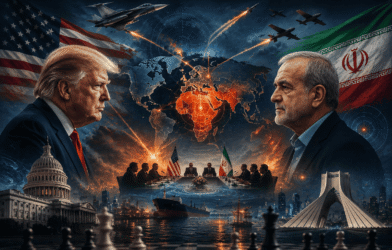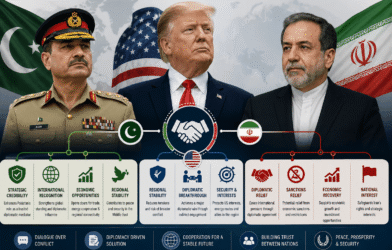
Doha, QR: Covert Strikes and Political Collapse Risks Redraw Middle East Tensions — a series of emerging reports and intelligence leaks have added new complexity to the already volatile Middle East security landscape, where the 2026 Iran-centered conflict has widened beyond direct state-on-state confrontation into a dense web of covert operations, proxy warfare, and rapidly shifting alliances.
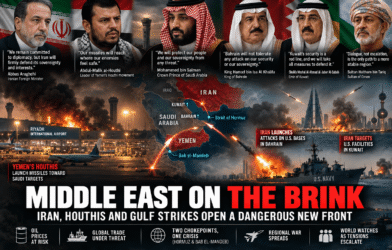
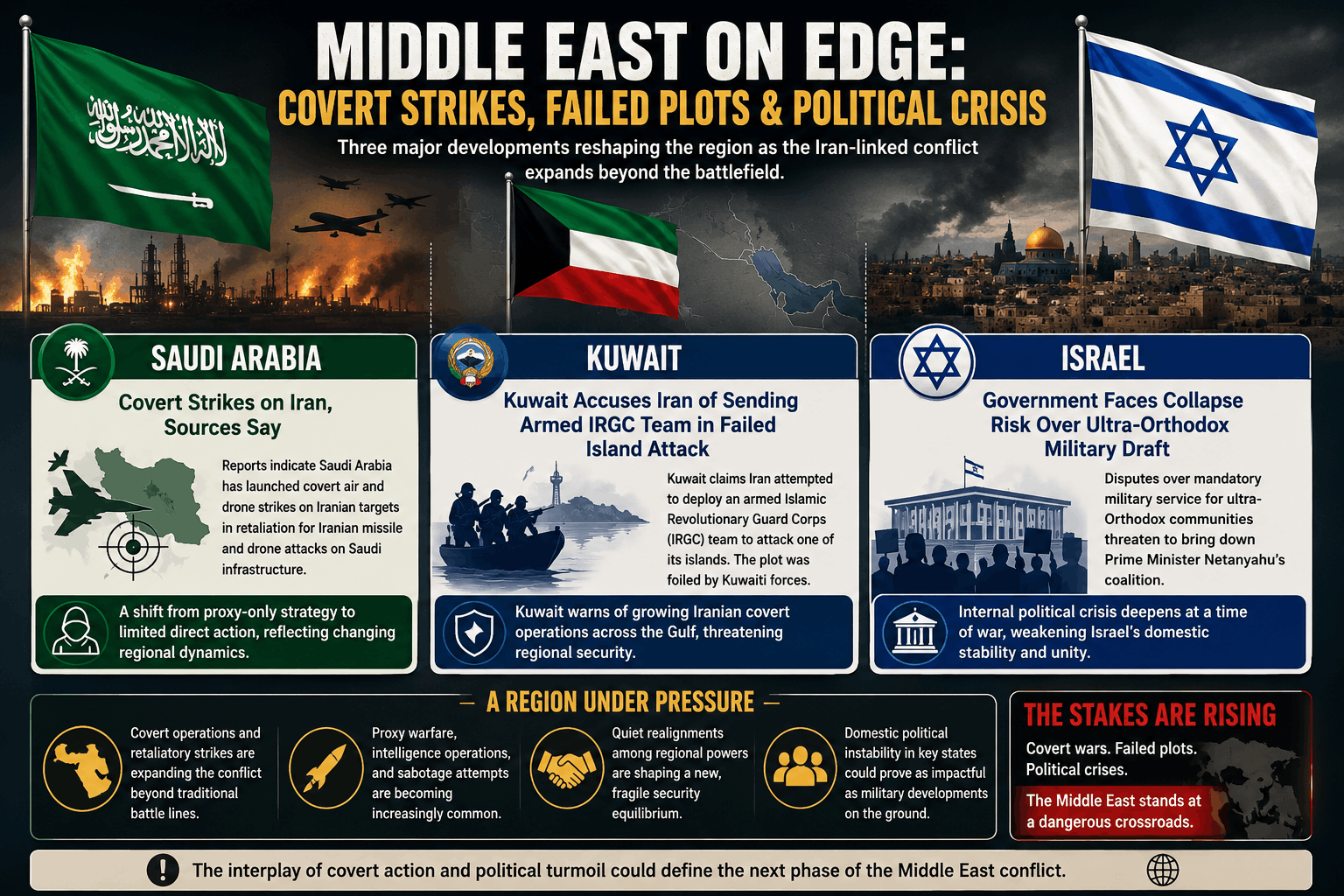
One of the most striking allegations circulating in regional and international reporting is the claim that Saudi Arabia conducted covert strikes on Iranian territory during the escalation phase of the war.
According to Reuters-based reporting and corroborated analysis, Saudi Arabia carried out limited but deliberate retaliatory air and drone operations against Iranian targets in response to sustained Iranian missile and drone attacks on Saudi infrastructure, including energy facilities and military installations.
These actions were described as “tit-for-tat” responses rather than a declared war campaign, signaling a significant departure from Riyadh’s traditional preference for indirect confrontation through proxies.
The reporting further suggests that these covert actions were coordinated in timing with broader regional dynamics, including Israeli military operations against Iran, reflecting an emerging but unspoken alignment of interests among certain Gulf States and Israel during the conflict phase.
At the same time, Kuwait has emerged as another frontline actor in the shadow conflict.
Official Kuwaiti statements and Associated Press reporting indicate that Kuwait has accused Iran of attempting to send an armed Islamic Revolutionary Guard Corps (IRGC) team to conduct an attack on an island within its territory.
The alleged operation was reportedly disrupted before execution, with Kuwaiti authorities describing it as part of a broader pattern of Iranian covert activity across the Gulf.
The accusation has intensified already fragile relations, as Kuwait frames the incident as direct evidence of Iranian efforts to expand asymmetric operations beyond conventional missile exchanges and into sabotage or Special Forces incursions.
These developments are unfolding alongside a widening regional escalation in which multiple Gulf States have reported Iranian retaliatory strikes and attempted infiltrations, while also engaging in their own defensive or pre-emptive actions.
In this environment, even traditionally cautious actors such as Saudi Arabia and the UAE appear to be increasingly willing to engage in limited direct action when perceived thresholds are crossed, although most governments continue to publicly emphasize restraint to avoid full-scale regional war.
Meanwhile, Israel’s internal political situation is adding another layer of uncertainty to the regional equation. Israeli domestic politics are under mounting strain due to the ongoing debate over ultra-Orthodox military conscription.
The coalition led by Prime Minister Benjamin Netanyahu has faced increasing pressure as tensions grow between secular political factions and ultra-Orthodox parties that resist mandatory military service requirements.
Reports indicate that this dispute has the potential to destabilize the governing coalition, as military manpower demands rise during prolonged regional conflict and public dissatisfaction grows over perceived inequities in national service obligations.
Analysts in multiple outlets have warned that this internal crisis could weaken governmental cohesion at a time when Israel is heavily engaged in external military operations and strategic deterrence campaigns.
Taken together, these developments suggest a region moving toward a fragmented security order rather than a clear bilateral or multilateral war structure.
Saudi covert activity, Kuwaiti accusations of Iranian infiltration attempts, and Israel’s internal political fragility all point to a situation where state actions are increasingly interconnected, yet formally denied or carefully obscured.
The result is a volatile equilibrium in which escalation is continuous but rarely declared, and where domestic political pressures inside key states may prove just as consequential as battlefield developments in shaping the next phase of the conflict.
Stay tuned at www.thevariant.us for the latest news updates and analysis.