Co-Author: Salman-Bin-Kareem
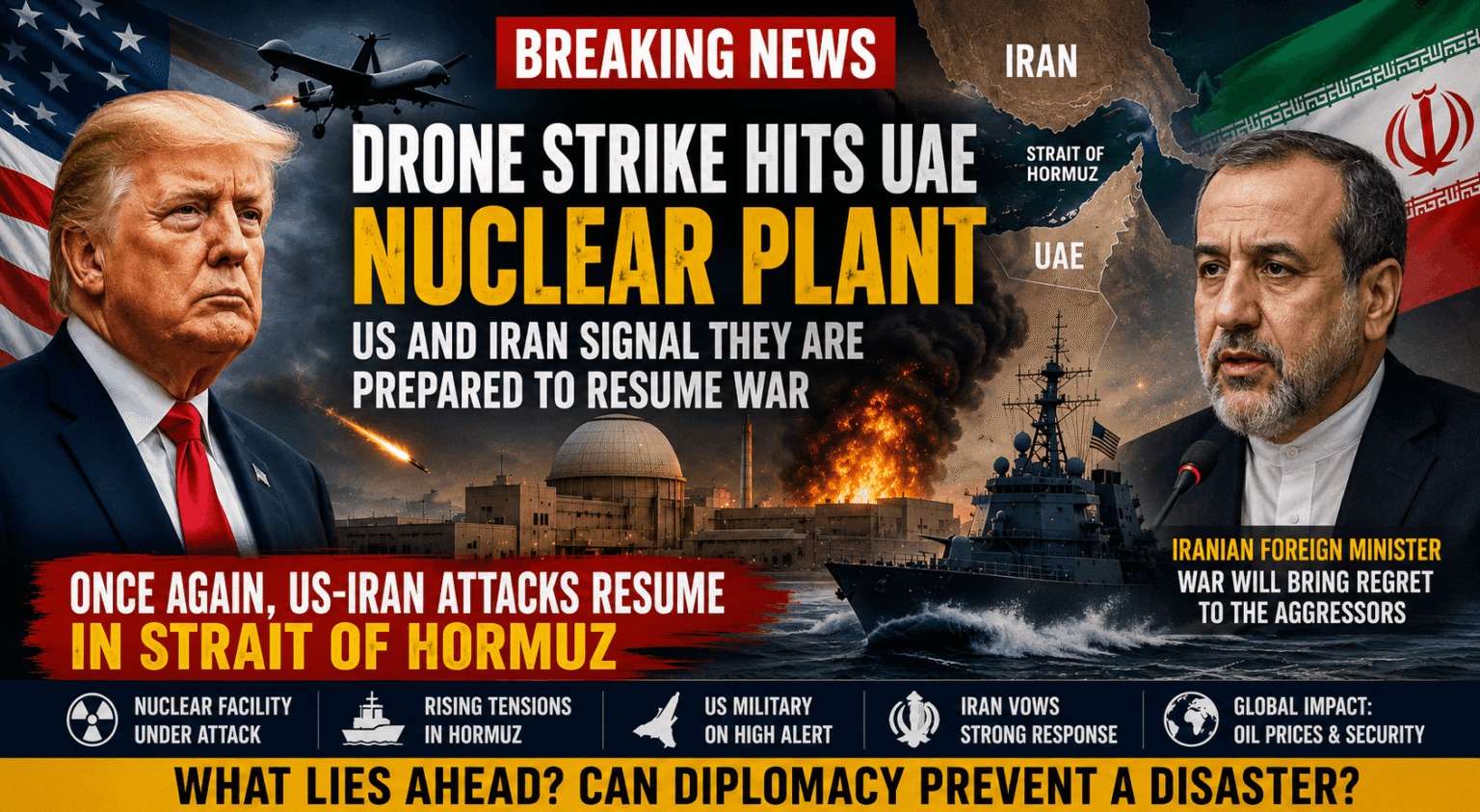
Drone Strike near UAE in Rochester, NY/Doha, QR: A recent drone strike near the United Arab Emirates’ Barakah Nuclear Power Plant has intensified already high tensions in the Gulf, triggering international concern over safety and regional security as the United States and Iran appear prepared to resume broader military confrontation in the Middle East.
The attack, which reportedly triggered a fire near the facility without causing radioactive leakage, has intensified fears that the shadow conflict between Washington and Tehran is entering a far more dangerous phase where energy infrastructure, nuclear facilities, and global shipping routes are all becoming potential targets.
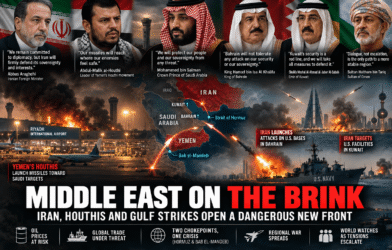
The timing of the strike is especially alarming. It comes as tensions in the Strait of Hormuz rapidly escalate once again following renewed naval incidents, drone interceptions, and accusations of ceasefire violations between American and Iranian forces.
The narrow maritime corridor, through which nearly one-fifth of the world’s oil supply passes daily, has once again become the epicenter of a geopolitical crisis capable of shaking the global economy within days.
Regional governments now fear that the Gulf is moving beyond controlled escalation toward an unpredictable conflict where a single miscalculation could ignite a much broader regional war involving the United States, Iran, Israel, and several Arab states simultaneously.
Trump Signals Readiness for Escalation
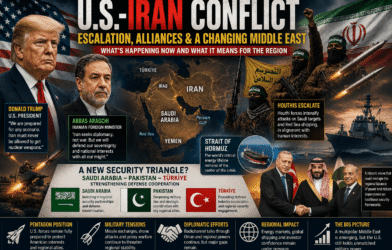
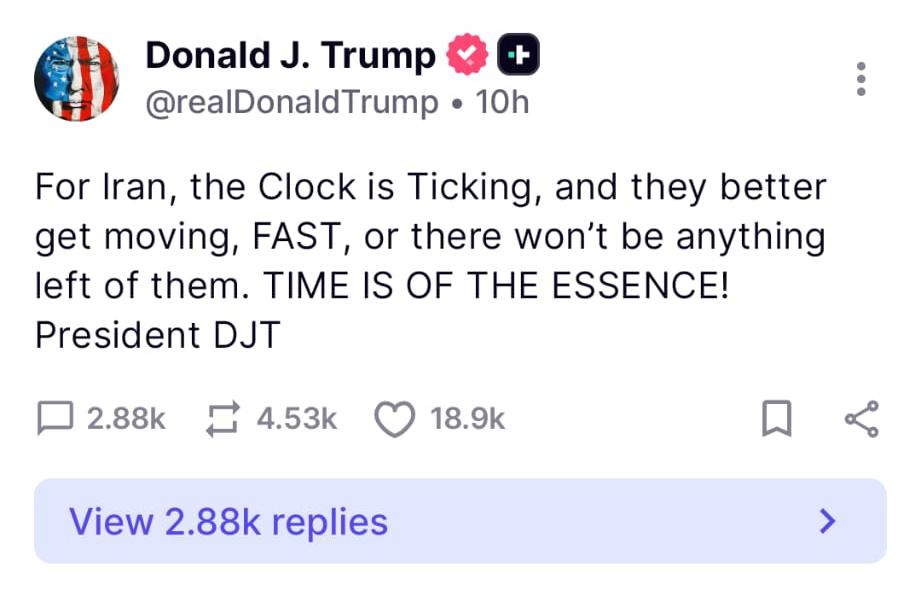
US President Donald Trump has adopted an increasingly aggressive tone in recent days, warning Tehran that Washington is fully prepared to respond militarily if attacks on regional infrastructure and maritime routes continue.
Trump stated that Iran “will face consequences like never before” if it threatens international navigation or targets American allies in the Gulf.
The White House has framed its current military posture as part of a broader strategy to protect global energy security, secure freedom of navigation in the Strait of Hormuz, and prevent Iran from expanding its missile and drone capabilities.
American military deployments across the Gulf have reportedly increased, while Washington continues close strategic coordination with Israel and Gulf partners regarding future contingency operations.
Trump’s latest statements also indicate growing frustration within the US administration over what it views as Iran’s use of proxy networks and asymmetric warfare to destabilize the region without entering direct conventional conflict.
American officials argue that Tehran is attempting to pressure Washington economically by threatening oil supplies and shipping lanes while simultaneously testing the resolve of Gulf states through attacks on strategic infrastructure.
At the same time, the Trump administration remains aware that a prolonged military conflict could trigger severe economic consequences globally, particularly through rising energy prices and disruption of international trade routes.
This contradiction has created a complex situation where Washington is signaling military strength while still attempting to avoid full-scale war.
Tehran Responds with Defiance
Iranian leadership has responded with equally forceful rhetoric, warning that any renewed American military campaign would receive what Tehran describes as a “decisive and crushing response.”
Iranian officials accuse the United States of deliberately escalating tensions in the Gulf while attempting to isolate Iran politically and economically through military pressure.
Iran’s leadership increasingly portrays the current crisis not simply as a dispute over nuclear ambitions, but as a battle over national sovereignty and regional influence.
Tehran believes Washington’s long-term objective is to weaken Iran strategically across the Middle East by targeting its military networks, economic infrastructure, and regional alliances.
Iranian military commanders have repeatedly emphasized that the Strait of Hormuz remains one of Tehran’s most important strategic leverage points.
By threatening disruptions in one of the world’s most vital energy corridors, Iran seeks to demonstrate that any attempt to militarily corner the country will carry global economic consequences.
The attack near the UAE nuclear facility has also reinforced long-standing Iranian arguments that Gulf States are becoming increasingly entangled in the US-Iran confrontation.
Tehran has often warned regional governments that allowing foreign military coordination against Iran could eventually place their own infrastructure at risk.
The Perilous Expansion of the Battlefield
The most troubling aspect of the recent developments is the widening nature of the battlefield itself. Previous confrontations between the United States and Iran largely revolved around sanctions, proxy conflicts, cyber warfare, and limited military exchanges.
The latest escalation, however, involves direct threats to nuclear-linked infrastructure, oil installations, shipping lanes, and civilian economic assets across the Gulf.
The strike near the Barakah nuclear facility has particularly alarmed international observers because it introduces the possibility of nuclear-related incidents becoming part of regional warfare calculations. Although no radiation leak occurred, security analysts warn that repeated attacks near sensitive facilities significantly increase the risk of catastrophic accidents.
The Gulf region’s economic structure is deeply interconnected with energy exports, desalination systems, maritime trade routes, and foreign investment networks.
Any sustained military escalation could therefore create economic shockwaves extending far beyond the Middle East.
Oil prices have already shown volatility following recent incidents around Hormuz, while global markets remain highly sensitive to any signs of further instability.
The broader fear among diplomats and regional governments is that the conflict may slowly move beyond the control of political leadership on both sides.
Once military engagements intensify in multiple locations simultaneously, the possibility of unintended escalation rises dramatically.
Is There Still a Chance to Prevent a Major Disaster?
Despite the harsh rhetoric emerging from both Washington and Tehran, there are still indications that neither side genuinely seeks an all-out regional war.
The United States understands that another prolonged Middle Eastern conflict could become economically and politically costly, particularly at a time when global markets are already facing instability.
Iran, meanwhile, remains under significant economic pressure from sanctions and prolonged confrontation, limiting its capacity to sustain an extended conventional war.
This mutual awareness may still provide a narrow diplomatic opening.
Regional mediators, including Gulf governments and international intermediaries, are reportedly attempting to revive backchannel communications aimed at reducing tensions around the Strait of Hormuz and preventing attacks on civilian and energy infrastructure.
Quiet diplomatic efforts continue because all major actors understand that once critical infrastructure or nuclear facilities suffer large-scale damage, containing the fallout may become nearly impossible.
However, the diplomatic window appears to be shrinking rapidly. Every new strike, drone interception, naval encounter, or political threat increases public pressure and military momentum on both sides.
The danger is no longer limited to a direct US-Iran confrontation; it now includes the possibility of a wider regional conflict capable of destabilizing global energy markets, threatening nuclear safety, and pushing the Middle East into prolonged uncertainty.
The latest drone strike near the UAE nuclear facility may therefore represent more than an isolated security incident. It could mark the beginning of a new and far more dangerous chapter in the confrontation between the United States and Iran, where the line between strategic pressure and uncontrollable war becomes increasingly thin.