Courtesy: Reporting Contribution by Salman-Bin-Kareem [A Senior Journalist I Doha, Qatar]
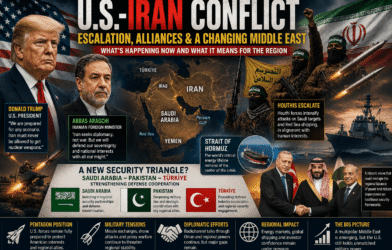
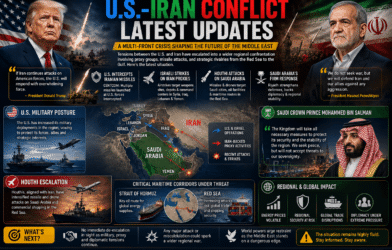
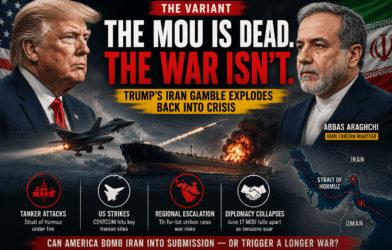
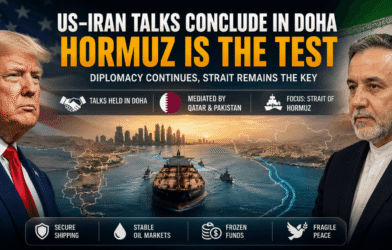
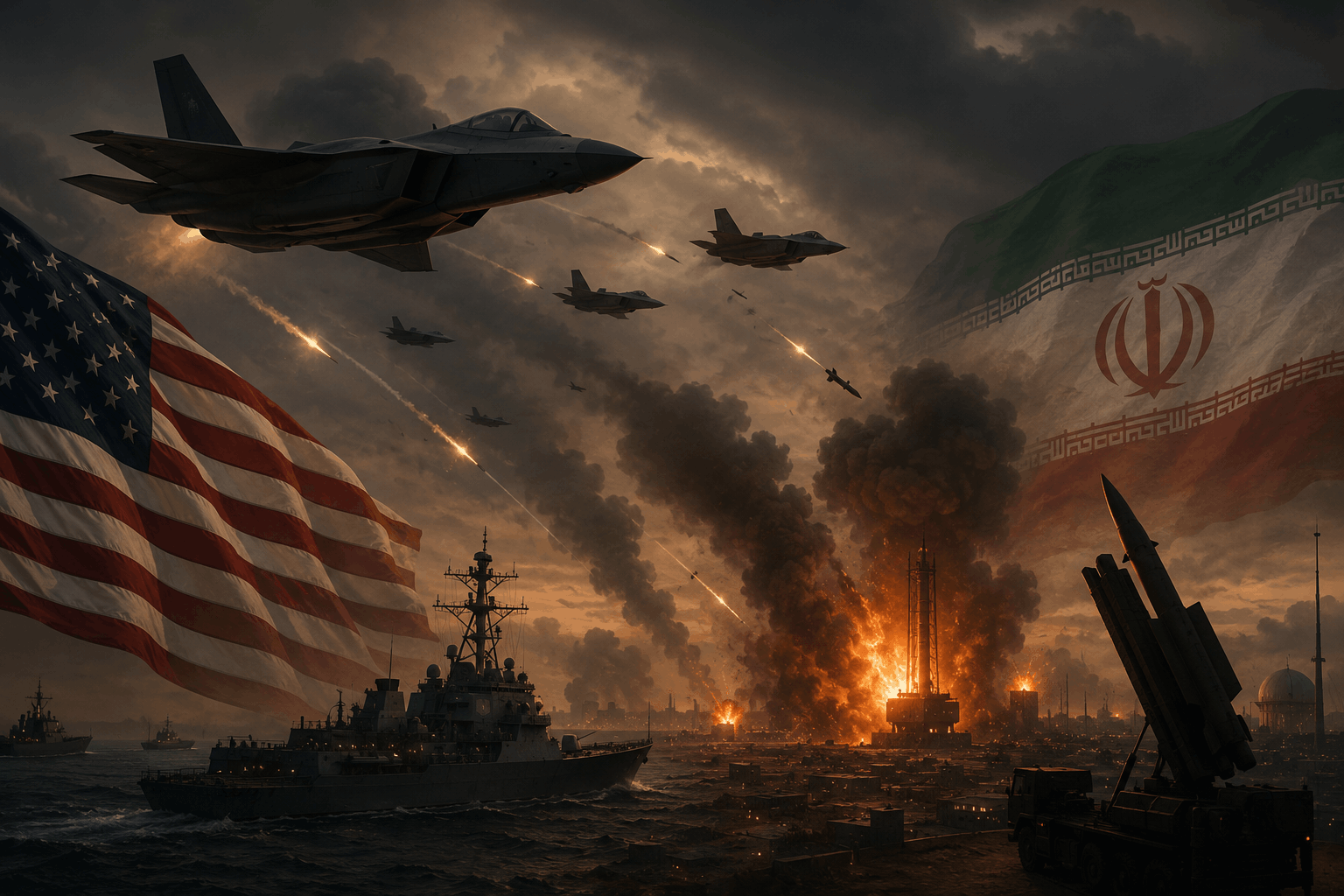
Washington, D.C/Rochester, NY/Doha, QR: The latest U.S. airstrikes on Iran have once again pushed the Middle East into a deeply dangerous phase, where diplomacy is still alive but every military action is weakening its chances.
Washington says the strikes were necessary to protect American interests, regional security and freedom of navigation, particularly around the Strait of Hormuz.
Tehran, however, sees the attacks as a direct assault on its sovereignty and a deliberate attempt to humiliate Iran at a moment when negotiations were still possible.
The outcome is not simply military damage. The real outcome is political escalation.
The United States may have destroyed or damaged Iranian military facilities, radar systems, missile positions and Revolutionary Guard-linked assets, but air power alone cannot force Iran into submission.
Iran has spent decades preparing for exactly this type of confrontation. Its strength does not depend only on conventional military bases.
It depends on dispersed missile systems, drones, naval pressure, regional allies and the ability to create uncertainty across the Gulf, Iraq, Syria, Lebanon and the wider Middle East.
For Washington, the message is clear: Iran must not be allowed to threaten international shipping, U.S. forces or allied states.
For Tehran, the message is equally clear: Iran will not accept military pressure as the price of negotiation.
This is why the crisis is becoming more dangerous with every passing day. Both sides believe they are defending red lines, but both are also narrowing the space for diplomacy.
Iranian leadership has reacted with anger and defiance. Senior Iranian officials have described the U.S. strikes as aggression and warned that Iran reserves the right to respond.
Foreign Minister Abbas Araghchi and other Iranian officials have repeatedly framed Tehran’s position as defensive, arguing that Iran will not remain silent if its territory, military assets or national dignity are attacked.
Inside Iran, retaliation is not only a military matter; it is also a political requirement. The leadership cannot appear weak in front of the Revolutionary Guards, the public or regional rivals.
But Iran also faces a difficult calculation. A major retaliation against U.S. forces, Gulf states or commercial shipping could invite even heavier American strikes.
A limited response may satisfy domestic pressure but fail to restore deterrence. This is the narrow and dangerous road Tehran is now walking: it must respond strongly enough to show resistance, but carefully enough to avoid a full-scale regional war.
The Strait of Hormuz remains the heart of this crisis. It is not just a narrow waterway; it is one of the most sensitive arteries of the global energy system.
Even a few attacks on tankers can shake oil markets, frighten shipping companies and raise insurance costs. Iran understands this leverage.
The United States understands it too. That is why Washington’s strikes appear focused not only on punishing Iran, but also on reassuring global markets that it can protect maritime routes.
Yet reassurance through bombing has limits. Every strike may reduce Iran’s immediate capability, but it also increases Tehran’s motivation to retaliate.
Every Iranian response then gives Washington a new justification for more military action. This is the cycle that now threatens to consume the region.
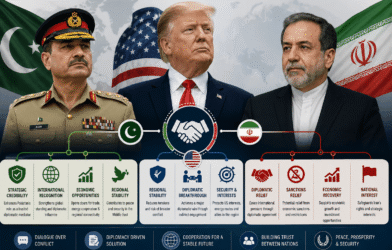
Pakistan’s role as mediator has therefore become extremely important, but also extremely difficult. Islamabad has tried to position itself as a bridge between Washington and Tehran.
Pakistan has relations with both sides, shares a long border with Iran, and has a direct interest in preventing the conflict from spreading.
A destabilized Iran would create serious security, economic and border concerns for Pakistan, especially in Balochistan and along sensitive western routes.
At the same time, Pakistan cannot afford to openly align itself against the United States or against Gulf partners. Its best position is principled neutrality: opposing attacks on sovereignty, supporting freedom of navigation, condemning escalation and pushing both sides back toward negotiations.
Pakistan cannot act as Iran’s spokesman, and it cannot appear as Washington’s silent supporter. Its credibility depends on balance.
Prime Minister Shehbaz Sharif’s government must now focus on quiet diplomacy rather than public slogans.
The real work will happen behind closed doors: passing messages, reducing misunderstandings, requesting pauses in retaliation and convincing both sides that a temporary ceasefire is better than uncontrolled escalation. Pakistan’s strongest card is not military power. It is communication.
But mediation will only work if the next diplomatic framework is stronger than the last one. A simple announcement of ceasefire will not be enough.
There must be clear rules: who investigates attacks in the Strait of Hormuz, what counts as a violation, how quickly evidence is shared, and whether mediators can request an emergency pause before either side retaliates. Without such mechanisms, every explosion at sea will become another excuse for war.
The latest U.S. strikes may have damaged Iran, but they have not solved the conflict. Iran remains capable of responding. The United States remains willing to use force. The Gulf remains nervous. Oil markets remain vulnerable. And Pakistan’s mediation is now being tested at the most fragile point of the crisis.
The most dangerous reality is that both Washington and Tehran may believe that one more strike will strengthen their position. History shows that this is how limited conflicts become larger wars. Airstrikes can destroy targets, but they cannot build trust. Missiles can send messages, but they cannot create peace.
At this moment, Pakistan’s responsibility is to keep the diplomatic door open before the region crosses a point of no return. Islamabad may not have the power to stop American aircraft or Iranian missiles, but it still has the ability to speak to both sides.
In a crisis where direct trust has almost collapsed, that channel may be one of the last remaining tools to prevent a wider Middle Eastern war.
Discover more perspectives, breaking news, and in-depth reports from around the world by visiting The Variant.