Courtesy: Reporting Contribution by Salman-Bin-Kareem [A Senior Journalist I Doha, Qatar]
Rochester, NY: The U.S.-Iran confrontation has entered another dodgy phase, with the conflict increasingly becoming not simply a contest between Washington and Tehran but a test of the entire Middle Eastern security architecture.
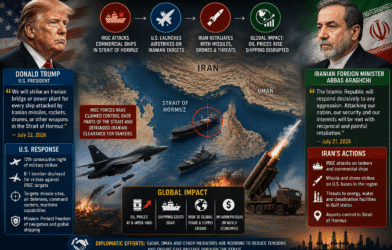
On September 5, U.S. and Iranian forces exchanged fire in waters near Iran after Washington said Iranian ballistic missiles had targeted two U.S. Navy vessels.
U.S. Central Command subsequently struck three Iranian crude-oil carriers.
No American personnel were reported injured. Iran, meanwhile, claimed retaliation against U.S.-linked vessels as tensions intensified around the Strait of Hormuz and Iran’s strategically vital Kharg Island.
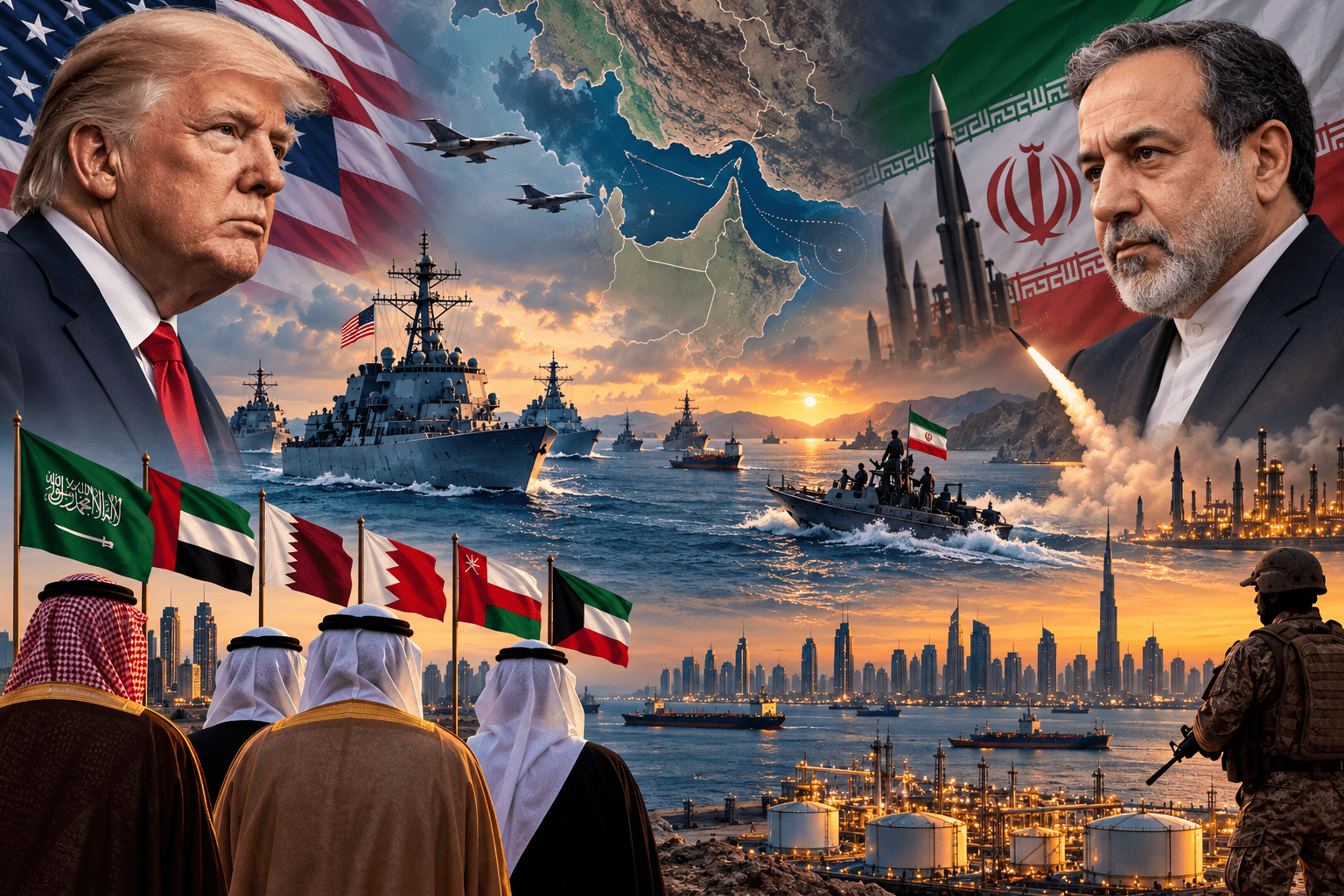
The immediate military exchange is important, but the larger story is what six months of confrontation have done to the thinking of Gulf governments.
Saudi Arabia, the United Arab Emirates, Qatar, Kuwait, Bahrain and Oman have discovered that hosting American military facilities or maintaining strong relations with Washington does not automatically insulate them from Iranian retaliation. At the same time, abandoning the American security umbrella would expose them to even greater uncertainty.
Their emerging answer is therefore not necessarily to replace the United States, but to build additional layers of deterrence around it.
Hormuz Has Become the Center of the Conflict
The Strait of Hormuz remains the most dangerous pressure point.
Iran sees its geographical position around the strait as one of its strongest strategic advantages. Washington sees unrestricted navigation through the waterway as essential to the international energy system.
Recent hostilities have sharply reduced normal maritime activity, while attacks and threats against vessels have raised shipping costs and insurance risks.
Egypt’s foreign minister, Badr Abdelatty, has called for renewed U.S.-Iran negotiations and emphasized the importance of protecting navigation through Hormuz.
The economic consequences extend far beyond Iran and the United States. Saudi Arabia, the UAE, Kuwait, Qatar and Iraq depend heavily upon the uninterrupted movement of energy exports from the Gulf.
That makes the Gulf monarchies simultaneously dependent on American military power and deeply uncomfortable with prolonged American-Iranian escalation.
Arab States Are No Longer Comfortable With a Single Security Guarantor
For decades, Gulf security followed a relatively clear model: the United States maintained bases, naval forces, air defenses and bilateral military relationships, while Gulf States purchased sophisticated Western weapons.
The current conflict is exposing the limitations of that arrangement.
A Congressional Research Service assessment earlier this year described the U.S.-Israel-Iran conflict and disruption of Hormuz as fundamental threats to the economic and national security interests of GCC members.
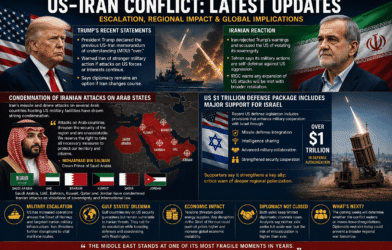
Iranian attacks have reinforced those concerns. Kuwait, Bahrain and Jordan have reported Iranian missile or drone attacks during recent rounds of retaliation, while Jordan’s extensive security relationship with Washington has itself made the country vulnerable to Iranian targeting.
The GCC has publicly condemned Iranian attacks against Gulf territory and commercial shipping, describing strikes on Saudi and Qatari tankers and attacks against Bahrain and Kuwait as violations of international law and threats to global energy supplies.
The conclusion Gulf capitals appear to be drawing is straightforward: American protection remains indispensable, but it is no longer sufficient by itself.
Saudi Arabia Is Building a Network Rather Than Choosing One Alliance
Saudi Arabia provides perhaps the clearest example of the emerging strategy.
Riyadh has increasingly pursued regional defense arrangements designed to complement its American partnership.
Reuters reported in August that Saudi Arabia was developing defensive alliances intended to strengthen deterrence against Iran and Iran-linked forces while avoiding deeper involvement in a war the kingdom did not initiate.
The most significant development is the Mecca Joint Defence Agreement linking Saudi Arabia, Turkey and Pakistan.
Signed on August 7, the agreement establishes a collective-defense principle under which an armed attack against one participant would be regarded as an attack against all three.
Senior officials from the three countries subsequently prepared their first committee meeting to discuss interoperability, collective deterrence and defense-industry cooperation.
This agreement is strategically notable because the three partners offer very different capabilities.
Saudi Arabia provides financial resources and geographic influence. Turkey brings NATO experience, a large conventional military and an expanding domestic defense industry.
Pakistan contributes significant military capabilities and nuclear deterrence.
The arrangement should therefore be understood less as a replacement for Washington than as evidence of a Gulf strategy of security diversification.
Future Gulf defense policy is likely to increasingly combine American military protection, European weapons systems, Turkish defense cooperation, Pakistani military partnerships and indigenous missile, drone and air-defense capabilities.
The UAE, Qatar and Other Gulf States Will Pursue Different Versions of the Same Strategy
The Gulf States are not operating from identical threat perceptions.
Qatar and Oman have traditionally invested heavily in mediation. Saudi Arabia increasingly combines dialogue with expanded defense partnerships.
The UAE has developed one of the region’s most capable militaries and has historically taken a harder position on some Iranian regional activities.
Nevertheless, they share one overriding interest: preventing their cities, ports, desalination plants, airports, energy facilities and financial centers from becoming permanent battlefields.
Iran has reportedly warned Gulf governments that their energy, electricity and water infrastructure could be targeted if they facilitated further American attacks.
Such threats give Arab governments powerful incentives to strengthen integrated missile defense, intelligence-sharing, drone detection and maritime security.
The future Gulf security architecture is therefore likely to be less like one formal NATO-style organization and more like several overlapping security networks.
Trump Is Combining Military Pressure with Transactional Diplomacy
President Donald Trump’s management of the conflict reflects two parallel strategies that can sometimes appear contradictory: coercive military pressure and rapid diplomatic bargaining.
In early August, Trump said he had postponed a major planned attack on Iran after consultations with Saudi Arabia, Qatar and the UAE.
He indicated that Gulf leaders, particularly Saudi Crown Prince Mohammed bin Salman, had influenced his decision to give negotiations additional time.
That episode demonstrated that Gulf governments retain significant influence over Washington’s calculations because the consequences of escalation fall heavily upon them.
But restraint has not meant abandonment of military pressure.
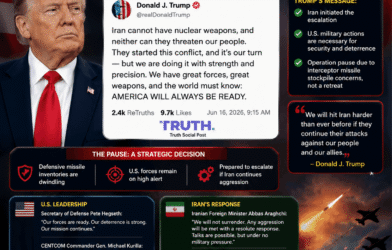
The latest American strikes against Iranian oil vessels demonstrate that Washington is prepared to respond militarily when U.S. ships or personnel are threatened.
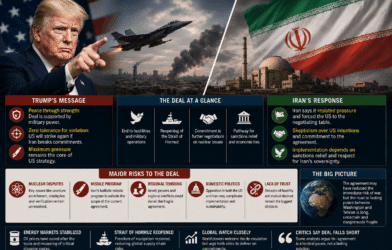
The administration has also sought a broader agreement than the earlier temporary understandings surrounding Hormuz. Recent reporting indicates Washington wants any settlement to address not only maritime access but Iran’s nuclear program as well.
Trump’s approach can therefore be described as pressure, pause, negotiation and renewed pressure rather than either permanent war or traditional diplomacy.
The strategic danger is that such calibrated escalation requires both sides to correctly interpret where the other’s red lines lie.
One miscalculation involving a U.S. warship, Iranian oil infrastructure, an American base or a Gulf energy installation could quickly make controlled escalation much harder.
American Military Capacity Is Also Part of the Calculation
Another factor receives less public attention: the cost of sustaining a prolonged high-intensity missile campaign.
Reuters reported in August that the U.S. military had used virtually all available stocks of certain long-range precision missiles allocated to the Iran war, highlighting the strain extended combat can place on sophisticated weapons inventories.
That does not mean Washington lacks the capability to continue military operations. But it increases the strategic value of deterrence, diplomacy and burden-sharing with regional allies.
For Trump, a negotiated arrangement that guarantees navigation through Hormuz while restricting Iran’s nuclear and military options could potentially achieve strategic objectives without requiring indefinite American military operations.
For Tehran, however, abandoning its leverage over Hormuz without meaningful sanctions relief would weaken one of its most powerful bargaining instruments.
That fundamental disagreement explains why ceasefires have repeatedly proved fragile.
The Middle East Is Moving Toward a Multi-Layered Security System
The most lasting consequence of the U.S.-Iran conflict may therefore not be a particular missile strike or ceasefire document.
It may be the transformation of Arab strategic thinking.
Gulf governments are increasingly recognizing that relying entirely on Washington carries risks, but distancing themselves from the United States carries even greater ones. Their likely response is diversification rather than separation.
Washington will remain the region’s most important outside military power, especially because of its naval capabilities, intelligence networks, air defenses and military bases. But Turkey, Pakistan and potentially other regional actors will play larger complementary roles, while Gulf governments accelerate domestic defense production.
At the same time, diplomatic relationships with Iran will probably remain necessary because geography cannot be changed. Tehran will remain directly across the Gulf regardless of the political outcome of the current confrontation.
The emerging strategy is therefore built around three objectives: American deterrence, regional defense diversification and continued diplomatic channels with Iran.
The latest confrontation around Hormuz shows why all three are needed.
The United States and Iran still possess enough military power to inflict serious damage on one another and their partners, but neither has demonstrated an easy pathway toward imposing a stable regional order.
For Arab capitals, that uncertainty is becoming the central lesson of the war: future Gulf security cannot depend entirely upon choosing between Washington and Tehran. It will increasingly depend upon creating enough military, diplomatic and economic partnerships that no single confrontation can determine the region’s fate.
Stay ahead of emerging trends and international developments with trusted reporting and analysis from The Variant.