


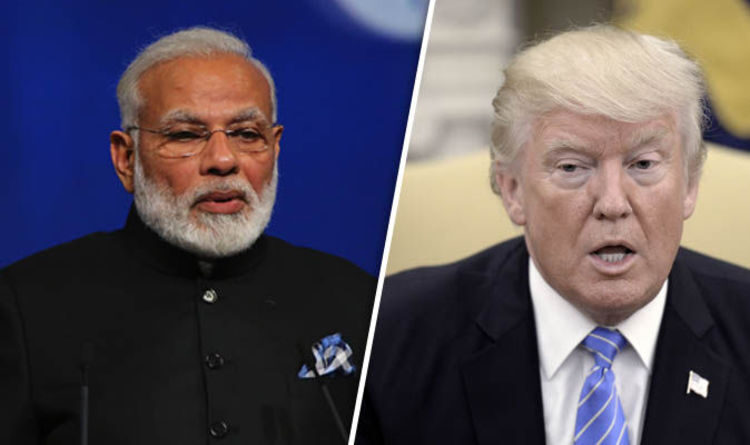
Rochester, NY: As the possibility of a U.S. strike against Iran moves from strategic discussion to real geopolitical concern, the role of international narratives — shaped not only by governments but by media ecosystems — has become almost as important as the shifting military deployments.
Among the global players whose voices carry influence, India stands out both for its strategic autonomy and for the way its government and media have responded to the intensifying U.S.–Iran standoff.
For decades, India has pursued a balancing act in West Asia. Unlike many Western governments that frame relations with Tehran primarily in terms of nuclear proliferation and security concerns, New Delhi sees Iran through the lenses of energy security, regional connectivity, and historical ties.
Iran remains a partner for India in critical infrastructure ventures, most notably the Chabahar port — a project that promises land access to Afghanistan and Central Asia while sidestepping Pakistan.
When the U.S. imposed sanctions on Tehran, India initially reduced crude oil purchases but maintained diplomatic engagement — signaling an enduring strategic link that predates and transcends current tensions.
India’s government statements and diplomatic conduct in recent international fora reflect this nuance. In January 2026, India’s mission at the United Nations Human Rights Council voted against increasing monitoring of Iran, prompting Iran’s ambassador to publicly thank New Delhi for standing against what Tehran portrayed as a “politically motivated” resolution.
This gesture highlighted how Indian actions — even procedural votes — can be interpreted by Tehran as indicative of solidarity or at least diplomatic sympathy, especially when aligned with principles of national sovereignty and multipolar diplomacy.
New Delhi’s public commentary on the Middle East has consistently emphasized de-escalation and protection of civilians rather than overt alignment with U.S. policy prescriptions.
After a meeting with Iran’s president and Indian Prime Minister Narendra Modi, India reiterated calls for dialogue and restraint, underscoring its potential role as a mediator given its close ties with both Tehran and Washington.
At the same time, sections of the Indian media have reflected and amplified these official positions — but not without controversy.
Critics in Tehran have accused some Indian news outlets of disseminating what were described as “fake and fabricated” narratives during the Israel-Iran conflict, suggesting coverage that in Iranian eyes echoed external propaganda rather than balanced reporting.
This rare rebuke from the Iranian embassy underscored how media framing in New Delhi can be seen as shaping international perceptions, particularly when it seems to question or critique Western military actions.
Beyond diplomatic language, Indian news channels and newspapers have at times contextualized U.S. actions in the broader historical pattern of American interventions, raising questions about the effectiveness and morality of military solutions.
Headlines and analysis pieces have underscored India’s emphasis on peace and cooperation over conflict, reinforcing domestic public opinion that is often skeptical of foreign military engagements — especially those seen as destabilizing to a region on which India’s trade routes and energy imports depend.
This combination of government statements and media narratives can harden into what U.S. policymakers might perceive as an anti-U.S. narrative, even if it is framed as principled non-alignment rather than support for Tehran.
For Washington, such narratives complicate already difficult diplomacy. If New Delhi’s discourse is interpreted as implicitly legitimizing Iranian grievances or opposing U.S. military options, it may embolden voices elsewhere that call for resistance to American policy.
To mitigate this, the U.S. government needs to be proactive on multiple fronts. First, sustained diplomatic engagement with New Delhi is crucial. Washington must acknowledge India’s strategic imperatives — including energy security and regional connectivity — and make clear that U.S. policy does not threaten India’s core interests. Emphasizing shared values of stability and civilian protection rather than coercive military language could help reduce narrative friction.
Second, the U.S. should invest in strategic communication efforts that engage not just governments but media organizations and academic institutions in India. Articulating U.S. security concerns in ways that resonate with Indian priorities — such as safeguarding global energy routes and counter-terrorism cooperation — will help reframe narrative debates in a language Indians see as relevant and balanced.
Another measure involves cultural and educational exchanges that deepen mutual understanding. When Indian journalists, scholars, and policymakers are exposed to nuanced U.S. perspectives on Middle Eastern policy, they are less likely to default to polarized narratives and more likely to present balanced coverage — a vital buffer against simplistic Good vs. Bad storylines.
Lastly, the U.S. can collaborate with India in multilateral forums focusing on conflict resolution and humanitarian protection. By positioning itself as a partner in peace, rather than as a unilateral actor, Washington can undercut narratives that paint its potential strike as aggressive or destabilizing.
The stakes are high. A U.S. strike on Iran — whatever its strategic justification — will not play out solely on battlefields. It will unfold in the court of global opinion, where India’s voice, its government’s positions, and its media’s framing can significantly influence how the conflict is understood across the Global South. Navigating this narrative terrain requires sensitivity to New Delhi’s perspectives and proactive engagement — diplomatic listening as much as strategic communication.







