


Contributed by Amir Mughal (Crime Reporter)
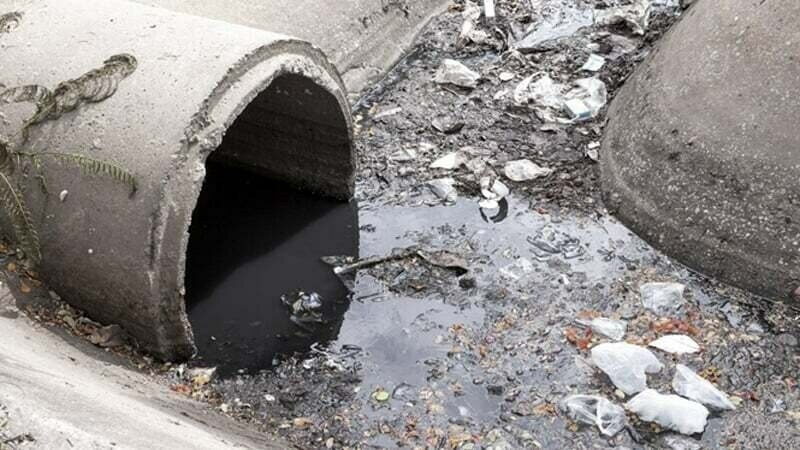
Rochester, NY/Lahore: A routine evening walk turned into a nightmare on January 28, 2026, for a young family in Lahore, Pakistan. In one of South Asia’s most historic and densely populated cities, a mother and her ten-month old daughter fell into an uncovered sewer line near Bhatti Gate, close to the revered Data Darbar shrine.
The innocent outing would end in death, but the aftermath — involving official denial, accusations of negligence, and allegations of police misconduct — has sparked outrage both domestically and among global observers concerned about urban safety and governance in emerging megacities.
The victims later identified in local reports as 24‑year‑old Sadia and her daughter Rida Fatima had stepped out of a rickshaw near an unfinished municipal sewer project when the unprotected opening gave way beneath them.
Emergency services responded to distress calls shortly before 7:30 p.m., and rescue teams recovered Sadia’s body from the sewerage system the same night. After an exhaustive search involving diving teams from Rescue 1122 — the province’s primary emergency response agency — little Rida’s body was found the following morning several kilometers downstream.
The tragedy laid bare alarming gaps in basic public safety measures. Despite being in the heart of a busy district, the sewer line — part of a municipal expansion project — had no temporary covers, warning signs or barricades to protect pedestrians.
In the immediate aftermath, local authorities scrambled to clarify what had happened, with some officials initially questioning whether the incident had occurred at all and suggesting that it might have been “fake.”
Such responses, in the eyes of many residents and commentators, underscored a pattern of administrative denial in the face of public calamity.
Within hours of the discovery of the bodies, Sadia’s father registered a First Information Report (FIR) at the Bhatti Gate police station charging the project manager, the safety officer, and the site Incharge under Section 322 of Pakistan’s Penal Code, which pertains to manslaughter. The FIR explicitly held construction project staff responsible for leaving the manhole uncovered despite heavy foot traffic in the area.
Public anger intensified when allegations surfaced that local police had not only mishandled the case but also detained and physically abused Sadia’s husband, Ghulam Murtaza. According to family statements reported by Aaj English TV, Murtaza approached police eager to register a complaint after his wife and daughter were lost, only to be treated with suspicion and detained.
He alleges that officers repeatedly interrogated him about whether he had killed his wife and attempted to compel him to confess, even holding him for hours and subjecting him to violence.
An internal police inquiry subsequently found that the Station House Officer (SHO) and Superintendent of Police (SP) involved in the early stages of the investigation had illegally detained and mistreated Murtaza while pursuing unfounded theories about the circumstances of the deaths.
According to the inquiry’s findings, CCTV footage and other evidence supported the family’s claim that he was wrongly treated as a suspect rather than a grieving husband. Both officers have been recommended for departmental action.
The scandal has prompted urgent questions from civil society groups and international governance observers about broader systemic issues. Experts highlight that sludge and sewer lines represent one of the most basic infrastructure needs in any city; yet, in Lahore and many other rapidly urbanizing South Asian metropolises, oversight mechanisms often lag behind development projects.
Open manholes and unprotected trenches have been linked to similar tragedies elsewhere, reinforcing concerns over public education, accountability, and enforcement of safety protocols.
The Punjab provincial government, led by Chief Minister Maryam Nawaz, responded by ordering the arrest and suspension of several officials associated with the sewer pipeline project and, at least on paper, seeking to fortify municipal safety standards.
Reports indicate that compensation was offered to the bereaved family, and high-level committees were tasked with producing investigative findings. This intervention underscores the political weight such tragedies can have in a region where infrastructure development is frequently framed as a sign of progress.
Yet local governance experts caution that these reactive measures, while necessary, do not address the deeper structural failures that allow such hazards to persist. In many fast-growing cities around the world, chronic underinvestment in basic civic infrastructure, weak enforcement of construction safety standards, and fragmented oversight between agencies create dangerous fault lines beneath everyday life.
For human rights advocates, the plight of Sadia and Rida also raises questions about law enforcement culture and protections for victims’ families. The initial treatment of Murtaza, followed by the subsequent admission of police misconduct, has renewed calls for comprehensive reforms within police departments tasked with investigating accidents and public safety complaints.
Activists argue for improved training to ensure that bereaved families are treated with dignity and that investigations focus squarely on root causes rather than deflecting blame onto victims or their loved ones.
Internationally, the incident has drawn attention to how urban infrastructure intersects with governance, accountability, and civil rights in rapidly developing nations. As cities take on large-scale public works projects, from sewer expansions to metro systems, the need for robust safety measures — from protective coverings and barriers to real-time public monitoring systems — is increasingly viewed as a basic human rights imperative, not just a technical requirement.
For Lahoris and observers abroad alike, the deaths of a young mother and her child were more than a local news item; they were a stark reminder that in every city, the measure of progress cannot merely be new roads or pipelines, but the safety, dignity, and protection afforded to all residents, especially the most vulnerable.







