


Rochester, NY: In a case that has sent shockwaves through diplomatic and intelligence circles in Washington and New Delhi, Nikhil Gupta, a 54-year-old Indian national, stood before U.S. Magistrate Judge Sarah Netburn in the U.S. District Court for the Southern District of New York on February 13 and entered guilty pleas to three federal charges — murder-for-hire, conspiracy to commit murder-for-hire, and conspiracy to commit money laundering — in connection with a plot to assassinate a prominent Sikh separatist leader on American soil.
The case began quietly in early 2023, when U.S. intelligence agencies picked up communications suggesting that individuals with overseas connections were attempting to recruit criminal intermediaries to target Gurpatwant Singh Pannun, a prominent Sikh separatist advocate based in New York.
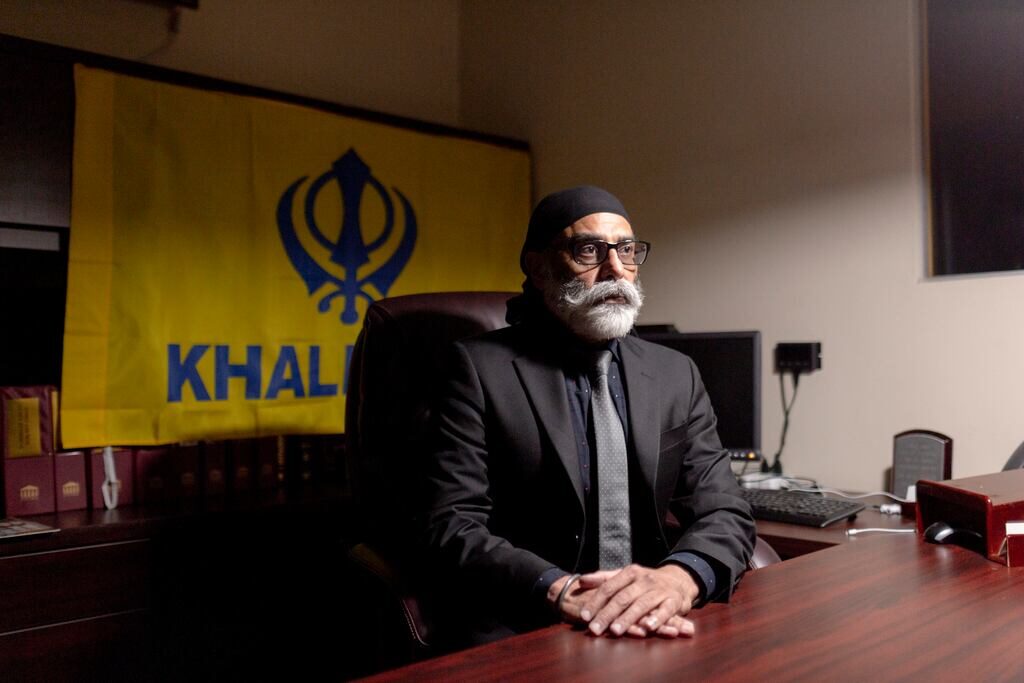
The Pannun, a U.S. and Canadian citizen and lawyer is known for leading the advocacy group Sikhs for Justice and promoting the idea of an independent Sikh state called Khalistan.
According to court filings and public statements from the U.S. Department of Justice (DoJ), Gupta worked “at the direction and coordination” of another key figure, Vikash Yadav, an employee of the Government of India’s Cabinet Secretariat — the organization that houses India’s foreign intelligence service RAW — to orchestrate what federal prosecutors described as an assassination plan that would silence Pannun for his outspoken activism.
By mid-2023, undercover recordings and encrypted messages had been collected. Investigators allege that Yadav provided operational guidance and intelligence regarding Pannun’s movements.
Gupta’s sentencing has been set for May 29, 2026, by U.S. District Judge Victor Marrero, and though federal guidelines suggest a potential sentence in the decades-long range, the final penalty will be determined at that hearing.
“This defendant plotted to assassinate a U.S. citizen in New York City,” declared U.S. Attorney Jay Clayton outside the Manhattan federal courthouse, reaffirming a message echoed by federal law enforcement that foreign actors cannot target individuals within the United States without consequence. “He thought that from outside this country he could kill someone in it without consequence, simply for exercising their American right to free speech. But he was wrong, and he will face justice.”
In a pointed statement underscoring domestic security priorities, FBI Assistant Director in Charge James C. Barnacle, Jr. told reporters that the bureau would “continue to aggressively defend the homeland against any foreign adversaries who target our citizens for exercising their constitutionally protected rights.”
In June 2023, the killing of Hardeep Singh Nijjar in Surrey, British Columbia, intensified scrutiny of potential cross-border targeting of Sikh activists. While the Nijjar case unfolded separately in Canada, U.S. investigators noted communications referencing that incident, increasing urgency around preventing another attack.
In late 2023, Gupta was arrested in the Czech Republic on a U.S. extradition request. After legal proceedings there, he was extradited to the United States in 2024 to face federal charges including murder-for-hire and money laundering conspiracy.
Throughout 2025, federal prosecutors presented intercepted communications, financial transfer plans, and testimony from cooperating witnesses. The case culminated in early 2026 when Gupta entered a guilty plea before U.S. District Judge Victor Marrero, acknowledging his role in the conspiracy.
The convergence of these two incidents has forced a reckoning between the United States and India over national sovereignty, free speech protections, and the limits of cross-border intelligence operations.
Prior to these developments, India–U.S. security cooperation had steadily deepened in the last decade, driven by mutual concerns over strategic influence in the Indo-Pacific, counterterrorism cooperation, and intelligence sharing.
The fallout of this case, however, risks fraying that trajectory. Several U.S. lawmakers from both parties have called for reviews of intelligence partnerships and visa policies for Indian officials, while also emphasizing that cooperation — particularly on shared threats like violent extremism — remains vital.
Legal experts note that the Justice Department’s vigorous prosecution of Gupta sends a clear message about U.S. policy: foreign nationals who engage in or facilitate violence against individuals on U.S. soil, regardless of the ideology involved, are subject to American criminal jurisdiction.
Under longstanding U.S. law and international norms, sovereignty is paramount; violent acts within the territory — especially those targeting residents for their protected political beliefs — are treated as domestic criminal offenses.
This case re-emphasizes that principle, and reinforces the stance that neither diplomatic position nor foreign government backing can insulate individuals from prosecution when they conspire to commit murder in the United States.
In New York City, community members and supporters of Pannun held vigils and prayer services outside the courthouse as the guilty plea was entered, underscoring the continuing volatility of the Khalistan issue among Diaspora Sikhs in North America.
Pannun himself, undeterred, released a statement vowing to continue his activism and advocacy for the Sikh community until his goals were realized, a commitment he repeated even in the face of a plot that brought him to the center of one of the most audacious foreign-linked prosecutions in recent U.S. history.
As diplomatic dialogues continue behind closed doors, the impact of this case on the broader security partnership between the United States and India will remain a subject of close international attention in the months leading up to Gupta’s sentencing and beyond.







