


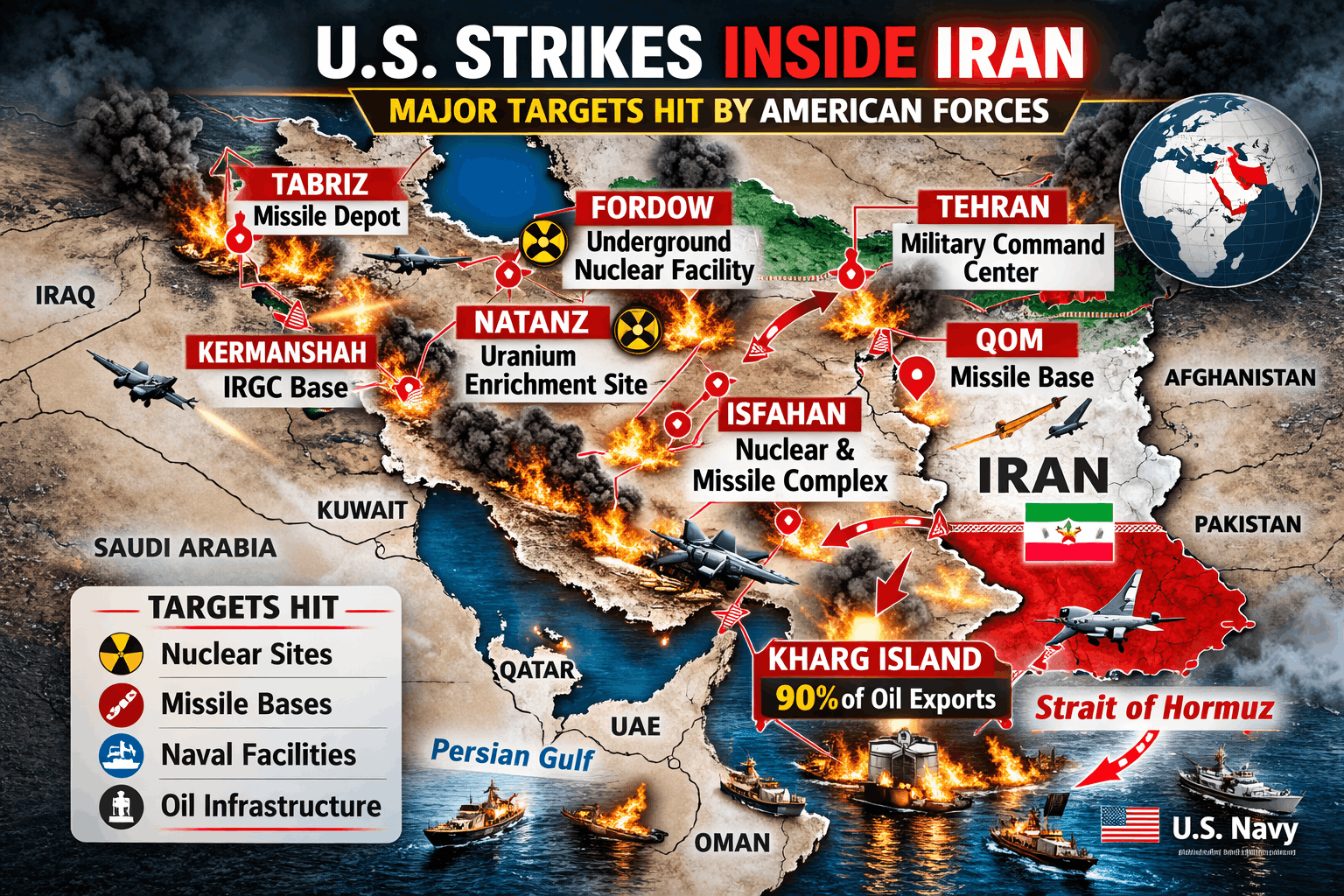
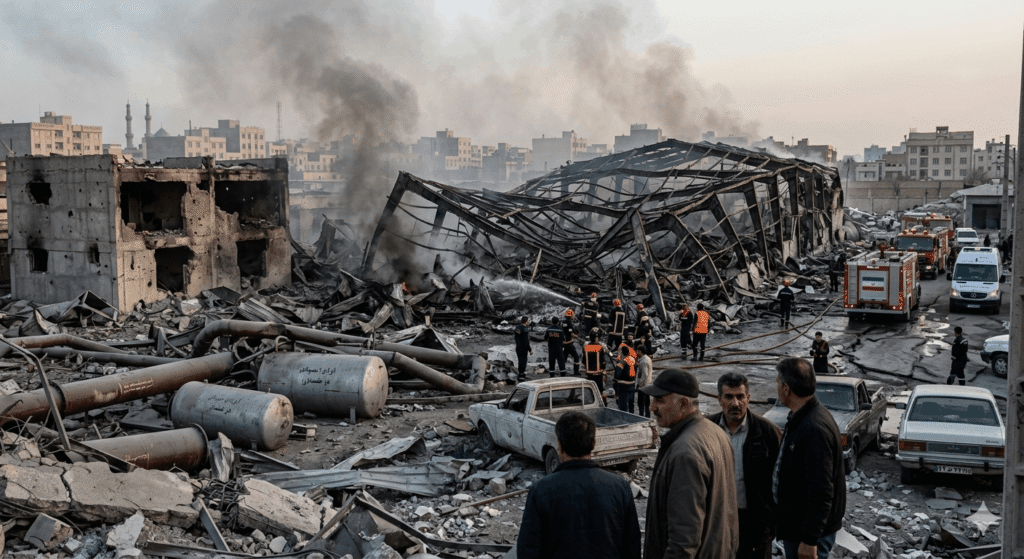
New York, NY/Toronto, ON: On February 28, the United States and Israel initiated an attack on Iran following an extended period of military buildup and escalating threats from President Trump. Extensive strikes were directed at Iranian military installations and the highest echelons of the Islamic Republic’s leadership, resulting in the death of Supreme Leader Ayatollah Ali Khamenei.
The Assembly of Experts in Tehran has designated Mojtaba Khamenei, the son of Ali Khamenei, as his successor. Iran has responded by striking U.S. military installations, along with energy and civilian infrastructure in the Gulf States.
Israel has increased its air strikes in Lebanon following Hezbollah’s rocket fire into Israel, which is perceived as support for Iran.
Over 1,800 fatalities have been recorded to date, comprising 8 U.S. service members and a minimum of 175 students, who reportedly lost their lives due to a U.S. strike on an Iranian elementary school. Trump has provided inconsistent remarks regarding U.S. military goals and the direction of the conflict.
The attack rapidly developed into a regional conflict, resulting in significant consequences for essential supply chains and humanitarian assistance.
The closure of the Strait of Hormuz by Iran has resulted in a significant disruption to global energy markets, leading the International Energy Agency to release four hundred million barrels from its strategic reserve.
Chronology of Iran’s Nuclear Initiative
Since at least 1957, Iran has engaged in a nuclear program, achieving varying levels of success over the years. In the late 1980s, amid the conflict with Iraq, Iran made the strategic decision to pursue the development of nuclear weapons as a means to bolster its security.
As a result, Iran engaged in negotiations with China and Russia to facilitate the program’s research during the 1990s. During the summer of 2002, the National Council of Resistance of Iran, which consists of various Iranian dissident groups, revealed the existence of two Iranian nuclear facilities that had been concealed from the IAEA.
In 2003, a concerted diplomatic initiative was initiated to put an end to Iran’s nuclear program. Iran consented, emphasizing the necessity of retaining its centrifuges for the purpose of nuclear energy production.
Nonetheless, it failed to uphold its pledge for transparent reporting to the IAEA and persisted with covert operations, resulting in a rebuke in June 2004 and a determination of non-compliance by the IAEA in September 2005, which set the stage for a subsequent referral to the UN Security Council (UNSC).
In 2006, the UNSC enacted Resolution 1696, marking the initial legally binding demand for Iran to halt its uranium enrichment activities. In the following years, the UNSC implemented a sequence of resolutions that imposed significant economic sanctions on Iran due to its inability to halt its enrichment-related activities.
From 2011 to 2015, the cumulative impact of international sanctions resulted in a 20 percent contraction of Iran’s economy, accompanied by an increase in unemployment to 20 percent.
In 2013, Hassan Rouhani, recognized for his pragmatic approach, secured victory in Iran’s presidential election by pledging to alleviate sanctions and revitalize the economy.
In the subsequent two years, the United States organized multiple rounds of bilateral discussions and guided the other P5+1 coalition members—China, France, Germany, Russia, and the United Kingdom—in their negotiations with Iran’s new leadership.
The culmination of these efforts was the adoption of the Joint Comprehensive Plan of Action (JCPOA) in 2015. Following the signing of the agreement by key parties, the UNSC proceeded to approve UN Resolution 2231, thereby facilitating sanctions relief.
The JCPOA mandated that Iran decrease its enriched uranium stockpile by 98 percent over a period of fifteen years, reduce the number of operational centrifuges by two-thirds for ten years, and grant inspectors access to enrichment facilities within twenty-four days in the event that the IAEA suspects any violations.
Furthermore, should the IAEA verify any violations, the JCPOA stipulates that sanctions can be reinstated without delay. Following the implementation of the JCPOA on January 16, 2016, Iran was granted sanctions relief amounting to nearly $100 billion. Iran persisted in its development of ballistic missiles; a move that the United States claims contravenes UN Resolution 2231.
Iran’s Regional Affiliates
While the JCPOA imposed restrictions on Iran’s nuclear ambitions, there was a notable expansion in its regional aspirations. Iran continued to provide arms and training to Shiite militants via its Quds Force, the international branch of the Islamic Revolutionary Guard Corps (IRGC), thereby intensifying sectarian divisions in the Middle East.
The military aid and training that Iran has extended to the Palestinian militant group Hamas over the years has been a significant factor in facilitating its attack on Israel on October 7, 2023.
The Quds Force has supplied advanced armed drones to Hezbollah in Lebanon, trained and funded over one hundred thousand Shiite fighters in Syria, provided ballistic missiles and drones to Yemen’s Houthis, and assisted Shiite militias in Iraq in developing missile capabilities.
The U.S. government identifies Iran as the leading state sponsor of terrorism, allocating over one billion dollars each year to support terrorist financing.
The estimated number of IRGC-Quds Force partner forces ranges from 140,000 to 185,000, distributed across regions including Afghanistan, Gaza, Lebanon, Pakistan, Syria, and Yemen.
Trump’s Initial Term Confrontation with Iran
The JCPOA was limited in scope, focusing solely on Iran’s nuclear program while neglecting its revisionist activities and ballistic missile initiatives. Consequently, the first Trump administration decided to withdraw the United States from the agreement, with the intention of pursuing a more comprehensive arrangement.
In 2018, the Trump administration initiated the reimposition of sanctions on Iran and required European nations to exit the JCPOA as a component of a revised containment strategy.
The economic crisis currently confronting Iran is the most severe it has experienced in four decades, primarily triggered by U.S. sanctions that have resulted in a reduction of Iranian oil exports by over fifty percent, simultaneously strengthening the position of hardliner factions within the country.
The Trump administration implemented a strategy of maximum pressure aimed at compelling Iran to engage in negotiations.
In response, Iran started to violate the restrictions set by the JCPOA regarding its nuclear program, which escalated tensions in the region. In April 2019, the United States classified the IRGC as a terrorist organization.
The Trump administration acted upon intelligence indicating possible Iranian attacks on U.S. troops by deploying bombers, carriers, and supplementary forces to the Middle East. In the upcoming month, there were attacks on six oil tankers in or near the Strait of Hormuz, with U.S. government officials attributing responsibility to Iran.
In late June 2019, a U.S. Global Hawk drone was downed by Iran in the Strait of Hormuz. In response, President Trump ordered a cyber attack and implemented new sanctions. On December 31, Trump attributed the protests attempting to seize the U.S. Embassy in Baghdad to Iran’s support.
Several days later, the situation escalated significantly when the United States conducted an air strike in Baghdad, resulting in the death of Qasem Soleimani, the commander of Iran’s Quds Force. In response, Iran announced its decision to cease compliance with the limitations set by the nuclear agreement, and during a state of heightened alert, it inadvertently shot down a Ukrainian passenger aircraft.
In late 2020, Trump escalated sanctions, while Iran increased uranium enrichment to levels significantly exceeding the nuclear deal’s limits, following the assassination of one of its leading nuclear scientists.
Analysis of the Tensions between Israel and Iran
The conflict that erupted in October 2023 between Israel, a key ally of the United States, and the Iran-backed militant group Hamas has intensified the existing tensions between Iran and Israel.
Proxy forces supported by Iran have significantly increased their strikes in response to Israel’s military actions in the Gaza Strip, executing over two hundred attacks on U.S. and Israeli targets in both Iraq and Syria.
In response, the United States executed air strikes on two facilities backed by Iran on October 26, 2023, and subsequently targeted eighty-five additional Iran-affiliated sites in the two countries on February 2, 2024.
The Houthis in Yemen and Hezbollah in Lebanon, both integral components of Iran’s axis of resistance, initiated attacks from the Red Sea and Israel’s northern border with Lebanon, raising concerns about potential regional spillover.
In 2024, the confrontation between Israel and Iran transitioned from indirect, proxy-based hostilities to direct exchanges of strikes. On April 1, a suspected Israeli air strike targeted an Iranian consular building in Damascus, Syria, resulting in the deaths of two Iranian generals and five military advisors.
Iran responded with the launch of more than three hundred drone and missile attacks, marking the first instance of Iran directly targeting Israel.
In October 2024, Iran executed a launch of 180 ballistic missiles targeting Israel, subsequent to the elimination of Hamas and Hezbollah leaders by Israel. Israel subsequently initiated its most significant direct offensive against Iran, focusing on its air defense systems and missile manufacturing sites.
The significant reduction of Hamas and Hezbollah leadership by Israel, along with the collapse of the Bashar al-Assad regime in Syria, notably diminished Iran’s axis of resistance in 2024.
In 2025, upon his return to office, U.S. President Donald Trump reinstated his maximum pressure campaign against Tehran and commenced negotiations regarding its nuclear program.
This marked the first direct U.S.-Iran discussions since his withdrawal from the JCPOA nuclear deal in 2018. Israel has consistently opposed the negotiations and has demonstrated a steadfast commitment to dismantling Iran’s nuclear program.
Israeli officials contend that Iran’s secretive initiatives to advance nuclear weaponry would significantly shift the regional power dynamics, presenting an immediate threat to Israel’s existence.
On June 12, the International Atomic Energy Agency (IAEA) reported that Iran was in breach of its non-proliferation obligations for the first time in two decades, leading Iran to declare its intention to unveil a clandestine uranium enrichment facility.
The following day, Israel executed a unilateral military operation against Iran, focusing on nuclear facilities, missile production sites, high-ranking military personnel, and nuclear scientists. Iran’s Foreign Minister Abbas Araghchi characterized the attack as “an act of war,” prompting Iran to respond with a series of drone strikes and the launch of numerous ballistic missiles.
Israeli Prime Minister Benjamin Netanyahu characterized the operation as a necessary measure aimed at thwarting Iran’s potential acquisition of nuclear weapons. Despite the recent resumption of nuclear negotiations by the Trump administration, President Trump consistently expressed support for Israel’s goals and indicated a willingness to consider regime change in Tehran.
After a week of air strikes involving Israel and Iran, the United States took direct action in the conflict by targeting three Iranian nuclear facilities located in Fordow, Isfahan, and Natanz on June 21.
The Trump administration asserted that the strikes considerably impeded Iran’s ability to obtain weapons-grade uranium; however, the leader of the UN nuclear watchdog evaluated that the program was delayed by only a few months.
Trump represents a notable precedent as the first U.S. president to engage in actions against another nation’s nuclear program, as well as the first to formally align with Israel in military action against an adversary.
On June 23, Iran executed a missile strike targeting U.S. forces at the Al Udeid Air Base in Qatar, with no casualties reported. Later that day, Trump made an announcement regarding a ceasefire. Despite mutual accusations of ongoing strikes, the truce has predominantly remained intact.







