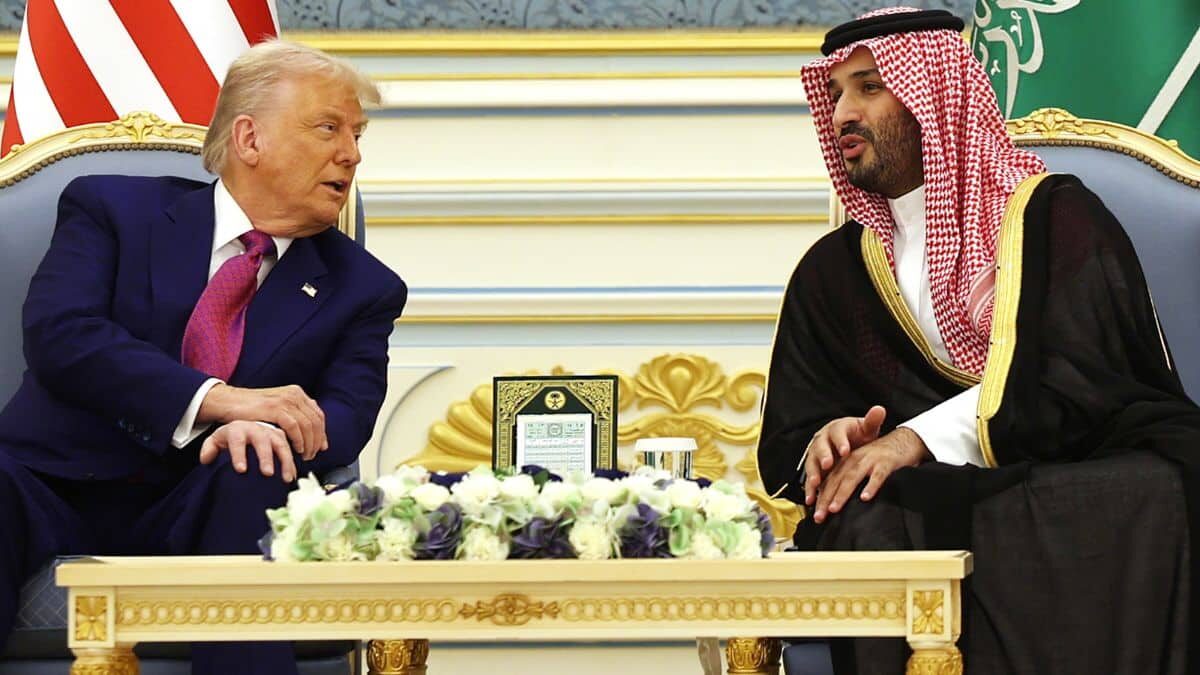
Riffa, Bahrain: In late 2025, Saudi Arabia’s Crown Prince Mohammed bin Salman traveled to Washington for a high-profile meeting with U.S. President Donald Trump, signaling a renewed chapter in the long-standing partnership between the two countries.
During the talks, MBS pledged extensive investment in the United States, with figures initially reported around $600 billion, potentially rising toward $1 trillion over the next decade. These commitments covered sectors ranging from technology and infrastructure to energy and defense.
Trump welcomed the pledges, describing them as “historic in scale” and emphasizing the importance of Saudi Arabia’s designation as a major non-NATO ally, a move aimed at strengthening defense cooperation and providing Riyadh with enhanced access to U.S. military technologies.
Experts observe that the visit combined both economic diplomacy and strategic signaling.
Adolfo Franco, a former U.S. State Department analyst, noted, “Saudi Arabia is positioning itself as a critical partner in regional security, and Washington is signaling its commitment to sustaining that partnership.
The investment pledges are significant, but their long-term success depends on follow-through and implementation.” Similarly, Middle East analyst Lina Khalid pointed out that “these agreements demonstrate Riyadh’s growing role as both an economic and security actor in the region. The challenge is balancing ambitions with realities on the ground.”
Riyadh’s strategic reach extends beyond Washington. In the Middle East, Saudi Arabia is asserting greater influence in Yemen following the UAE’s withdrawal from parts of the south.
The kingdom pledged $500 million for development initiatives to rebuild infrastructure and promote stability in areas affected by conflict. This move reflects both a strategic intent to maintain leadership in the Gulf and a desire to shape the future trajectory of Yemen, even as tensions with regional partners like the UAE persist.
Analysts emphasize that Saudi Arabia’s actions in Yemen illustrate a broader effort to consolidate influence within the Gulf Cooperation Council while navigating regional rivalries.
South Asia remains another focal point of Saudi engagement. Pakistan, in particular, has strengthened defense and security ties with Riyadh, with both countries signing agreements that reinforce military cooperation and mutual support. Economically, Saudi investments in Pakistan’s energy and infrastructure sectors provide critical support at a time when Islamabad faces significant fiscal pressures.
Political observers note that these ties allow Saudi Arabia to maintain influence in South Asia, even as global powers like China and the United States vie for strategic partnerships in the region.
The kingdom’s economic influence also extends through its sovereign wealth fund, the Public Investment Fund (PIF), which channels investments abroad and fosters international partnerships.
Agreements with U.S. companies on artificial intelligence, advanced technology, and infrastructure aim to both diversify the Saudi economy and expand Riyadh’s international commercial footprint. While ambitious, some experts caution that large headline figures often face delays in actual execution.
As Adolfo Franco observes, “High-level pledges make headlines, but the practical realities of turning commitments into flows of capital require navigating regulatory and market complexities.”
Human rights considerations also shape perceptions of Saudi Arabia’s expanding global role.
Critics argue that partnerships with the kingdom must be evaluated alongside domestic governance issues and international human rights concerns.
Proponents, however, highlight the strategic necessity of Saudi engagement for regional stability and economic development.
As Lina Khalid summarized, “Saudi Arabia is demonstrating that economic and security diplomacy can be tools of influence, how the international community interprets these moves will determine Riyadh’s effectiveness in achieving long-term strategic goals.”
In essence, the MBS–Trump meeting was not simply a series of announcements or photo opportunities. It reflected Saudi Arabia’s deliberate strategy of combining economic diplomacy with security engagement to extend its influence in both the Middle East and South Asia.
The long-term impact will hinge on successful implementation of investment pledges, evolving regional dynamics, and the kingdom’s ability to navigate both internal and external challenges in an increasingly complex geopolitical landscape.
Stay informed with The Variant for in-depth analysis, breaking developments, and expert perspectives on the stories shaping our world.