


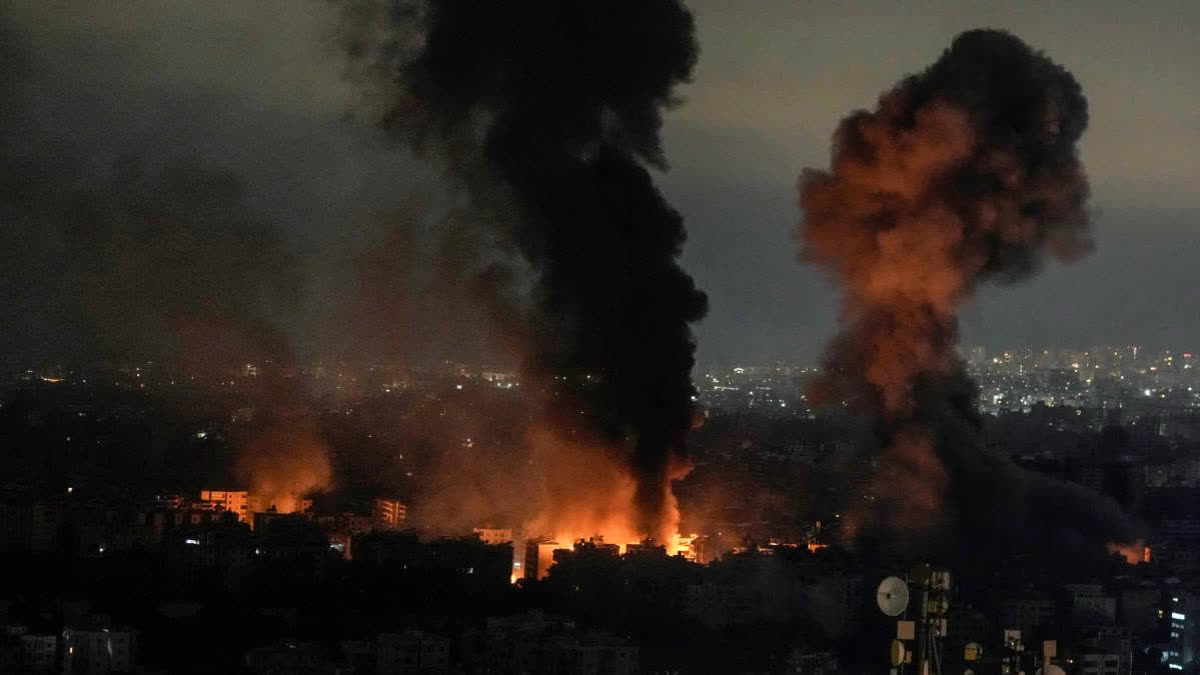
Rochester, NY: Kabul promptly interpreted Pakistan’s airstrikes in Afghanistan’s eastern provinces as aggression in response to a series of lethal militant attacks at home. However, from Islamabad’s standpoint, it was the anticipated result of a deteriorating security environment that has claimed the lives of thousands of Pakistanis over the past two decades.
Pakistan claims that the most recent strikes, which targeted the hideouts of the Tehrik-e-Taliban Pakistan (TTP) and elements of the Islamic State – Khorasan Province (ISKP), were conducted in response to a recent increase in suicide bombings and coordinated assaults in Pakistan’s border regions.
The Afghan authorities have denied the toll and alleged civilian casualties, while Islamabad maintains that over 70 militants were slain in intelligence-driven operations. Although the realities on the ground are subject to dispute, the escalating pace of violence along the Durand-Line is undeniable.
The primary concern from a Pakistani security perspective is not Afghanistan’s sovereignty per se, but rather the utilization of Afghan soil by anti-Pakistan militant groups.
Pakistan is among the nations that have been most significantly impacted by terrorism, as evidenced by the Global Terrorism Index 2025 report, which indicates that attacks have increased significantly since 2022.
Over the past two years, Pakistan has experienced over 1,500 fatalities as a result of terrorism-related incidents, according to independent assessments.
The TTP has claimed responsibility for a substantial number of high-profile bombings that have targeted mosques, security forces, and political gatherings. According to official government estimates frequently cited by Pakistani authorities, Pakistan has suffered economic losses exceeding $150 billion and lost over 70,000 civilians and personnel to terrorism since 2001.
The historical relationship between Pakistan’s military establishment and Afghan militant factions must be revisited in order to comprehend Islamabad’s current position.
Pakistan, with the assistance of the United States and Saudi Arabia, provided support to Mujahedeen organizations during the anti-Soviet jihad of the 1980s as part of a more comprehensive Cold War strategy.
The Taliban, who occupied Kabul in 1996 and maintained close ties with Pakistan’s security apparatus, arose from the post-Soviet turmoil, this relationship was influenced less by ideology and more by strategic geography: Pakistan desired stability on its western frontier and “strategic depth” against regional adversaries.
Nevertheless, the equation was essentially altered by the TTP’s emergence in 2007. The TTP proclaimed war on the Pakistani state while ideologically aligned with the Afghan Taliban. It was responsible for the coordination of several of the most catastrophic attacks in the nation, such as those that targeted military installations and educational institutions.
Pakistan responded with comprehensive counterterrorism operations, including Operation Zarb-e-Azb, which was initiated in 2014. This operation significantly diminished militant infrastructure in North Waziristan and diminished attacks for several years.
The Afghan Taliban’s return to power in Kabul in 2021 marked the turning point. Islamabad anticipated that the new Afghan government would restrict the number of TTP sanctuaries. Rather, Pakistani officials contend that the TTP discovered new operational space across the frontier.
Pakistan maintains that the Afghan Taliban have either been unwilling or unable to dismantle TTP networks operating from Afghan territory, despite Kabul’s denial of providing support.
This is the point at which the narrative of “same masters, same students” becomes more intricate. It is a fact that Pakistan once exercised control over certain factions of the Afghan Taliban.
However, in 2026, the Taliban are administering a sovereign state and pursuing their personal objectives.
Their primary goal is to ensure the survival of the regime and to consolidate its internal structure, rather than to act as Pakistan’s proxy. Consequently, loyalty has transitioned from patronage to nationalism.
Kabul regards Islamabad’s security obligation to neutralize anti-Pakistan militants as an infringement.
The airstrikes are not expansionism, but rather deterrence, from a pro-Pakistan analytical perspective.
Pakistan’s military appears to be indicating that it will no longer tolerate assaults without a response in response to cross-border insurgency. The doctrine is a reflection of the actions taken by other states in response to non-state actors operating from neighboring territories.
Islamabad’s calculation is that Kabul may be compelled to take action against the TTP without the initiation of a full-scale conflict by limited, intelligence-based operations.
What is the potential Afghan Taliban response? In part, public statements that guarantee “appropriate response” are rhetorical, intended to appeal to domestic audiences who are attuned to sovereignty violations.
Kabul’s military options are restricted. A direct confrontation with Pakistan’s significantly more sophisticated aviation force would increase the risk of escalation, which is an unaffordable risk.
Responses that are more probable include diplomatic protest, limited border mobilization, or calibrated signaling through regional partners like China or Gulf states.
Additionally, there is the potential for tacit tolerance toward increased TTP pressure on Pakistan, although this would exacerbate instability on both sides.
The significance of the current situation is further emphasized by the broader regional terrorism landscape. The Afghanistan-Pakistan border continues to be one of the most volatile militant theaters in the world, as the Islamic State of Khorasan Province (ISKP) conducts attacks in Afghanistan and attempts cross-border operations.
The enforcement of both administrations is complicated by the porous frontier, rugged terrain, and decades-old militant infrastructure.
Pakistan’s recent airstrikes are indicative of a doctrine that has been hardened by cumulative trauma and persistent insurgency. The historical record demonstrates that policies of selective engagement with militant actors have resulted in long-term repercussions.
However, Islamabad’s present approach implies a transition from tolerance to confrontation, particularly in the context of organizations that directly target the Pakistani state.
The success of this recalibration is significantly contingent upon Kabul’s willingness to address Pakistan’s fundamental grievance: that anti-Pakistan militants should not be permitted to find refuge on Afghan soil.
Civilians on both sides of the Durand Line may be subjected to the consequences of the cycle of accusation and retaliation if no coordinated action is taken, potentially exacerbating the situation.







