


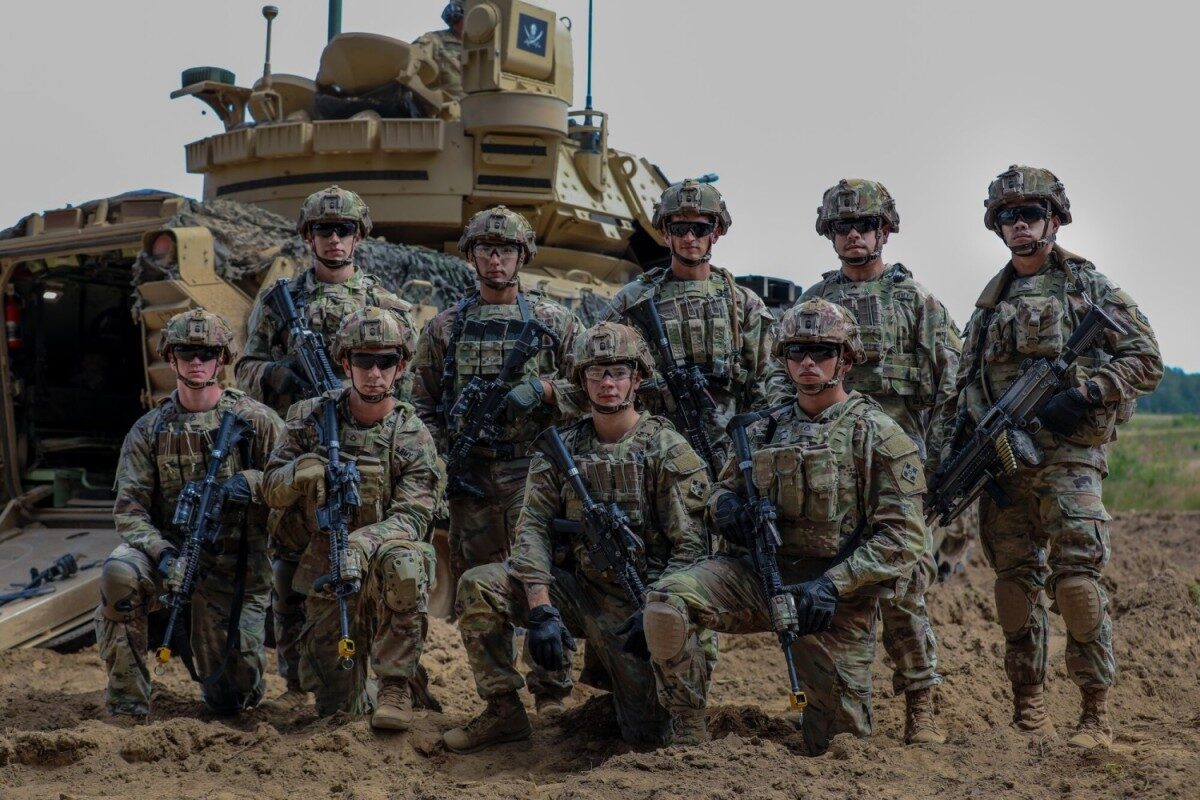
Atlanta, Georgia: As tensions between the United States and Iran edge toward another historic watershed, policymakers and analysts on both sides of the divide are framing the confrontation not simply as a clash of interests, but as a strategic moment whose outcomes could reverberate across the Middle East and beyond.
In Washington and Tehran alike, commentators acknowledge that longstanding grievances are now intersecting with political imperatives, military deterrence, and the competing narratives of national pride and regional order.
At the center of this confrontation is Iran’s nuclear program and its ballistic missile arsenal, both of which Tehran insists are defensive and civilian in purpose but which U.S. leaders describe as an existential threat to regional stability.
The U.S. perception of Iran’s capabilities has been shaped in recent months by a combination of diplomacy and force: President Donald Trump declared that a newly deployed naval armada was heading toward the Iranian coast to underline American resolve, calling on Tehran to abandon nuclear ambitions.
Trump’s administration has repeatedly said it seeks negotiations but will not rule out military strikes to prevent what Washington views as a crossing of Iran’s nuclear “red lines.”
Iranian officials, in turn, have framed U.S. pressure as a continuation of what they call decades of foreign interference. At a recent press conference, Foreign Minister Abbas Araqchi underscored that negotiations might resume if conducted under conditions the Iranian government sees as fair, but he made clear that Tehran’s defensive posture — including its missile capabilities — would not be on the negotiating table. “Iran’s defense capabilities and missiles will never be subject to negotiations,” Araqchi said, insisting that Tehran’s sovereign right to defend itself is not up for bargaining.
Against this backdrop of geopolitical brinkmanship, independent analysts offer a range of perspectives.
From a U.S. strategic standpoint, Ernest J. Moniz, co-chair and CEO of the Nuclear Threat Initiative, described the early impact of allied strikes on Iranian nuclear sites as significant but emphasized the limitations of military action.
In his assessment of attacks on Iran’s Fordow and Natanz facilities, Moniz said the operations “certainly eliminated, at least for some time, some of the Iranian facilities,” while also acknowledging that crucial infrastructure remains capable of reconstitution.
Echoing concern over escalation, Farzan Sabet, a Geneva Graduate Institute researcher, has warned that the threat of conflict remains dangerously elevated. “The chances for a potential conflict do increase over time — despite the fact that Iran is not looking for a confrontation,” Sabet said, adding that U.S. and Iranian leaders both have incentives to avoid full-scale war even as military rhetoric intensifies.
Regional analysts, meanwhile, emphasize that the Middle East’s strategic landscape is far from monolithic. Sina Azodi, assistant professor of Middle East politics at George Washington University, has described Tehran’s posture not as reckless adventurism, but as calculated deterrence rooted in the lived experience of past conflicts: “Iran thinks that a second round of war with the U.S. is not a new war but rather the continuation of the 12-day war in June which reached a stalemate and a temporary pause,” he told analysts, underlining that Iranian decision-makers view escalation through the prism of prior engagements rather than pure confrontation.
If deterrence fails, the consequences could be catastrophic. From the perspective of Tehran’s leadership, the Supreme Leader Ayatollah Ali Khamenei has warned that any U.S. military strike would ignite a broader regional war.
The Iranian cleric’s remarks underscored Tehran’s belief that conflict would not remain confined to battlefields but spill across allied networks in Lebanon, Iraq, Yemen, and beyond — turning a bilateral dispute into a multilateral conflagration.
Analysts caution that even as Iran’s missile production continues — often repositioned into hardened sites — the threat posed by these systems extends well beyond immediate military targets. Iran’s arsenal of short- and medium-range missiles can strike U.S. bases and allied facilities across the Gulf, and as Gulf partners like Saudi Arabia and the United Arab Emirates have publicly noted, regional defense systems could be quickly overwhelmed in a sustained conflict.
The global stakes are even broader. The world economy remains acutely sensitive to instability in the Persian Gulf, where nearly one-fifth of international oil supply flows through the Strait of Hormuz.
Interruptions there would send shockwaves through global markets, triggering price spikes and economic disruption far beyond the immediate combat zone.
Beyond economics, the diplomatic repercussions would be profound. Turkey and other regional mediators have urged incremental approaches to dispute resolution with Iran, arguing that piecemeal confidence-building measures offer better prospects for stability than sweeping demands or military threats. As Turkey’s foreign minister put it, resolving disputes “one by one” — beginning with the nuclear program — could prevent outcomes that neither side truly desires.
Within Iran itself, the calculus is complex. Hardliners insist that pressure from Washington strengthens their hand, while significant segments of the population — particularly those involved in sustained anti-regime protests — seek a quieter living space removed from both domestic repression and international conflict. The dual pressures of U.S. sanctions and political unrest reinforce Tehran’s determination to project strength even as diplomacy continues on uneven terms.
For American policymakers, the dilemma remains whether military coercion can deliver security without inducing wider war, or whether measured negotiation offers a more stable but politically fraught pathway.
The debate is more than academic: it reflects competing visions of U.S. leadership in a multi-polar world where nuclear concerns, missile capabilities, regional alliances, and historical grievances intersect in unpredictable ways.
In the end, experts from both sides agree on this sobering point: the line between deterrence and disaster is thin, and navigating it will require not only military readiness but diplomatic creativity and political courage.
Whether Washington and Tehran can constrain escalation — or whether miscalculation will plunge the region into a conflict whose reverberations are felt in capitals worldwide — remains one of the most consequential questions of our time.







